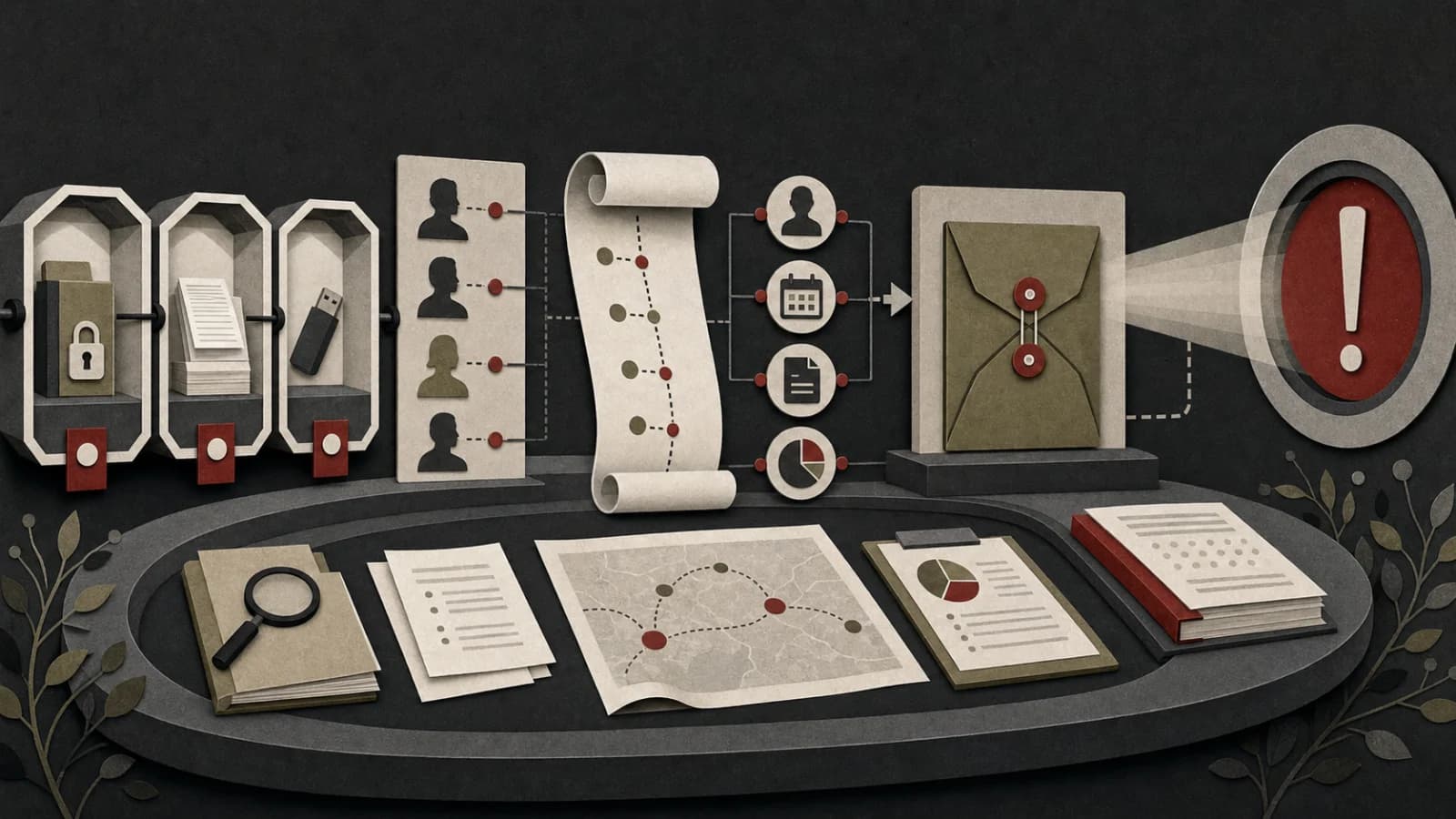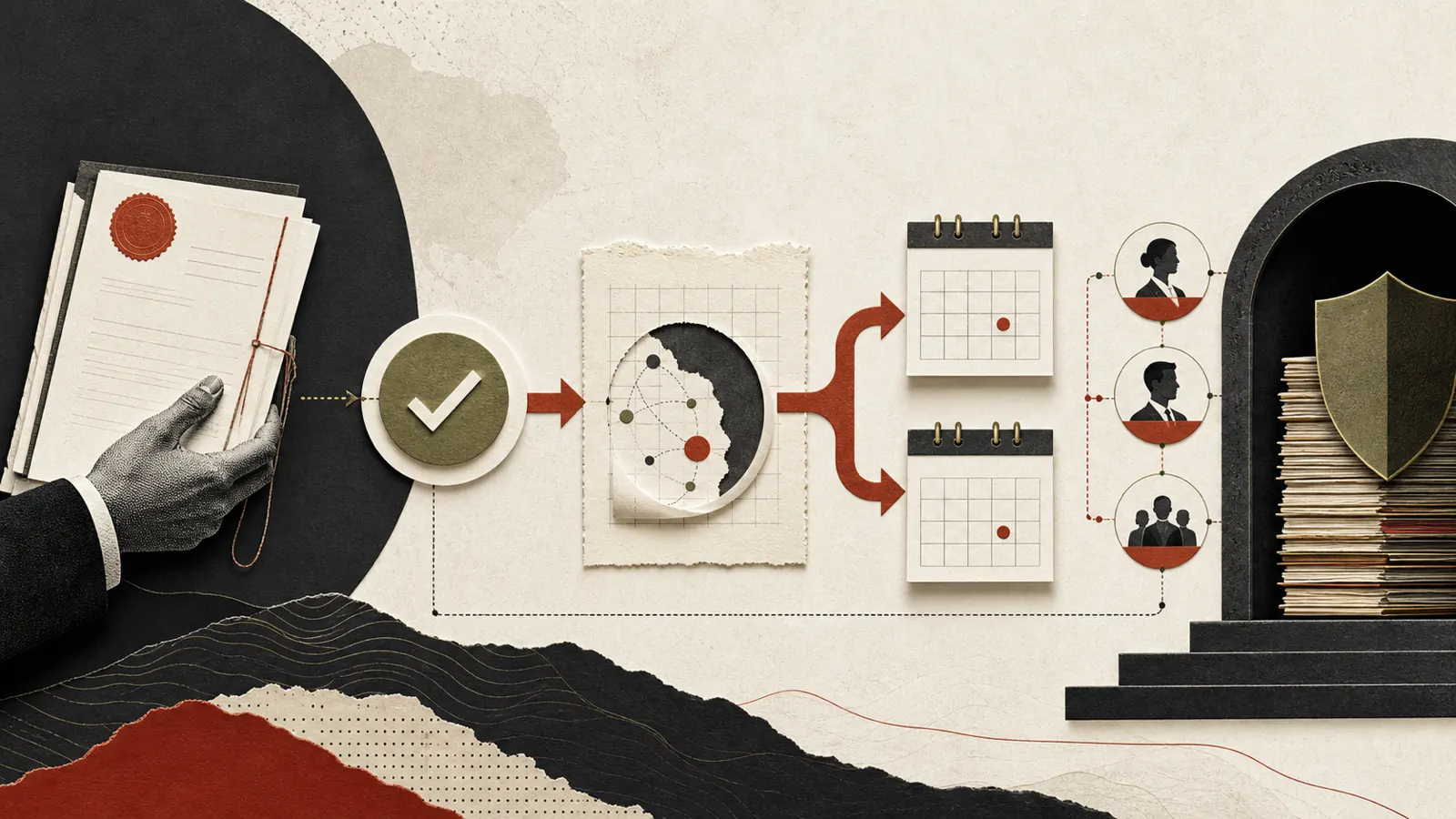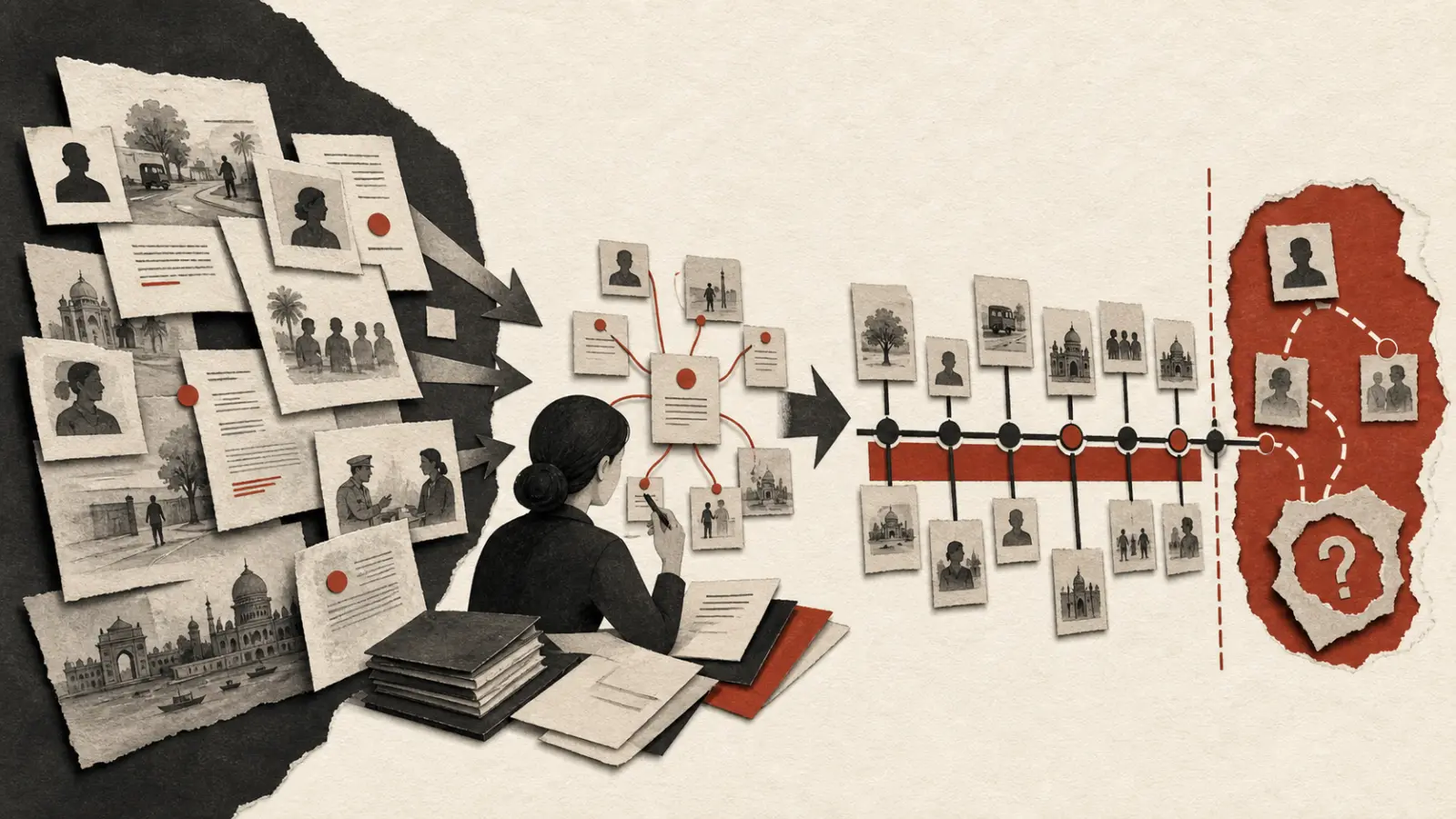
A litigation hold process is how a US legal team turns the duty to preserve into actions it can prove later. Many US teams call it a legal hold. The steps are the same under either name: decide that the duty has been triggered, define scope, identify custodians and systems, send a legal hold notice, suspend routine deletion, track acknowledgments, send reminders, and release the hold when counsel decides the basis has ended.
This guide is built on federal law. In federal court, the Federal Rules of Civil Procedure "govern the procedure in all civil actions and proceedings in the United States district courts," except as stated in Rule 81. State courts apply their own rules and case law on preservation and spoliation, so check the forum's rules before you rely on any federal standard.
A hold is a matter-specific response. The standing work that makes it fast, such as a system map, named owners and an intake route, belongs in a litigation readiness plan that exists before any trigger.
When does the duty to preserve start?
Rule 37(e) applies to electronically stored information (ESI) "that should have been preserved in the anticipation or conduct of litigation." It does not define the trigger date itself. The 2015 advisory committee note explains that "Many court decisions hold that potential litigants have a duty to preserve relevant information when litigation is reasonably foreseeable," and that Rule 37(e) is based on that common-law duty rather than creating a new one. The note also says the rule "does not apply when information is lost before a duty to preserve arises."
The note warns that the events that put a party on notice "often" give only limited information about the future case, so the right scope may be uncertain. Courts are told not to judge that early decision with hindsight. That is why a written trigger record matters: it shows what the team knew and when.
Typical events that should prompt a hold assessment include a demand letter, a filed complaint, a government subpoena or inquiry, a credible threat of suit, an internal complaint that names a likely claim, or a preservation letter from the other side.
Government investigations carry extra risk. 18 U.S.C. § 1519 makes it a federal crime to knowingly destroy or alter a record "with the intent to impede, obstruct, or influence" a matter within the jurisdiction of a federal department or agency, including "in relation to or contemplation of any such matter." The penalty is a fine, imprisonment "not more than 20 years, or both."
Create a short trigger record with:
- the event, its date, and who escalated it;
- the likely claims, parties, and time period;
- the people, business units, and systems that may hold relevant information;
- any known court dates, regulator deadlines, or preservation letters;
- the lawyer who made the scoping decision, and the assumptions behind it; and
- the next review date.
What does FRCP 37(e) require if ESI is lost?
Rule 37(e) sets the federal consequences when ESI that should have been preserved is lost "because a party failed to take reasonable steps to preserve it, and it cannot be restored or replaced through additional discovery." It has two tiers.
| Tier | What the court must find | What the court may do |
|---|---|---|
| Rule 37(e)(1) | Prejudice to another party from the loss | Order "measures no greater than necessary to cure the prejudice" |
| Rule 37(e)(2) | The party "acted with the intent to deprive another party of the information's use in the litigation" | Presume the information was unfavorable; instruct the jury that it may or must presume this; or dismiss the action or enter a default judgment |
Four points from the 2015 committee note shape a defensible process:
- Reasonable steps, not perfection. The note says the rule "recognizes that 'reasonable steps' to preserve suffice; it does not call for perfection."
- Routine deletion is relevant. The routine, good-faith operation of an information system is a factor, "although the prospect of litigation may call for reasonable steps to preserve information by intervening in that routine operation."
- Proportionality counts. A party "may act reasonably by choosing a less costly form of information preservation, if it is substantially as effective as more costly forms."
- Counsel must know the systems. The note says it is important that counsel "become familiar with their clients' information systems and digital data," including social media.
Rule 37(e) covers only ESI. The committee note also says the rule does not affect an independent spoliation tort claim where state law applies and authorizes one. It rejects cases that allowed adverse-inference instructions on a finding of negligence or gross negligence, which is why intent is now the line for the most severe measures in federal court.
Who owns the legal hold workflow?
Name one accountable lawyer, even when several functions do the work. Unclear ownership between legal and IT is the most common way a hold fails.
| Role | Responsibility | Record to keep |
|---|---|---|
| Responsible attorney | Decides trigger, scope, changes, and release | Decision log with dates |
| Hold coordinator | Issues notices, tracks acknowledgments, sends reminders | Notice and acknowledgment register |
| IT or system owner | Suspends deletion and applies preservation controls | System action log, with verification |
| Records manager | Explains retention schedules and disposal jobs | Schedule exceptions applied |
| HR | Flags departures, transfers, and device returns | Custodian change notices |
| Custodian | Preserves material and reports other sources | Signed acknowledgment and interview notes |
| Outside counsel or vendor | Advises on scope, collection, and negotiation | Engagement scope and chain-of-custody records |
How do you identify custodians and data sources?
Start from the claims, not from the software list. For each issue, ask who took part, who approved, who received reports, and who ran the relevant process. Then find where those people kept information during the relevant period.
Scope is tied to control. Rule 34(a)(1) lets a party request documents and ESI in the responding party's "possession, custody, or control." Data held by a cloud provider, payroll vendor, or outsourced service can still be in scope. Discovery under Rule 26(b)(1) must be "relevant to any party's claim or defense and proportional to the needs of the case," which is a useful check against a hold that tries to cover everything.
| Mapping question | Why it matters |
|---|---|
| What claims and date range are in scope? | Stops the hold from becoming unbounded |
| Who created, approved, received, or administered the records? | Finds less visible custodians, such as assistants and shared accounts |
| Which systems were used in that period? | Catches migrations and retired tools |
| Which data auto-deletes, expires, or is overwritten? | Shows what to suspend first |
| Do vendors or former employees hold relevant data? | Exposes control and access gaps |
| Are chat, text messages, voicemail, or personal devices used for work? | Avoids an email-only hold |
Test the map with short custodian interviews. A custodian may keep signed copies in a deal room and drafts in a chat channel. The litigation document organization guide covers how to structure preserved and collected material once the matter opens.
What should a legal hold notice include?
The content of a legal hold notice is a matter of practice. A useful notice is specific enough to act on and plain enough for a non-lawyer to follow. It should not ask custodians to decide legal relevance. Give examples tied to the issues and tell anyone unsure to preserve and ask.
Legal hold notice checklist:
- a clear subject line and the name of the responsible attorney;
- a matter name and an instruction to keep the notice confidential;
- the topics, people, and date range covered;
- the systems, accounts, devices, and paper files in scope;
- what to do, and what not to do (delete, overwrite, wipe a phone, change auto-delete settings);
- a deadline to acknowledge and a contact for questions;
- a request to name other custodians or sources;
- what happens on departure, role change, or device replacement; and
- a statement that the hold stays in force until written release.
Keep legal strategy out of the notice. Treat it as a document that may be seen by others later.
How do you suspend deletion and preserve ESI?
A notice alone is not preservation. The committee note's point about "intervening in that routine operation" means the IT side must act: pause auto-delete and retention policies for the right accounts, stop scheduled purges, suspend mailbox deletion for departing staff, and keep devices that would otherwise be wiped or recycled.
Choose the method by system and risk. Options include in-place hold in the email or collaboration platform, account-level retention, a targeted export, or forensic imaging by a qualified examiner. For each action, record who did it, when, on which system and account, with what filters, and where the preserved copy sits. Then verify that the setting took effect. A hold that was configured but never checked is a common gap.
How do you track acknowledgments and send reminders?
A sent email does not prove anyone read it. Keep a register for each matter.
| Register field | Purpose |
|---|---|
| Custodian, role, and system accounts | Shows who is covered and where |
| Notice version and date sent | Ties each person to the scope they received |
| Acknowledgment date | Proves receipt and understanding |
| Follow-up and escalation dates | Shows how non-responses were handled |
| Interview notes and new sources | Records what the custodian disclosed |
| Status changes (leaver, transfer, new device) | Triggers IT action before data is lost |
Send reminders at a cadence the responsible attorney sets for the matter, and send an updated notice whenever scope changes. A review loop keeps the hold current:
- Reconfirm the claims, parties, and date range.
- Chase missing acknowledgments and escalate repeat non-responses.
- Check with IT that preservation settings are still in place.
- Add new custodians and sources; record any exclusions and why.
- Set the next review date, or recommend release.
How does preservation come up at the Rule 26(f) conference?
Preservation is an agenda item once a federal case is filed. Under Rule 26(f)(2), the parties must "discuss any issues about preserving discoverable information" and develop a proposed discovery plan. Rule 26(f)(3)(C) requires the plan to state the parties' views on "any issues about disclosure, discovery, or preservation of electronically stored information." Unless the case is exempt from initial disclosure or the court orders otherwise, the conference must take place at least 21 days before a scheduling conference is held or a scheduling order is due. The written report is due within 14 days after the conference.
A scheduling order under Rule 16(b)(3)(B)(iii) may "provide for disclosure, discovery, or preservation of electronically stored information." The committee note adds that if parties cannot agree on preservation, "promptly seeking judicial guidance" may be important. Your hold register and trigger record are the evidence you bring to that discussion.
When can you release a legal hold?
Release only on a written decision by the responsible attorney, after the claims are resolved and any appeal period has run, or after counsel concludes that litigation is no longer reasonably foreseeable. Check first whether the same data is under another hold, a regulatory retention rule, or a contract that still applies.
Tell custodians and system owners exactly which restrictions end. Release does not require immediate deletion. It returns the data to the normal retention schedule. Record the release date, the approver, and the systems restored to normal disposal.
For the same process under the disclosure rules of England and Wales, see the UK version of this guide. Gotham for US legal teams lets you research federal and state case law, the U.S. Code and federal regulations, review contracts at scale and draft in Word, in one workspace. Every answer cites the passage it relies on.
Questions about US litigation holds
Is a litigation hold the same as a legal hold?
Yes. Both terms describe the same process: a matter-specific instruction, backed by technical steps, to preserve documents and electronically stored information that may be relevant to a dispute. US teams use the two names interchangeably.
When does the duty to preserve start in US federal court?
Rule 37(e) of the Federal Rules of Civil Procedure covers information that should have been preserved in the anticipation or conduct of litigation. The 2015 advisory committee note says many courts hold that the duty arises when litigation is reasonably foreseeable, and that the rule does not apply to information lost before the duty arose.
What happens if electronically stored information is lost after a legal hold should have been issued?
Under Rule 37(e), if the party failed to take reasonable steps and the information cannot be restored or replaced, the court may order measures no greater than necessary to cure prejudice. Only on a finding of intent to deprive may it presume the information was unfavorable, give an adverse-inference jury instruction, or dismiss the action or enter a default judgment.
Do state courts follow FRCP 37(e)?
Not automatically. The Federal Rules of Civil Procedure govern civil actions in US district courts. State courts apply their own rules and case law on preservation and spoliation, and the federal committee note says Rule 37(e) does not affect an independent state-law spoliation tort claim where state law authorizes one.