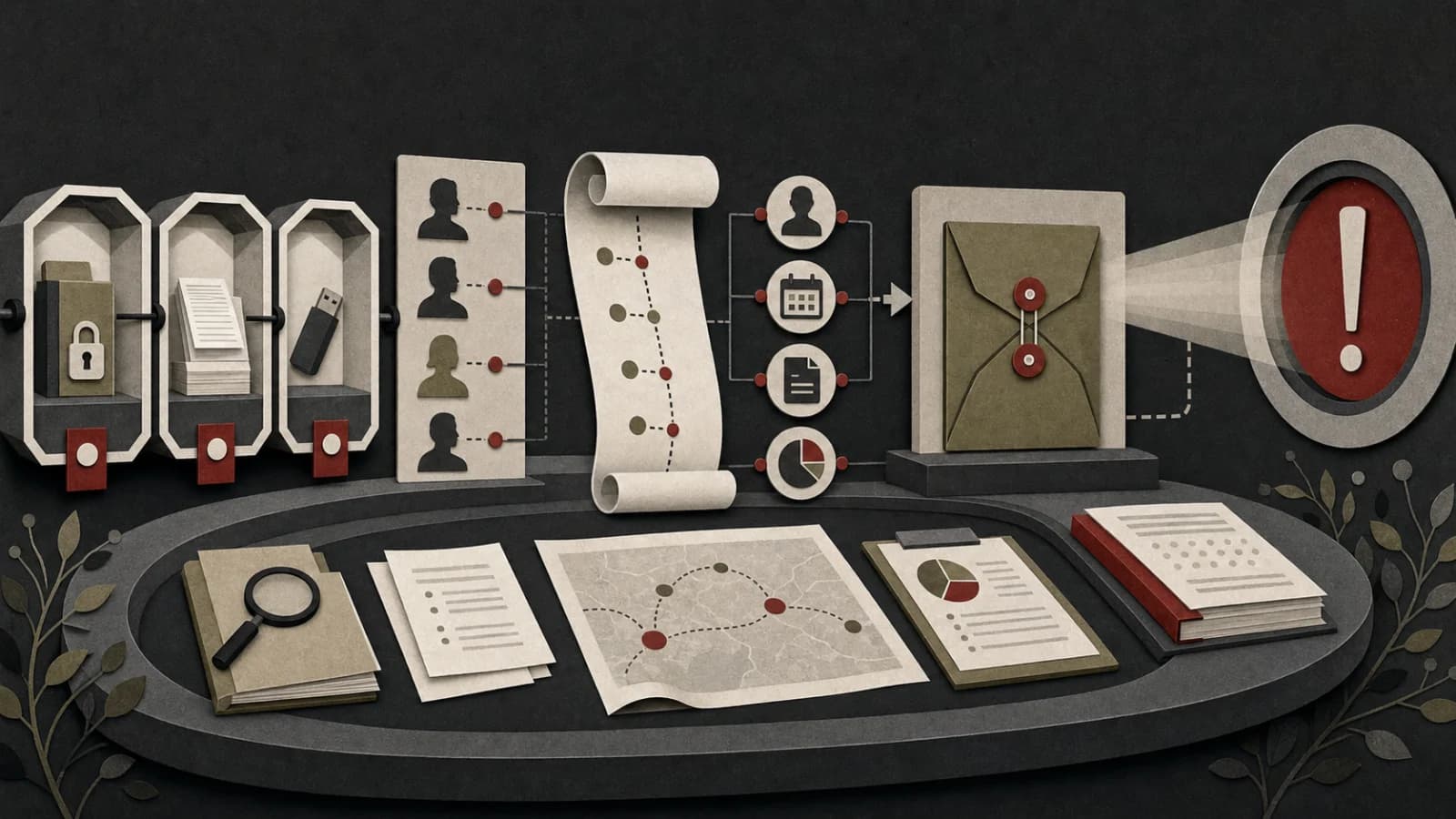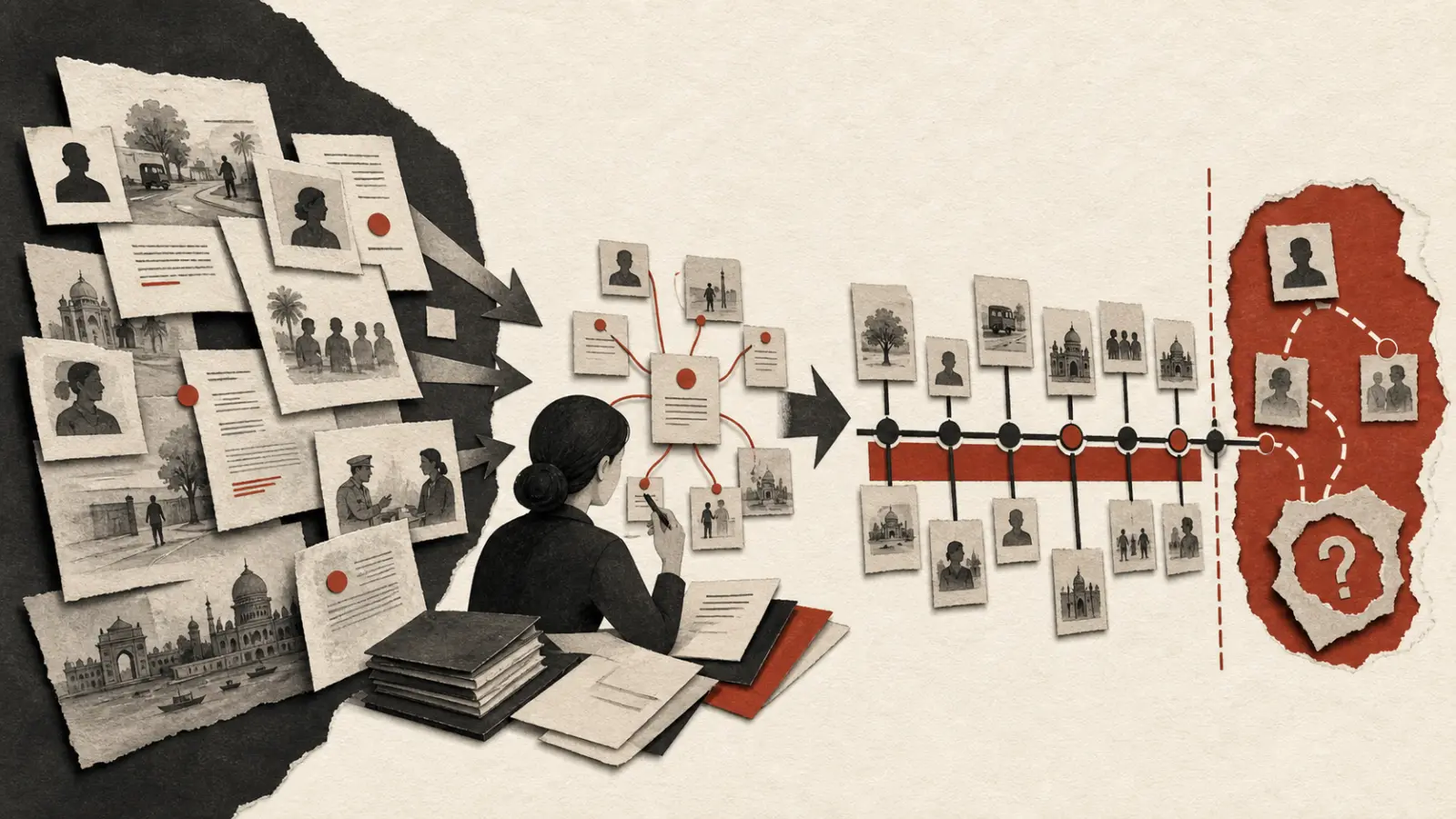
A litigation hold process is how a legal team in England and Wales meets its duty to preserve documents once a dispute is in prospect. US teams call this a legal hold. Practitioners in England and Wales more often speak of document preservation and a preservation notice, and the Business and Property Courts' disclosure rules call the notice a "written notification". The steps are the same: decide the duty has arisen, define scope, identify custodians and systems, send the notice, suspend deletion, cover third parties, track acknowledgements, send reminders and release.
This guide covers England and Wales only. Scotland and Northern Ireland have their own courts and rules of procedure, and the Practice Directions below do not apply there.
A hold is one matter-specific response. The standing work that makes it fast, such as a system map, named owners and an escalation route, belongs in a litigation readiness plan that exists before any trigger.
Which rules govern document preservation in England and Wales?
The answer depends on the court.
| Court or track | Main source | Preservation provision |
|---|---|---|
| Business and Property Courts | Practice Direction 57AD | Paragraphs 3.1 to 4.5 |
| Other multi-track claims | CPR Part 31 and Practice Direction 31B | PD 31B paragraph 7 and paragraph 9(4) |
PD 57AD paragraph 1.2 says it "applies to existing and new proceedings in the Business and Property Courts of England and Wales." Unless the court orders otherwise, paragraph 1.4 excludes some proceedings, including competition claims, public procurement claims, the Intellectual Property and Enterprise Court, the Admiralty Court, the Shorter and Flexible Trials Schemes, fixed or capped costs cases, and Part 8 claims. Within its scope, paragraph 1.8 says CPR Part 31 and PDs 31A and 31B do not apply, save for the provisions set out in its Section II.
Outside the Business and Property Courts, PD 31B applies "unless the court orders otherwise" to proceedings that are, or are likely to be, allocated to the multi-track (paragraph 3).
When does the duty to preserve documents start?
Under PD 57AD paragraph 3.1, the duty applies to "a person who knows that it is or may become a party to proceedings that have been commenced or who knows that it may become a party to proceedings that may be commenced." The first of its Disclosure Duties is "to take reasonable steps to preserve documents in its control that may be relevant to any issue in the proceedings." The duty can therefore start before any claim form is issued.
PD 31B paragraph 7 puts the point on legal representatives: "As soon as litigation is contemplated, the parties' legal representatives must notify their clients of the need to preserve disclosable documents."
Events that should prompt an assessment include a letter before claim, a threatened claim, a regulator's request, a whistleblowing report that names a likely claim, a contractual dispute notice, or a request from the other side to preserve documents. Create a short trigger record with:
- the event, its date and who escalated it;
- the likely issues, parties and time period;
- the people, teams and systems that may hold relevant documents;
- any pre-action correspondence, deadlines or court dates;
- the solicitor or in-house lawyer who made the scoping decision, and the assumptions behind it; and
- the next review date.
What counts as a document, and what is in your control?
The definitions are wide. CPR 31.4 defines a document as "anything in which information of any description is recorded." PD 57AD paragraph 2.5 says a document includes e-mail, "text messages, webmail, social media and voicemail, audio or visual recordings." Paragraph 2.6 extends it to information on servers and back-up systems, information that has been "deleted", and metadata.
Control is defined the same way in both regimes. A document is in a party's control if it is or was in its physical possession, it has or has had a right to possession of it, or it has or has had a right to inspect or take copies of it (CPR 31.8 and PD 57AD Appendix 1, paragraph 1.1). Documents held by a cloud provider, payroll bureau or outsourced service can fall within that test.
PD 57AD paragraph 4.1 adds that documents to be preserved "include documents which might otherwise be deleted or destroyed in accordance with a document retention policy or in the ordinary course of business." Preservation "includes, in suitable cases, making copies of sources and documents and storing them."
Who owns the preservation process?
Name one accountable lawyer. External solicitors carry their own duties under PD 57AD paragraph 3.2, including taking reasonable steps to preserve documents within their control and to "advise and assist the party to comply with its Disclosure Duties." Under paragraph 4.4, they must, within a reasonable period of being instructed, notify the client of the need to preserve documents and obtain written confirmation that the client has taken the steps in paragraphs 4.2 and 4.3.
| Role | Responsibility | Record to keep |
|---|---|---|
| In-house lawyer or matter lead | Decides trigger, scope, changes and release | Decision log with dates |
| External solicitors | Advise on duties, obtain client confirmation | Written confirmation under para 4.4 |
| Hold coordinator | Issues notices, tracks acknowledgements, sends reminders | Notice and acknowledgement register |
| IT or system owner | Suspends deletion and applies preservation controls | System action log, with verification |
| Records manager | Explains retention schedules and disposal jobs | Schedule exceptions applied |
| HR | Flags leavers, transfers and device returns | Custodian change notices |
| Data protection officer | Reviews retention against data protection duties | Note of the legal basis for retention |
What should a preservation notice contain?
PD 57AD paragraph 4.2(2) requires a written notification "in any form" to relevant employees and former employees "where there are reasonable grounds for believing" they may hold disclosable documents not also in the party's possession. Under paragraph 4.3, the notification should identify the documents or classes of documents to be preserved, and tell the recipient not to delete or destroy them and to take reasonable steps to preserve them.
Those are the minimum points. A practical preservation notice also covers:
- a clear subject line and the name of the responsible lawyer;
- a matter name and an instruction to keep the notice confidential;
- the topics, people and date range covered;
- the systems, accounts, devices and paper files in scope;
- what not to do (delete, overwrite, wipe a phone, change auto-delete settings);
- a deadline to acknowledge and a contact for questions;
- a request to name other people or sources;
- what happens on departure, role change or device replacement; and
- a statement that the notice stays in force until written release.
Do not ask recipients to judge legal relevance. Give examples tied to the issues and tell anyone unsure to preserve and ask. Keep legal advice and strategy out of the notice.
How do you suspend deletion and cover third parties?
PD 57AD paragraph 4.2(1) imposes "an obligation to suspend relevant document deletion or destruction processes for the duration of the proceedings." In practice that means IT must pause auto-delete and retention policies for the right accounts, stop scheduled purges, keep leavers' mailboxes, and hold devices that would otherwise be wiped. Record who did each step, when, on which system, and where any preserved copy is stored. Then check that the setting took effect.
Paragraph 4.2(3) requires "reasonable steps so that agents or third parties who may hold documents on the party's behalf do not delete or destroy documents that may be relevant." Write to those providers, name the data and date range, and keep their replies.
Data protection requests can arrive during a hold. The ICO's guidance on the right to erasure says the right does not apply if processing is necessary "for the establishment, exercise or defence of legal claims." Route erasure requests that touch held data to the matter lead and the data protection officer rather than processing them automatically.
How do you track acknowledgements, reminders and confirmations?
A sent email does not prove anyone read it. Keep a register for each matter.
| Register field | Purpose |
|---|---|
| Custodian, role and system accounts | Shows who is covered and where |
| Notice version and date sent | Ties each person to the scope they received |
| Acknowledgement date | Proves receipt |
| Follow-up and escalation dates | Shows how non-responses were handled |
| Third-party letters and replies | Evidence for paragraph 4.2(3) |
| Status changes (leaver, transfer, new device) | Triggers IT action before data is lost |
The register also supports formal confirmations. PD 57AD paragraph 4.5 requires each party to confirm in writing, when serving its particulars of claim or defence, "that steps have been taken to preserve relevant documents." Where Extended Disclosure is sought, the parties use the Disclosure Review Document (paragraph 10.1). In PD 31B cases, the Electronic Documents Questionnaire asks "Do you have a document retention policy?" and "Have you given an instruction to preserve Electronic Documents, and if so, when?"
Send reminders at a cadence the matter lead sets, and send an updated notice whenever scope changes. A simple review loop:
- Reconfirm the issues, parties and date range.
- Chase missing acknowledgements and escalate repeat non-responses.
- Check with IT and third parties that preservation is still in place.
- Add new custodians and sources; record any exclusions and why.
- Set the next review date, or recommend release.
What happens if documents are not preserved?
Under PD 57AD paragraph 20.2, if a party fails to discharge its Disclosure Duties, the court "may adjourn any hearing, make an adverse order for costs or order that any further disclosure by a party be conditional on any matter the court shall specify." The paragraph adds that this "does not limit the court's power to deal with the failure as a contempt of court in an appropriate case." Paragraph 20.1 keeps the court's "full range of sanctions" throughout disclosure.
When can you release a preservation notice?
PD 57AD paragraph 3.3 says the duties "are continuing duties that last until the conclusion of the proceedings (including any appeal) or until it is clear there will be no proceedings." Release only on a written decision by the responsible lawyer once that point is reached. Check first whether the same documents are under another hold, a regulatory retention rule or a contract that still applies.
Tell custodians, IT and third parties exactly which restrictions end. Release does not require immediate deletion; it returns documents to the normal retention schedule. For how to organise what you preserved, see the litigation document organisation guide.
For the same process under US federal rules, see the US version of this guide. Gotham for UK legal teams lets you research UK case law and legislation, review contracts at scale and draft in Word, in one workspace. Every answer cites the passage it relies on.
Questions about document preservation in England and Wales
When does the duty to preserve documents start in England and Wales?
In the Business and Property Courts, PD 57AD paragraph 3.1 applies to a person who knows it is, or may become, a party to proceedings that have been or may be commenced. In other multi-track cases, PD 31B paragraph 7 requires legal representatives to notify clients of the need to preserve disclosable documents as soon as litigation is contemplated.
What is a preservation notice?
It is the written instruction telling people not to delete or destroy relevant documents. PD 57AD paragraph 4.3 says the written notification should identify the documents or classes of documents to be preserved and tell recipients not to delete or destroy them and to take reasonable steps to preserve them.
Do we have to notify former employees?
Under PD 57AD paragraph 4.2(2), a written notification must go to relevant employees and former employees where there are reasonable grounds for believing they may hold disclosable documents that are not also in the party's possession.
How long does a document preservation duty last?
PD 57AD paragraph 3.3 says the duties are continuing duties that last until the conclusion of the proceedings, including any appeal, or until it is clear there will be no proceedings. Paragraph 4.2(1) requires relevant deletion processes to be suspended for the duration of the proceedings.