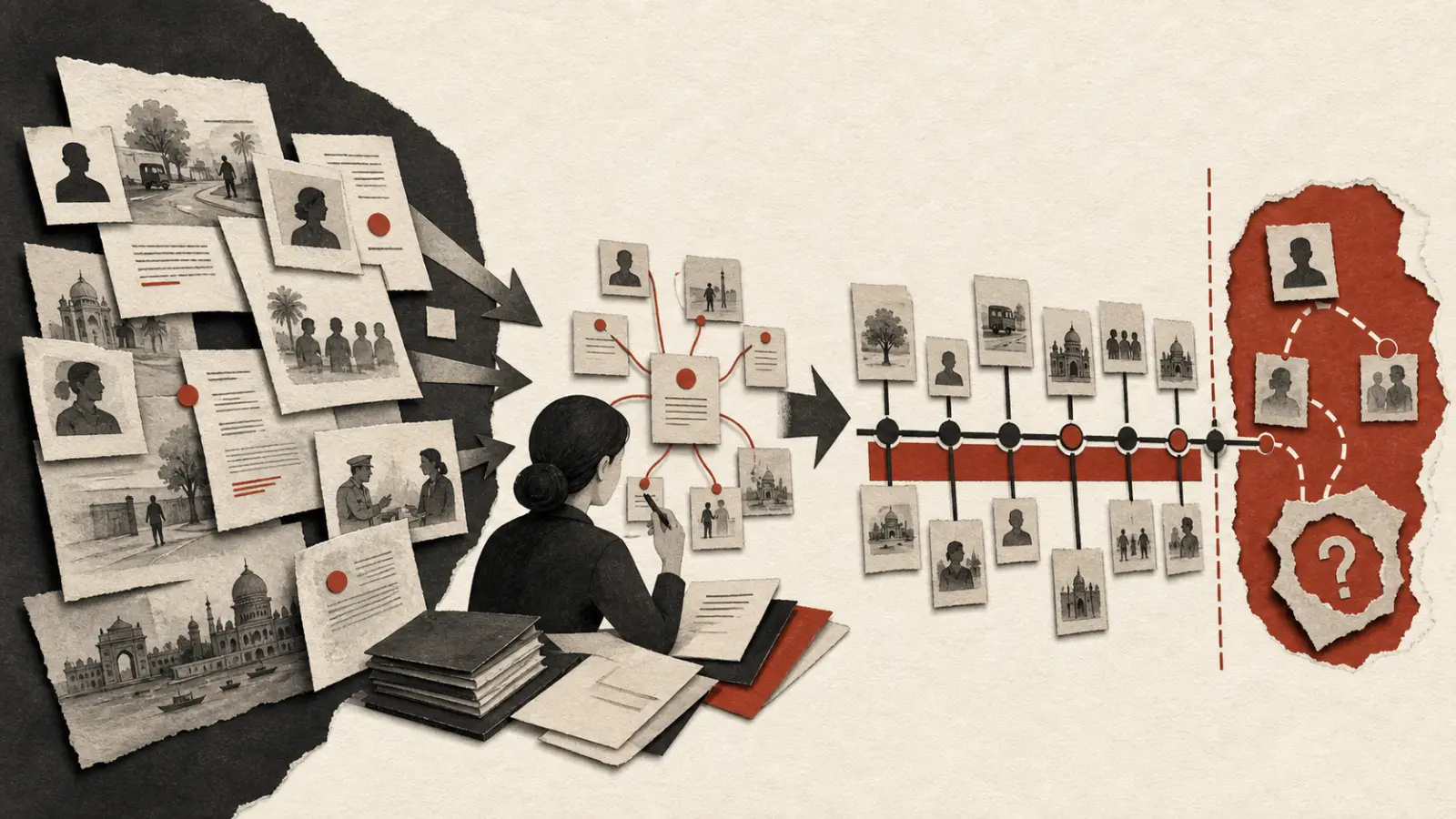
A litigation readiness plan is a standing operating plan for the period before a dispute becomes a filed matter. It tells an in-house team how to recognise escalation signals, reach the right decision-makers, identify likely evidence sources, preserve information when required, brief outside counsel, and create a reliable first view of facts, exposure, cost, and next actions.
Readiness is not the same as issuing a litigation hold. A hold is a matter-specific preservation action triggered by legal analysis. Readiness creates the people, systems map, decision route, and tested procedures that make a hold or urgent response possible. It also does not prejudge whether a claim should be defended, settled, mediated, or reported.
Indian evidence and procedure make source discipline important. The Bharatiya Sakshya Adhiniyam, 2023 addresses electronic records and conditions relevant to their admissibility. The Commercial Courts Act, 2015 includes disclosure duties and specific declarations concerning electronic documents in commercial disputes. Counsel must interpret the current law, court rules, and facts; an internal checklist is not a substitute for that analysis.
One-page litigation readiness plan template
Keep the first page operational. It should tell the team who decides, what must happen first, and where the supporting procedures live. Use a table like this as an index to the controlled plan rather than trying to compress legal analysis into a checklist.
| Plan element | Minimum decision or record | Evidence that the control works |
|---|---|---|
| Trigger and intake | Events that require legal review and the intake route | A test notice reaches the named legal owner |
| Authority | Primary lead, alternate, specialists, and urgent spend authority | Current contact and delegation record |
| Deadlines | Route for court, contract, insurer, regulator, and internal dates | Source-backed deadline entry with reviewer |
| Evidence map | Priority systems, custodians, retention, vendors, and access limits | Small authorised retrieval test with metadata |
| Preservation | Counsel-led decision, scope, notice, technical action, monitoring, and release | Matter-specific decision and acknowledgement trail |
| Counsel handoff | Facts, documents, deadlines, issues, access, and open questions | Secure pack another reviewer can reconcile |
| Reporting and budget | Audience, cadence, exposure method, spend authority, and escalation | Decision-focused update tied to source records |
| Exercise and maintenance | Scenario, owners, fixes, review date, and plan custodian | Closed corrective actions and a scheduled retest |
Link each row to the detailed procedure, approved form, or system record. If the organisation cannot demonstrate the right-hand column during a tabletop exercise, the plan is documentation rather than readiness.
Define readiness triggers before a crisis
Create a trigger catalogue based on the organisation’s actual risk. It can include a demand letter, threatened termination, regulator contact, serious incident, failed milestone, repeated reservation of rights, whistleblower allegation, material customer complaint, employee escalation, payment default, data event, or executive request for dispute advice.
Classify triggers by what they require, not only by severity:
| Trigger class | Immediate decision |
|---|---|
| Claim or formal notice | Response owner, deadline, counsel, preservation analysis |
| Credible threat | Monitoring, privilege route, fact collection, settlement authority |
| Operational event | Containment, evidence protection, regulator and insurer analysis |
| Recurring contractual breach | Cure, notice, commercial response, pattern documentation |
| Internal allegation | Independence, employment process, investigation, anti-retaliation controls |
| Public or executive escalation | Communication, governance, disclosure, and decision cadence |
Do not tell every employee to preserve everything after every complaint. Overbroad reflexes create noise and cost. The plan should route a trigger to qualified legal assessment, then record who made the decision, what information was available, and when it will be revisited.
Publish a simple intake channel. Business teams should know how to send the notice, contract, event summary, deadlines, counterparties, current communications, and named internal contacts. The legal team can then open the appropriate litigation matter-management workflow without reconstructing the first week from inboxes.
Assign roles and emergency authority
Readiness fails when ownership is described as “Legal and IT.” Name roles and alternates.
The in-house matter lead should own legal strategy, privilege decisions, external counsel, and reporting. A business sponsor should own operational facts and commercial decisions. IT and security should understand systems, access, logs, backups, and safe collection options. Records, HR, finance, communications, insurance, and compliance should join when their remit is triggered.
Document who can:
- instruct outside counsel and approve urgent spend;
- issue, amend, and release preservation instructions;
- suspend deletion or routine disposition where required;
- collect information from devices, applications, and third parties;
- communicate with the counterparty, court, regulator, insurer, or public;
- approve settlement ranges and commercial remedies;
- report to executives, the board, auditors, or other governance bodies.
Use an on-call directory that works during leave and outside business hours. Test it. A plan that names former employees or routes approvals through an unavailable executive is not a control.
Map evidence sources before preservation is urgent
Build a system and custodian map at the category level. It should identify where potentially relevant information may exist, who owns the system, typical retention, export capability, access restrictions, vendor dependencies, and the route for suspending deletion when legally appropriate.
Common sources include corporate email, collaboration messages, shared drives, contract systems, finance and ERP records, ticketing tools, customer systems, code and deployment logs, access logs, call recordings, physical files, employee devices, and approved business messaging. Shadow systems and local spreadsheets deserve explicit attention.
Turn that list into a working map before a dispute. For each source, name the person who can explain it, the owner who can authorize access, the retention and export limits to confirm, and a small retrieval check:
| Source category | Owner to identify | Retention and access questions | Readiness check |
|---|---|---|---|
| Email and collaboration | System owner and likely custodians | Auto-deletion, account closure, search and export permissions | Retrieve an authorised sample with its available metadata |
| Shared drives and contract systems | Business owner and system administrator | Version history, access groups, external sharing and export format | Locate one agreement and distinguish received, working and approved copies |
| Finance, ERP and ticketing | Process owner and system administrator | Relevant date fields, retention settings and export filters | Produce a small approved extract and record its filters and timezone |
| Devices and service providers | Custodian contact, IT or vendor manager | Contractual access, retention, device changes and approval route | Confirm who can request a retrieval and what authority is required |
This standing source map supports preparation before a matter opens. For active-matter folders, naming and authoritative copies, see the litigation document organization guide. A matter-specific preservation decision follows the litigation hold process for India and should be reviewed by qualified counsel.
The goal is readiness, not indiscriminate advance collection. Keep the map current and test whether authorised teams can retrieve a small sample with metadata intact. Record timezone, account identity, export method, date range, filters, file counts, errors, hash or other integrity method where appropriate, handler, and storage location.
Section 63 of the Bharatiya Sakshya Adhiniyam includes conditions and certificate concepts for electronic records, and its schedule asks for details such as the device and hash values. That does not mean one universal collection recipe will satisfy every matter. It does mean the team should involve counsel and competent technical personnel early enough to avoid an undocumented scramble.
Prepare a preservation decision workflow
When a trigger may require preservation, follow a documented legal decision route. The deeper litigation hold process for India covers trigger analysis, custodians, notices, systems, acknowledgement, monitoring, and release.
The readiness plan should make that workflow executable:
- Identify the anticipated or actual proceeding and issues.
- Determine the likely relevant date range, people, systems, and document categories.
- Check routine deletion, auto-expiry, device replacement, departing staff, and third-party control.
- Decide whether a hold or narrower protective step is required, with counsel.
- Send clear instructions to the correct population and obtain acknowledgement.
- Apply targeted technical controls where appropriate and verify them.
- Track changes in claims, custodians, systems, and scope.
- Release controls through an authorised, recorded process when the basis ends.
Separate preservation from investigation. A custodian interview may inform both, but collection and review should follow defined authority, privacy, employment, privilege, and security controls. Avoid changing source data through casual exports or opening files in ways that alter metadata when that could matter.
Assemble the outside-counsel handoff pack
Outside counsel should receive a controlled starting pack, not an unstructured mailbox forward. Tailor access and content to the engagement, conflicts process, privilege approach, and need-to-know limits.
The pack can include:
- a one-page issue and posture summary, clearly labelled preliminary;
- key entities, people, jurisdictions, agreements, and dispute clauses;
- notices, claims, responses, and all known deadlines;
- a source-linked preliminary chronology;
- the evidence-source and custodian map;
- preservation decisions and current hold status;
- known adverse facts, missing information, and disputed assumptions;
- business objectives, decision-makers, and communication restrictions;
- insurance, indemnity, audit, regulator, and disclosure questions for review;
- an initial budget scope, reporting cadence, and urgent decisions.
Give each file a stable reference and record what was shared, when, and by whom. Do not describe an unverified internal summary as fact. The case chronology workflow shows how to separate event date, document date, source, proposition, inference, and uncertainty.
Create a chronology that can survive challenge
Start with decisive events, then expand. Each entry should link to a source and state whether the event is directly evidenced, reported by a person, inferred, or disputed. Preserve contrary material instead of smoothing it away.
A readiness chronology should include the contract or legal baseline, performance milestones, deviations, notices, key meetings, remedial steps, reservations of rights, internal escalations, and the current procedural posture. Use consistent timezone handling and preserve original dates where systems display differently.
Do not use the chronology as a private advocacy document. It is a factual control for the legal team. Strategy, mental impressions, witness assessments, and settlement advice may require separate treatment under counsel’s privilege and confidentiality protocol.
Readiness also requires an issues list. For each issue, record the question, current evidence, missing evidence, owner, next action, and decision date. Link issues to chronology events and documents rather than duplicating facts in several spreadsheets.
Plan cost, reserves, and reporting without mixing judgments
Create separate workstreams for legal merits, operational remediation, external spend, insurance recovery, accounting treatment, and governance reporting. These decisions inform each other but should not be collapsed into one “risk score.”
An initial budget should show assumptions, phases, exclusions, third-party costs, likely decision points, and uncertainty. Track actuals and commitments against the approved scope. Require a change note when pleadings, discovery, experts, hearing dates, or settlement work alter the plan.
The legal department KPI dashboard guide can help structure matter, spend, and cycle-time reporting. Protect privileged detail and personal information in executive dashboards. Report the decision needed, exposure range methodology, next milestone, and confidence level, not a false single-number certainty.
Run a tabletop exercise twice a year
Use a fictional but realistic scenario. Start with an ambiguous business escalation, then introduce a formal notice, a departing custodian, expiring messages, a missing amendment, an insurer deadline, and a media query. Observe the process rather than testing memory.
Measure:
- time to reach the legal decision-maker;
- time to identify deadlines and critical systems;
- accuracy of the custodian and source map;
- ability to pause relevant deletion through authorised channels;
- completeness of the counsel handoff;
- clarity of spend and communication authority;
- unresolved privacy, security, privilege, and vendor dependencies.
Turn gaps into assigned corrective actions with due dates. Re-run the difficult steps after changes. A tabletop is valuable when it changes the operating system, not when it produces a reassuring slide.
Litigation readiness checklist
- Trigger categories, intake route, and escalation thresholds are documented.
- Matter lead, business sponsor, specialists, alternates, and urgent authorities are named.
- Court, contract, insurer, regulator, and internal deadlines have an immediate capture route.
- System, custodian, retention, and vendor maps are current and access-controlled.
- Preservation analysis, notice, technical action, monitoring, and release are documented.
- Collection records can capture source, scope, method, handler, errors, and integrity details.
- The outside-counsel pack has a standard structure and secure transfer route.
- Chronology entries distinguish evidence, report, inference, and dispute.
- Budget, insurance, accounting, remediation, and legal judgments remain traceable.
- Tabletop exercises produce owners, deadlines, and verified fixes.
A strong readiness plan does not assume litigation is inevitable. It reduces preventable delay and evidence risk while preserving room for commercial resolution. When the first serious trigger arrives, the legal team should be making informed decisions, not discovering where the organisation keeps its facts. Once a matter reaches submission, move to the narrower court filing readiness checklist for document, annexure, approval, portal, and acknowledgement controls.