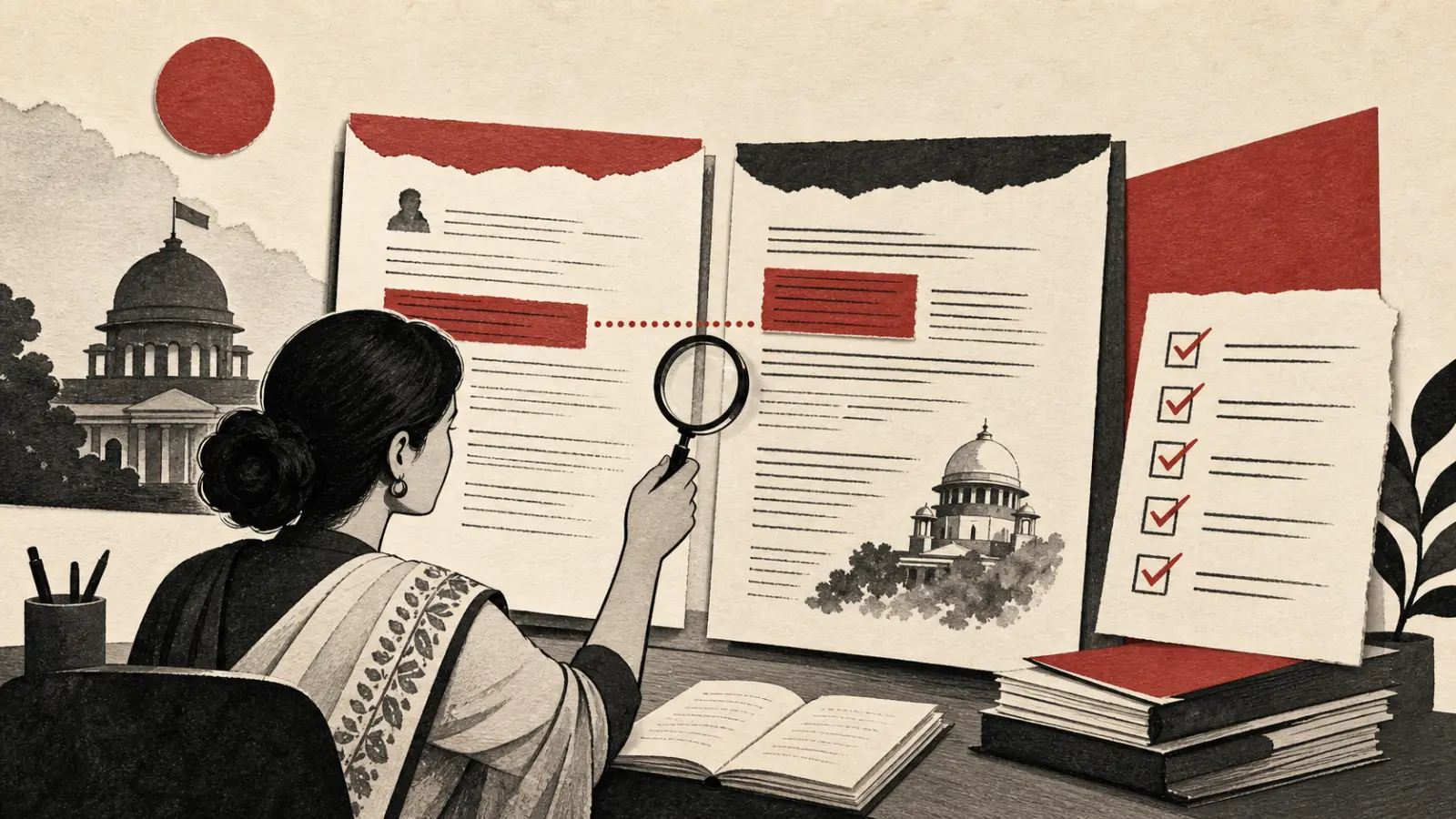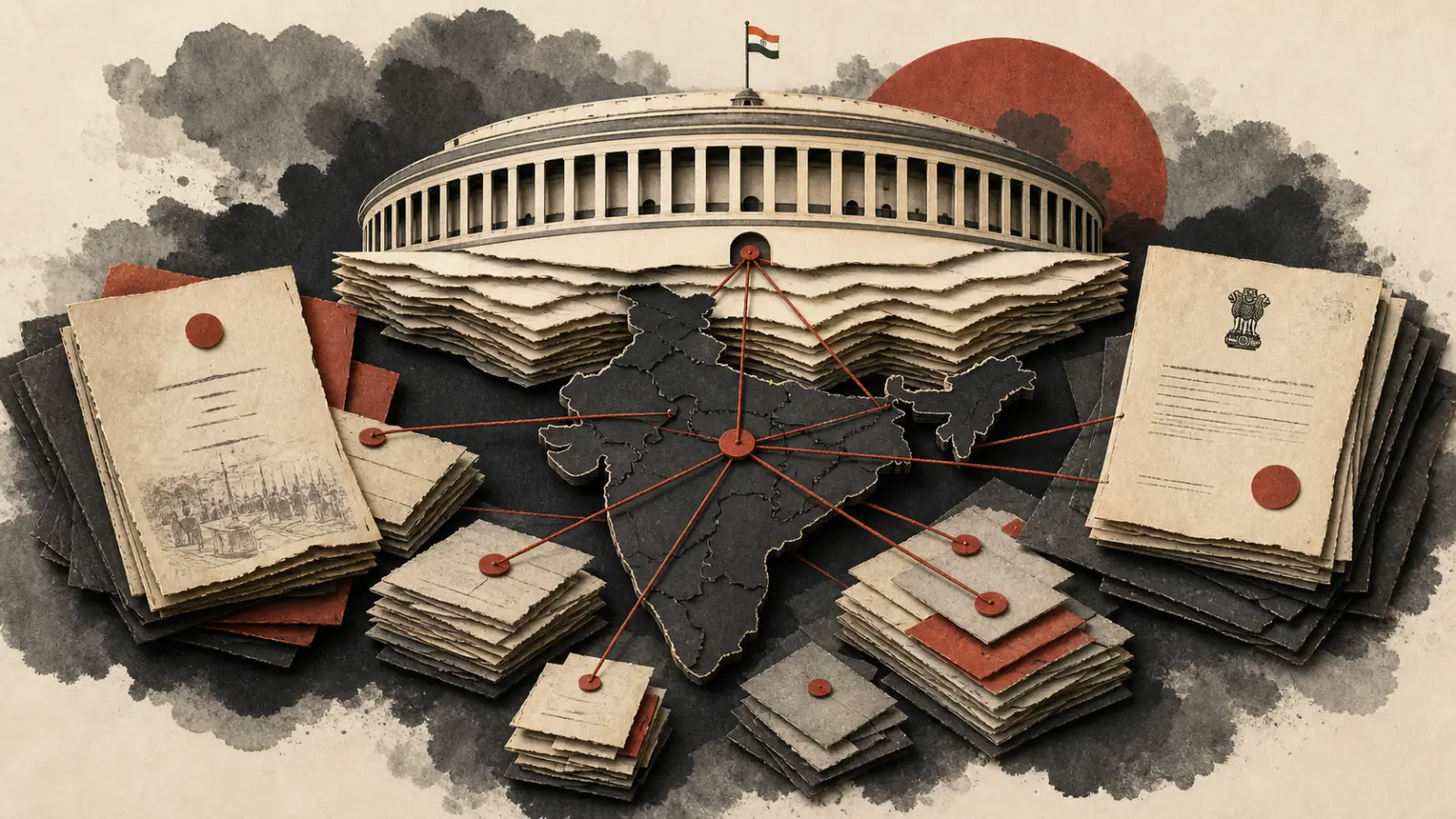
Legislative history research in India begins with a deceptively simple question: how did the words now found in a statute reach their present form? The answer may run through a Bill, its Statement of Objects and Reasons, parliamentary debates, committee reports, amendments moved in each House, the enacted text, later amending Acts, and commencement notifications. These records do different jobs. They should not be blended into a single account of what “Parliament intended.”
A sound research file connects each historical claim to the document that proves it. It also distinguishes the history of enactment from the legal effect of the enacted words. The workflow below is meant for legal researchers, policy teams, and lawyers preparing an internal note. Whether or how a court may use a particular legislative record is a separate legal question that requires authority-specific analysis.
What question should a legislative history search answer?
Start with the statutory text and a narrow question. “Find the history of this Act” is too broad to control the search. A better instruction identifies the provision, the wording in dispute, the relevant date, and the point that the history might clarify.
Common research questions include:
- When was a phrase introduced, removed, or replaced?
- Did the provision appear in the Bill as introduced, or was it added during parliamentary consideration?
- What mischief or policy problem did the sponsoring ministry describe?
- Did a standing or select committee propose different language?
- Which amendment created the version that applied on a specified date?
- Was enactment followed by a separate commencement notification?
Copy the exact current provision into the research brief, along with its section number, definitions it relies on, provisos, explanations, and relevant schedule entries. Then write down the historical proposition you are testing. This prevents a striking sentence from a debate or explanatory document from displacing the actual question.
For a broader method covering issue framing and authority verification, use the legal research workflow for India. A team can also configure repeatable research workflows for source capture and review.
Which official sources form the legislative history source map?
No single portal necessarily contains every stage in a convenient sequence. Build a source map before searching. Three official repositories provide the main anchors:
| Research stage | Official starting point | What to capture |
|---|---|---|
| Consolidated Act and amendment references | India Code | Long title, enactment date, sections, schedules, footnotes, amending Acts, rules, and available notifications |
| Bills and parliamentary business | Digital Sansad | Bill text, introduction details, legislative business, questions, debates, committee material, and House-specific records where available |
| Authoritative publication record | eGazette of India | Enacted Acts, notifications, rules, corrigenda, commencement instruments, and issue publication details |
Treat this as a routing table, not a guarantee that every historical document will be indexed under the same title. Statute titles can change between a Bill and an Act. Older records may use a department name or spelling that has since changed. Search by title fragments, Bill or Act number, year, ministry, distinctive phrases, and dates learned from another official record.
Save the document itself when permitted, its stable URL, the portal name, retrieval date, and publication metadata. A link without a document description is hard to audit later. Gotham's legal corpus may support discovery across legal materials, but the research note should retain the official source trail used for verification.
How do you trace an Act back to the Bill as introduced?
Begin on India Code with the Act number, year, short title, enactment date, and the provision under review. Read the long title and arrangement of sections. Note any footnotes that identify substitutions, insertions, or omissions. Those references become leads for later amending Acts.
Next, search Digital Sansad for the corresponding Bill. Confirm that the Bill matches the enacted statute through its title, year, Bill number, sponsoring ministry, and subject matter. Do not rely on a shared or similar title alone. Preserve the Bill as introduced and its Statement of Objects and Reasons as separate records.
Compare the introduced Bill with the enacted Act provision by provision. A redline is helpful, but it needs a human-readable change log. Record changes such as:
| Provision | Bill as introduced | Act as enacted | Point to investigate |
|---|---|---|---|
| Section or clause number | Exact wording and page | Exact wording and source | Whether wording changed and at which stage |
| Definition | Included, omitted, or qualified | Final definition | Effect on connected provisions |
| Proviso or explanation | Original position | Final position | Source of insertion or deletion |
| Commencement clause | Proposed mechanism | Enacted mechanism | Whether a later notification was required |
The Statement of Objects and Reasons can help identify the stated policy setting of the Bill. It is not the enacted provision. Quote it accurately, label it by document type, and avoid presenting its language as though it appeared in the Act.
How should you search parliamentary debates and committee records?
Use the dates of introduction, consideration, and passage to narrow the parliamentary search. Look in the records of both Houses where relevant. Search the Bill title, the minister's name or ministry, clause numbers, and unusual phrases from the provision. If optical character recognition is imperfect, shorter title fragments and neighboring business items may work better than an exact quotation.
Read enough of the debate to identify the speaker, House, date, stage of proceedings, clause under discussion, and whether the passage records a proposal, objection, response, or decision. A member's speech and a sponsoring minister's response are different records. Neither should be anonymously summarized as “Parliament said.”
Committee material needs the same care. Establish which body produced the report, its mandate, date, report number, evidence considered, and recommendation. Then compare the recommendation with the Bill text and final Act. A recommendation may have been accepted in part, expressed through different drafting, or not adopted.
For every useful passage, retain a pinpoint page or paragraph when the document supplies one. If the scan has printed and PDF page numbers, record both. The case-law citation verification checklist provides a compatible method for checking authorities that discuss the statute or its history.
How do you trace amendments and the law in force on an earlier date?
Current consolidated text is the endpoint, not the full history. Use India Code footnotes and references to list each Act that affected the provision. Open every relevant amending Act and identify the operative language, commencement rule, and any transitional or saving clause. Repeat the exercise when an amending provision was itself later changed.
Then check eGazette for publication of the amending Act and for notifications that brought provisions into force. The date of assent, Gazette publication, and legal commencement may not answer the same question. Record each date under its proper label instead of selecting one as “the effective date” without examining the instrument.
Build a version table:
| Period | Text in force | Change instrument | Commencement evidence | Notes |
|---|---|---|---|---|
| Starting version | Provision as enacted | Principal Act | Act or appointed-date notification | Territorial or subject limits |
| First change | Text after amendment | Amending Act and section | Gazette notification if required | Savings or transition |
| Later change | Revised text | Later amending Act | Applicable commencement record | Connected rule changes |
Do not silently reconstruct missing wording. If an official scan, schedule, or notification cannot be located, state the gap and the searches performed. An unofficial copy can provide a lead, but it should not be relabelled as the official record.
What should a reviewable legislative history note contain?
Write the note around documents and dates, not a narrative assembled from memory. A compact source log should include the item title, document type, issuing body, date, identifier, URL, pinpoint, proposition supported, and retrieval date. Keep quotations short enough to preserve context around the selected passage.
A useful structure is:
- Research question, relevant provision, material date, and cut-off date.
- Current or target statutory text, with the official source.
- Chronology from introduction through enactment and commencement.
- Clause-by-clause changes relevant to the question.
- Committee and debate material, attributed to the correct speaker or body.
- Amendment and commencement history through the target date.
- Judicial treatment of the legislative material, if within scope.
- Gaps, conflicting records, limits, and items requiring lawyer review.
If AI assists with document discovery, transcription, or comparison, check every extracted date, quotation, and clause against the source image or official text. The guide to AI legal research in India explains why a generated citation or summary is a lead rather than verification. Teams assessing a wider implementation can review Gotham's security controls and decide what material may enter an approved system.
When is the legislative history file ready for review?
Run a final check against the question you began with:
- The Act number, year, provision, relevant date, and research cut-off are recorded.
- The current or target text was checked on India Code or another applicable official source.
- The Bill as introduced was matched to the enacted Act by more than its title.
- The Statement of Objects and Reasons is labelled separately from enacted text.
- Material changes between the Bill and Act are listed with source references.
- Debate passages identify the speaker, House, date, stage, and pinpoint.
- Committee recommendations are compared with the final statutory wording.
- Every relevant amending Act has been traced to its operative provision.
- Gazette publication, assent, and commencement dates are not conflated.
- Notifications, rules, corrigenda, savings, and transitional provisions were checked where relevant.
- Quotations and transcriptions were compared with the official document.
- Missing records and interpretive limits are stated rather than guessed.
- A qualified reviewer has assessed any work intended for advice, filing, or external reliance.
The result should let a second researcher reproduce the route from the present provision to its earlier forms. It should also show which statements come from enacted law, which come from explanatory or parliamentary records, and where the file remains incomplete.
Legislative history research is often slow because the record is distributed across formats and institutions. A source map, version table, and change log make that work visible and reviewable. If your team wants to build those checks into its own research process, contact Gotham to discuss a verification-first workflow.