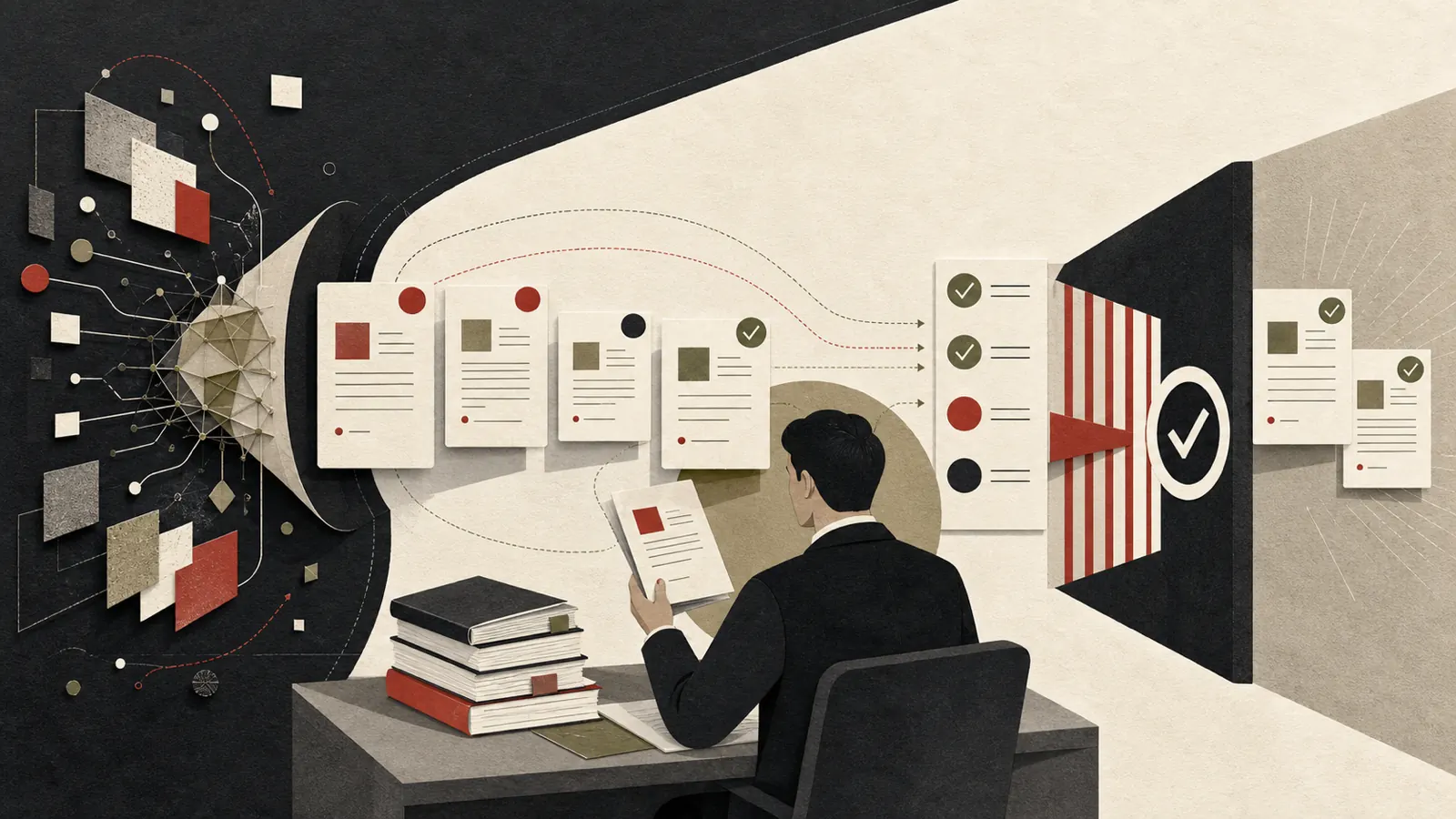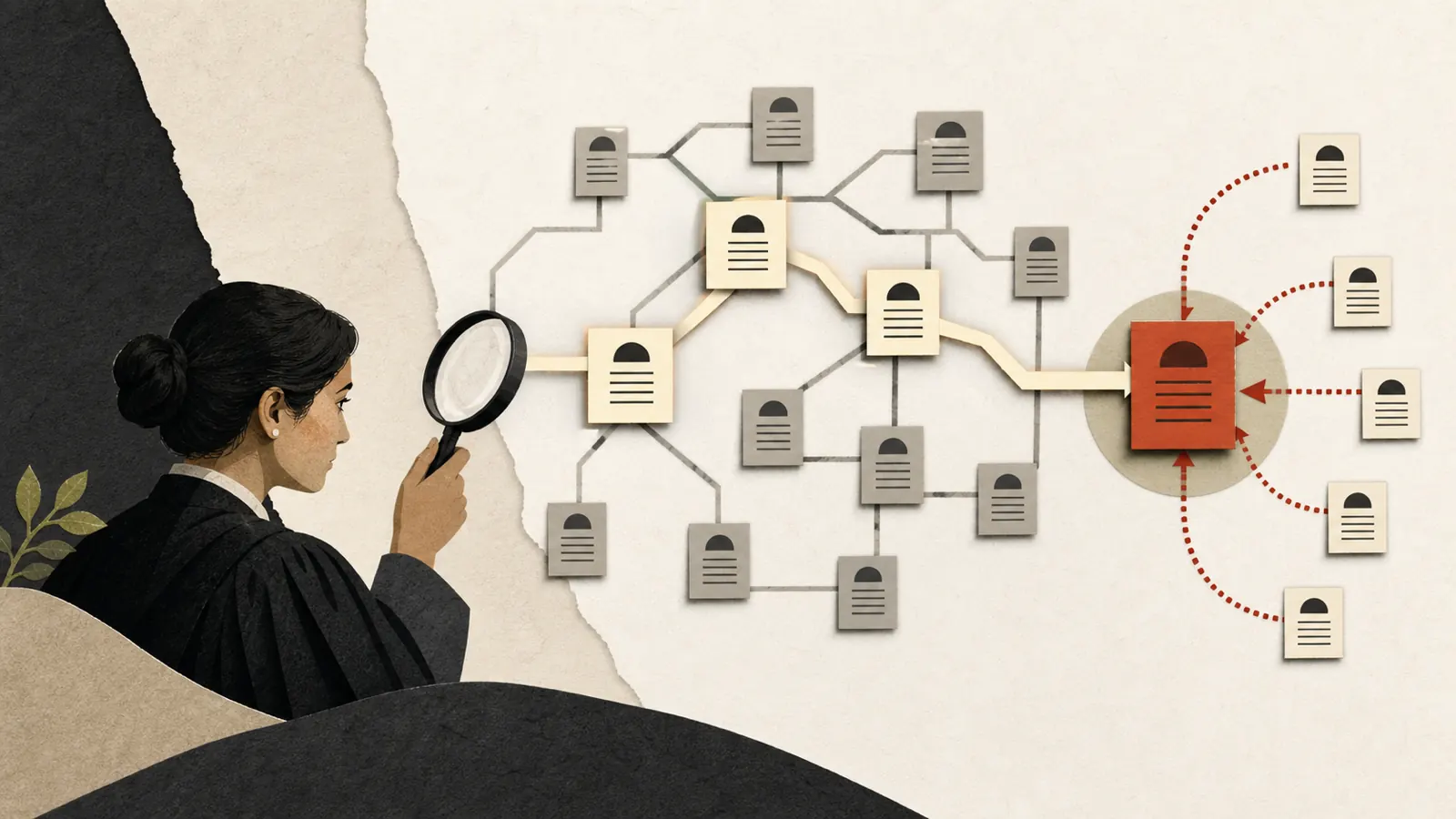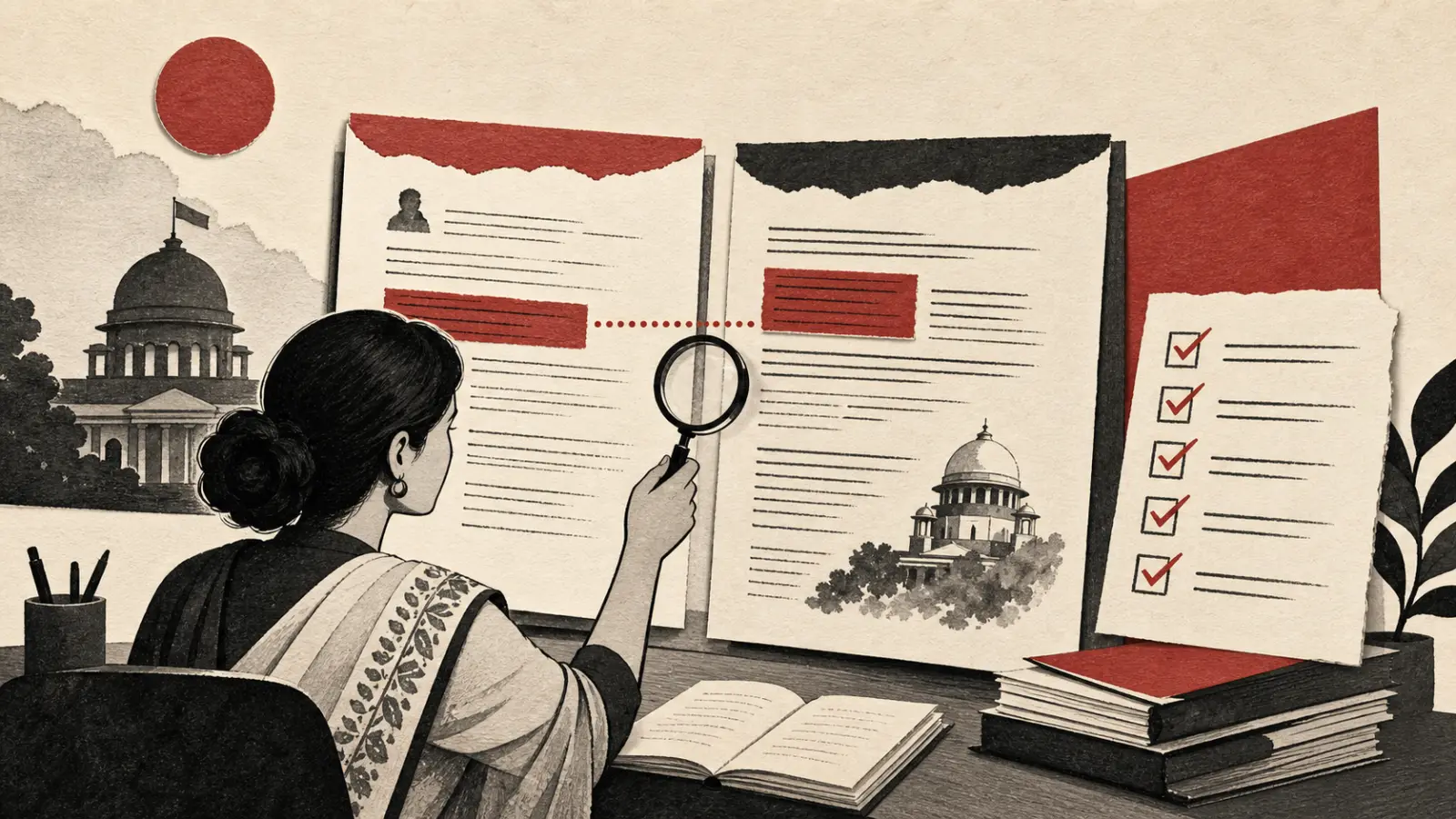
Case law citation verification means confirming that a judgment exists, identifying the correct decision, checking that the cited passage supports the stated proposition, and reviewing what later courts have done with it. For Indian legal teams, the safest routine starts with an official court source, reads the judgment in context, checks subsequent treatment, and records enough detail for another reviewer to repeat the work.
A citation that looks conventional can still be wrong. The party name may be misspelled, a reporter reference may point to another case, a paragraph may not contain the quoted words, or an interim order may be presented as a final decision. Verification therefore belongs at proposition level, not merely at the level of a case name.
What if you cannot verify cited cases quickly before filing?
Do not rely on an unverified case in the filing. Search the Supreme Court Reports or the relevant court record using the neutral citation, case number, parties, and decision date. If you find the judgment, check the exact passage and later treatment. If you cannot resolve the citation before the filing cut-off, flag it to the responsible lawyer, remove or rewrite the unsupported proposition, and record the unresolved search in the review log. The lawyer must decide the final submission and any procedural response needed for that matter.
Do not replace a missing citation with a similar-looking result. A different order in the same proceeding may not support the claim. The failure table later in this guide sets out what to do for a missing case, wrong passage, adverse treatment, or unavailable portal.
Gotham's AI legal research workflow is designed to keep the question, candidate authorities, and source-linked propositions together for lawyer verification. If citations are holding up a filing workflow, discuss a representative research task with Gotham and define the source and review standard before testing it.
Is a citation-verified answer different from a case database result?
Yes. A database result helps locate a possible authority; a citation-verified answer connects a specific proposition to the correct judgment, pinpoint passage, document type, outcome, and treatment checked as of a stated date. A case may exist while the quoted paragraph does not, or the paragraph may report a party's argument rather than the court's conclusion. Keep the source PDF and verification log so another reviewer can reproduce the answer.
What should you verify before relying on an Indian judgment?
Use two passes. The first confirms identity and source. The second tests legal relevance and treatment. Do not let a successful search result substitute for either pass.
| Check | What to compare | Preferred evidence | Record in the file |
|---|---|---|---|
| Court and bench | Court, bench location, coram, and jurisdiction | Official judgment or order PDF | Court, judge names, decision date |
| Case identity | Party names, case type, number, year, and connected matters | Official court record and PDF title page | Exact cause title and case identifiers |
| Citation | Neutral citation, SCR citation, reporter citation, or CNR | Official portal plus the cited reporter where relevant | Every confirmed citation format |
| Document type | Judgment, reportable judgment, order, interim order, or disposal order | Heading, operative portion, and case history | Document type and status |
| Proposition | Exact words relied on and their context | Majority or controlling opinion | Pinpoint paragraph or page |
| Outcome | Relief granted or refused and operative directions | Final paragraphs and signed order | Short outcome note |
| Authority | Whether binding, persuasive, distinguished, or otherwise limited | Court hierarchy, bench strength, later decisions | Authority assessment with reason |
| Currency | Appeal, review, recall, overruling, statutory amendment, or later treatment | Later judgments and official case status | Search date and treatment note |
The Supreme Court Reports search supports searches by keywords, SCR reference, and neutral citation. For High Court and district court matters, eCourts High Court Services allows searches by case details and provides an orders and judgments route. The district court eCourts case-status service can help reconcile case numbers, parties, status, and history.
How do you confirm that you have found the right case?
Start with the most discriminating identifier available. A neutral citation or exact case number is better than party names alone. Indian party names may appear with initials, abbreviations, spelling variants, changed corporate names, or multiple connected proceedings.
Open the official PDF and compare at least four identity fields: court, decision date, coram, and case number. Then match the parties and any connected case references. If the document was found through a third-party database, repeat the identity check against the relevant court portal or SCR record.
Be alert to documents from different stages of the same proceeding. A listing order, interim direction, review decision, and final judgment may share parties but answer different questions. Read the document heading and operative paragraphs. Check the case history when the distinction is not clear from the PDF.
The team's legal research workflow should make this source trail visible. A saved search result without the judgment, search date, and identifier is difficult to audit later.
Does the judgment actually support the cited proposition?
Find the quoted phrase or the paragraph number in the judgment. Read the entire paragraph, then the surrounding reasoning and the operative conclusion. A sentence can describe a party's submission, quote a precedent that the court later rejects, or state a factual assumption rather than the court's holding.
Ask five questions about every material proposition:
- Is this the court's own conclusion, or a submission, quotation, dissent, or factual recital?
- What issue was the court deciding at that point?
- Were there conditions, exceptions, or limiting facts nearby?
- Does the operative outcome agree with the proposed characterisation?
- If there are multiple opinions, which reasoning controls?
Quote only as much as needed and preserve the pinpoint. Where paragraph numbering differs between the official PDF and a reporter, record both locations or specify which version was used. For scanned judgments, compare optical character recognition text against the page image before copying names, dates, amounts, or quotations.
This is also the core citation test in Gotham's guide to evaluating legal AI accuracy. A real citation does not cure a proposition that the source never supports.
Apply an AI-citation stop rule to the whole work product
The Supreme Court of India's official summary of Pooja Ramesh Singh v Jammu and Kashmir Bank Ltd, 2026 INSC 668 records that six citations relied upon below were either non-existent or attached to non-existent paragraphs. The Court set aside the decisions and directed fresh disposal. The summary also warns that it is explanatory and not part of the Court's reasons, so the judgment itself remains the controlling source.
That example supports a stronger control than checking only the citation that first looks suspicious. If one AI-assisted authority fails, quarantine the full research output and run this sequence:
- Extract every cited case, statute, quotation, and pinpoint from the work product.
- Verify existence and identity against the relevant official source.
- Verify each quoted or paraphrased proposition in the actual judgment.
- Check the procedural posture, outcome, later treatment, and current statutory context.
- Rebuild the analysis from the verified sources rather than patching isolated citations.
- Record which claims changed, who reviewed them, and the final research cut-off.
The stop rule matters because one fabricated citation is evidence that the generation and review process failed. It is not evidence that every other citation is false, but it removes any basis for trusting the unchecked remainder.
How should later treatment and legal currency be checked?
Search the exact case name, neutral citation, reporter citation, and distinctive language from the holding. Look for appeals, review or curative proceedings, recall orders, larger-bench decisions, and later cases that follow, explain, distinguish, doubt, or overrule the proposition.
Bench strength and court hierarchy matter, but they do not replace a treatment search. A later judgment may narrow an apparently broad sentence to its facts. A statutory amendment may also change the premise on which the case was decided. Verify the relevant provision on India Code and note the version or effective date used. India Code's official page for the Bharatiya Sakshya Adhiniyam, 2023, for example, identifies its enactment and enforcement information and provides the statutory text.
Record the research cut-off date. "Good law" without a jurisdiction, proposition, and date is too broad to be useful. If treatment cannot be resolved confidently, state the uncertainty and escalate it rather than compressing it into a green tick.
What is a practical case law citation verification checklist?
The reviewer can use the following sequence for a pleading, opinion, note, or AI-assisted draft.
- Copy each material proposition and its citation into a verification log.
- Locate the judgment on the relevant official court portal or SCR search.
- Match court, date, coram, parties, case number, and connected proceedings.
- Save or link the official document and record the access date.
- Confirm whether it is a judgment, final order, interim order, or another document.
- Find the quoted text or supporting passage in the source.
- Read the surrounding paragraphs, issues, separate opinions, and operative result.
- Note the pinpoint paragraph or page and the version used.
- Assess court hierarchy, bench strength, jurisdiction, and the role of the cited passage.
- Search later treatment using the case name and each known citation.
- Check whether the relevant statutory text has changed since the decision.
- Correct the draft, add a limitation, or escalate any unresolved discrepancy.
- Have a second reviewer check authorities that determine the advice, pleading, or requested relief.
Keep the log beside the work product. A simple table with proposition, source, pinpoint, treatment, verifier, and date is usually enough. Teams evaluating software can also compare this process with the broader controls in AI legal research in India.
What should happen when a citation fails verification?
Do not silently replace a failed authority and leave the surrounding analysis untouched. The failure may affect several propositions or reveal that the conclusion was built on a false premise.
| Failure | Immediate action | Follow-up |
|---|---|---|
| Case cannot be found | Stop reliance and retry identifiers on official portals | Ask the author for the source; mark as unverified if unresolved |
| Wrong case or document | Remove the citation from that proposition | Reassess every claim derived from it |
| Passage does not support claim | Correct or delete the proposition | Search for valid authority without reverse-engineering support |
| Quotation differs | Compare official PDF with reporter and scan image | Correct text and pinpoint; disclose any material discrepancy |
| Later adverse treatment | Pause use of the proposition | Analyse the later decision and escalate to the responsible lawyer |
| Statute has changed | Identify the relevant temporal version | Rewrite the analysis for the applicable date and facts |
| Portal is unavailable | Record the outage and use another official route | Recheck before filing, publication, or delivery |
| AI-generated citation is suspect | Quarantine the output and verify all linked claims | Review the rest of the output for the same failure pattern |
Give failures an owner and a deadline tied to the work product. High-consequence authorities should not remain in a generic "to check" list at filing or delivery. If an unresolved point must be mentioned internally, label it plainly and prevent it from flowing into a final document by mistake.
How can teams make citation checks repeatable without turning them into box-ticking?
Set a minimum evidence standard and vary review depth by consequence. A background research note may use sampling for peripheral references, while a dispositive proposition in a pleading calls for full source and treatment review. The responsible lawyer decides the risk tier.
Templates help when they capture evidence rather than confidence. Require a source link, pinpoint, search date, and treatment note. Preserve who verified the citation and which document version they used. For sensitive matters, follow the organisation's access and retention rules; Gotham's security overview lists questions teams can raise when legal material moves through software.
Automation can collect citations, flag missing pinpoints, and route exceptions. It cannot decide, without qualified review, whether a passage is binding, distinguishable, or sufficient for a particular submission. Use technology to shorten retrieval and make the record easier to inspect. Keep legal judgment with the legal team.
If your team is redesigning research intake, review gates, and exception handling, talk to Gotham about a verification-first workflow. Bring one representative research task and the approval path it follows today. That makes the discussion concrete without exposing live matter material unnecessarily.
This checklist is general information, not legal advice. Court requirements, citation conventions, and the appropriate level of review vary by forum and matter. A qualified lawyer should review authorities and submissions for the specific case.