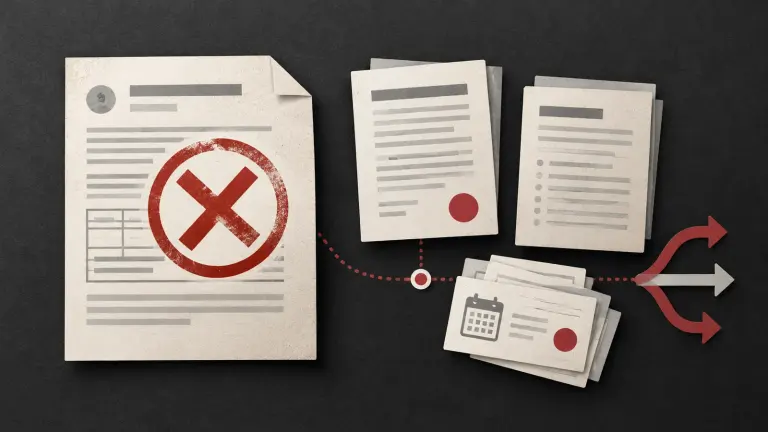
If your employer deducted tax from your salary but has not given you the salary TDS certificate, ask payroll or HR in writing for the certificate that applies to the relevant period. Then compare it with your salary records and the Income Tax Department’s tax-credit records. A missing certificate alone does not establish whether tax was deducted, deposited, or reported correctly. Check each step before claiming a credit or deciding what to report in your return.
First identify the period and the document
The law and certificate form used for salary TDS can depend on when the salary was paid. The year in which that salary is assessable for your return is a separate question. Do not infer your return year from the date on a payslip or certificate alone.
| Date salary was paid for TDS purposes | TDS rule and certificate to ask about | Ordinary certificate due date |
|---|---|---|
| On or before 31 March 2026 | Section 192 of the Income-tax Act, 1961; Form 16 under the 1961 Act and Rule 31 of the Income-tax Rules, 1962 | By 15 June of the following financial year under Rule 31. For TDS in FY 2025–26, that date was 15 June 2026; check whether an official extension applies. |
| On or after 1 April 2026 | Section 392 of the Income-tax Act, 2025; Form 130 for section 392 other than subsection (7). Section 392(7), for TDS on a taxable accumulated provident-fund balance, is separately listed under Form 131. See Rule 215 and the Department’s Form 130 FAQs. | Form 130 is due by 15 June of the financial year immediately following the Tax Year, so by 15 June 2027 for TY 2026–27. Rule 215 gives a different timetable for Form 131. |
The Department’s transition guidance says the date salary is paid determines which Act applies to salary TDS. For example, March 2026 salary paid on 31 March is under the old Act, while salary paid on 30 April is under the new Act. The Department’s salary guide separately says salary is generally chargeable in the year it is due or received, whichever is earlier. TDS credit follows the year in which the income is assessable, not simply the date the employer deposits tax. So March salary due before year end but paid in April may have a new-Act TDS process while its return-year treatment needs separate reconciliation. Ask payroll to confirm the Act, form, quarter, and year reported. Have the return-year treatment checked against the salary timing rule by a qualified tax professional if needed.
For income assessable for FY 2025–26, the return is filed for Assessment Year (AY) 2026–27 under the 1961 Act. TY 2026–27 is a distinct period under the 2025 Act. The Department says the AY 2026–27 statement is AIS, while the TY 2026–27 statement is Form 168. Use the statement for the year in which the income is assessable and reconcile any cross-year salary payment with payroll.
If you worked for more than one employer during a year, the rules distinguish the certificate parts. Under Rule 31, each employer issues Form 16 Part A for its employment period; Part B may be issued by each employer or, at your option, by the last employer. Under Rule 215, each employer issues Form 130 Parts A and B for its employment period; Part C may be issued by each employer or, at your option, by the last employer. Keep every part and reconcile the combined figures.
Check whether a certificate should have been issued
Form 16 is the annual salary TDS certificate under section 192 of the 1961 Act. Under Rule 215, Form 130 is the annual certificate for salary TDS under section 392 of the 2025 Act other than subsection (7), along with one specified senior-citizen interest case. The Department says Form 130 is mandatory once tax has been deducted and deposited. It is generated after the employer’s quarterly TDS statement is filed and processed. Section 392(7) concerns TDS on a taxable accumulated provident-fund balance and is listed separately under Form 131, so do not treat every payment under section 392 as covered by Form 130. A certificate is evidence of reported salary and tax deducted or deposited; it is not a complete record of every part of your tax position.
If no tax was deducted from your salary, you may not have a salary TDS certificate to receive. Ask payroll to confirm in writing whether it deducted any tax for the period and, if not, request the salary and withholding statement you need for your own records. Do not infer from a missing certificate alone that no tax was withheld.
Request it in writing
Send a concise request to payroll or HR, copying the employer’s finance or tax contact if you have one. State:
- your full name, employee or payroll ID, and PAN. Share PAN only through the employer’s established secure channel;
- the employer entity and the exact period you worked there;
- whether you need Form 16 for salary paid through 31 March 2026 or Form 130 for salary TDS under section 392, other than subsection (7), for TY 2026–27;
- whether the whole certificate or a particular part is missing, and whether you need a corrected certificate; and
- the date by which you need an update and a way to contact you.
Ask the employer to confirm whether it filed the relevant quarterly salary TDS statement, whether your PAN and salary/TDS amounts were reported correctly, and whether a correction statement is needed. Keep your request, delivery evidence, ticket number, and response. If you have left the employer, use the former employer’s official payroll, HR, or finance contact and give your employment dates. Leaving the job does not remove the need to reconcile tax deducted for that period.
There is a practical reason to ask about the underlying filing, not just the PDF. The Department’s Form 130 FAQs say the certificate is generated after the quarterly statement is processed. The Department’s older Form 16 guidance likewise links the certificate information to the employer’s salary TDS statement. If information is wrong or missing from the statement, ask the employer to correct the filing and then issue a corrected certificate. A spreadsheet or salary slip is useful evidence for your records but is not a substitute for the employer-issued TDS certificate.
Reconcile the certificate with your tax records
Sign in to the official e-Filing portal and check the records for the year in which the income is assessable. For AY 2026–27, check AIS and Form 26AS. From AY 2023–24 onward, Form 26AS displays TDS/TCS information, while AIS carries broader information and lets you submit feedback on items shown. For TY 2026–27, the Department says to check Form 168. These are year-specific records: do not use AY 2026–27 AIS or Form 26AS as the record for TY 2026–27. Neither a certificate nor a portal statement replaces your payslips, bank credits, and other income records.
Compare, as relevant:
- Identity and period: your name and PAN, employer name and TAN, and dates of employment.
- Salary: monthly payslips, annual payroll statement, final settlement, and salary credited to your bank account. Note any bonus, perquisite, reimbursement, or arrears separately and ask payroll how it treated them.
- Tax deducted: for AY 2026–27, compare the tax shown on payslips and Form 16 with Form 26AS and AIS; for TY 2026–27, use the relevant Form 130 and Form 168 records. Check that the employer, period, and assessable year align. If salary was due in one tax year but paid in another, ask payroll to reconcile the TDS section, certificate, quarterly statement, and tax-credit year.
- Other income and tax: interest or other income, advance or self-assessment tax, and any prior-employer salary you disclosed to the current employer. A salary TDS certificate will not necessarily cover these items.
If an item in AIS looks wrong, use AIS feedback where appropriate and save the acknowledgement. Feedback records your response; it does not itself amend the employer’s TDS statement or guarantee that a TDS credit will appear. For salary TDS that is absent or misreported, tell the employer and ask it to verify its filing and deposit details and submit a correction if needed. Check the portal again after the correction has been processed.
If the employer does not respond or the records still disagree
- Follow up through a traceable channel. Refer to your first request and ask for a written status, the quarter or quarters involved, and the expected date for the certificate or correction. Keep the tone factual and retain the reply.
- Escalate within the employer. If payroll does not resolve it, send the same evidence to HR leadership, finance, or the employer’s published grievance contact. Ask specifically whether tax was deducted, deposited, and included against your PAN in the salary TDS statement.
- Use official portal help for portal problems. If you cannot view or download your own tax records, raise an e-Filing portal grievance through the Department’s official channel. A portal-access complaint does not correct the employer’s source filing; continue to ask the employer to correct any filing error.
- Get qualified tax help if the discrepancy affects a return or deadline. A chartered accountant or other qualified Indian tax professional can review the payslips, certificate, year-specific Form 26AS/AIS or Form 168, and employer correspondence, and advise on return treatment and escalation. Do not assume a payslip alone settles your tax-credit position, and do not automatically forgo a credit just because portal records appear late or incomplete. Ask the employer to correct its reporting and get advice on the evidence before filing.
Avoid sending PAN, bank statements, payslips, or a full tax return to an unverified email address or person claiming they can “release” a refund or fix your certificate. Use employer and Department channels that you reach independently from their official websites.
Can you file without the certificate?
The Department’s Form 130 FAQs say Form 130 need not be attached to the return and should be kept for records. Its ITR-1 FAQ says no documents are attached when filing ITR-1 and tells those taxpayers to check Form 26AS/AIS and reconcile discrepancies with the employer or deductor. That ITR-1 instruction should not be assumed to cover every return form. Not attaching a certificate does not mean you can ignore salary or tax paid, or that every pre-filled figure is correct. Follow the current instructions for the ITR form that applies to you, preserve supporting records, and seek professional help if a material TDS credit is missing or figures conflict.
Do not wait for the certificate without checking the return’s actual due date for your taxpayer category and year. Deadlines and extensions can change. Confirm the applicable date on the official Income Tax Department portal; this guide does not state a filing deadline.
Quick checklist
- Match the certificate to the tax year and payment: Form 16 for salary under the old Act through 31 March 2026; Form 130 for TY 2026–27 salary TDS under section 392 other than subsection (7). Section 392(7) is a separate Form 131 case.
- Ask the employer in writing for the missing certificate, and ask whether the quarterly statement was filed and processed.
- Compare salary and withholding against payslips and bank credits; use Form 26AS/AIS for AY 2026–27 or Form 168 for TY 2026–27, as applicable.
- Ask the employer to correct a wrong or missing TDS statement; keep the correction request and evidence.
- Save the certificate, portal statements, feedback acknowledgement, payslips, and correspondence with your tax records.
- Verify current return instructions and due dates on the official portal; obtain qualified tax advice for unresolved credit or income differences.
Related employment records
A missing tax certificate is separate from a missing employment-exit document. See the relieving letter and employment proof guide, the unpaid wages after resignation guide, the guide to salary withheld over a new NDA, and the provident fund records guide for those distinct issues.
Official sources
Official sources checked on 30 October 2026. Laws, rules, forms, portal processes, and deadlines can change. Confirm the live official text and current instructions for the period that applies to you.
- Income-tax Rules, 1962, Rule 31, including the Form 16 issue date and multiple-employer certificate parts.
- Income-tax Act, 1961, section 203, on the deductor’s TDS certificate duty; and Notification No. 09/2019 on Form 16 Part B for the older certificate structure and processing guidance.
- Income-tax Act, 2025, as amended by the Finance Act, 2026 and Income-tax Rules, 2026, Rule 215; the notified Rules PDF includes the Form 130 and Form 131 table entries.
- Income Tax Department Form 130 FAQs, covering the form’s scope, quarterly statement processing, issue date, corrections, return attachment, and multiple employers.
- Income Tax Department FAQs on Interplay and Transition, on payment-date transition, year distinctions, tax-credit statements, and mismatches.
- Income Tax Returns help, Income from Salary guide, AIS FAQs, and TDS Compliance FAQs for return-year selection, salary timing, AIS, and TDS transition guidance.
- ITR-1 FAQ on document attachment and reconciliation guidance specific to that return form.
This article is general information about Indian salary TDS and is not tax, legal, or accounting advice. The Income-tax Acts, rules, forms, and portal guidance may change. Check current official instructions for the relevant tax year. Cross-year salary, missing TDS credit, return eligibility, and deadlines should be reviewed by a qualified Indian tax professional.
How Gotham researches and reviews field guides