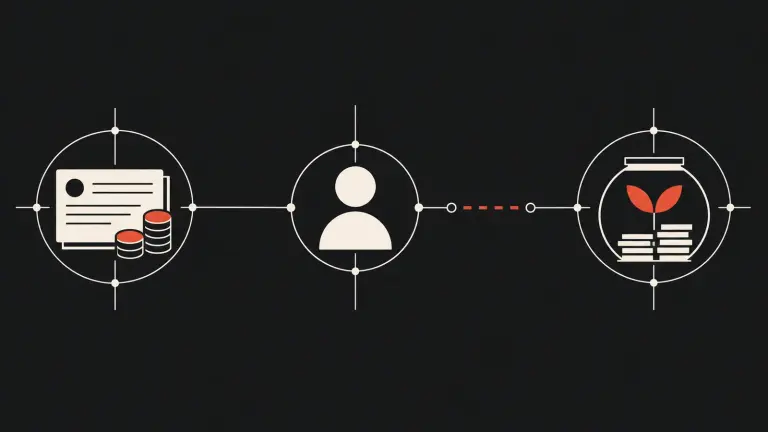
A PF deduction on your payslip and a contribution entry in your EPFO passbook are different records. If a wage month appears to be missing, first match the employer, UAN, member ID and month. Then compare the payslip with the EPFO account or, where applicable, a provident-fund trust statement. Ask payroll for a written reconciliation before deciding what the gap means.
A blank passbook entry does not by itself establish whether a contribution was not remitted, was linked to a different member record, is held in an exempted trust account, or has not appeared in the portal yet. The aim is to identify which record is missing and obtain an answer for that wage month.
Compare the records for the same wage month
Make a month-by-month list. Record your joining date, the wage month, the PF amount shown on the payslip, the date salary was paid, and what the EPFO or trust account shows. Keep the original payslips and relevant bank entries. Do not infer the employer contribution or the applicable wage base from the employee deduction alone.
| Record | What it can help you check | What it does not prove by itself |
|---|---|---|
| Payslip | Whether payroll recorded an employee deduction for that period | That the amount was remitted or credited to the right account |
| UAN and member ID | Whether you are viewing the record for the right employment | That every wage month or employer is linked correctly |
| EPFO passbook | Which contribution entries appear in the member-facing account | Why an entry is blank or delayed |
| Employer or trust statement | Which figures or account entries the administrator reports | That the establishment's coverage, exemption or figures are legally correct |
Treat the table as a way to organise evidence, not as a legal test or a finding of non-compliance.
Check the employer's legal name and establishment code against your records. If you have worked for more than one establishment, confirm that you are looking at the member ID for the right job and the wage months in question. EPFO's member services portal and passbook and claim-status portal provide member-facing records. The public EPFO establishment search can help identify establishment details. A search result does not decide an individual employee's membership or prove that a particular contribution was credited.
If a portal is unavailable, shows an older month or does not match another record, save the date and the screen or error. Check again when the service is available and ask payroll for the matching monthly record. A portal issue and a failure to remit are different possibilities; one does not prove the other.
Ask payroll for a written reconciliation
Send HR or payroll a short request that identifies the wage months. Ask them to confirm:
- the establishment name and code, your UAN and the member ID used for each month;
- whether the establishment remits contributions to EPFO or administers an exempted provident-fund trust;
- the wage months reported and the employee and employer figures shown in the account or return; and
- how to obtain the account statement or remittance reference for each month that does not match.
Keep the reply and any statement or reference number. Compare a payroll explanation with your payslip and member or trust account. A deduction entry, reported return, remittance and posted account credit are distinct pieces of evidence.
Check whether a trust administers the account
Some establishments maintain members' provident-fund accounts through a trust under an applicable exemption. Ask for the trust administrator's contact, a statement for the wage months in question and the exemption details. A trust account may use a different statement or grievance contact from the standard EPFO passbook.
Do not assume the account is missing solely because the EPFO passbook does not show it. An employer's description of a fund as “trust managed” also does not, by itself, establish the exemption or show that a contribution reached your account. Ask the employer and trust to reconcile the records. The Social Security (Central) Rules, 2026 set requirements for exempted establishments and trust management. The applicable exemption order, records and any remedy depend on the facts; this guide does not determine whether an establishment is exempt or a trust owes a particular amount.
Use an official grievance route if the records remain unresolved
The EPFiGMS portal accepts grievances from members, pensioners, employers and others. It routes grievances to the concerned EPFO office and provides a registration number, status and reminder features. Use the category that accurately describes the issue. Include the months and identifiers needed to locate the account, attach only relevant records, and save the registration number and replies.
For a trust-administered account, first ask the trust for its statement and grievance contact. If the issue remains unresolved, ask EPFO which office or channel handles questions about the exemption or oversight. A portal acknowledgement confirms that a grievance was registered. It is not a decision that a violation occurred or that an amount is recoverable.
If the membership or coverage question cannot be resolved from the records, ask the employer for a written explanation and ask the relevant EPFO office how that question is decided. Rules can differ by wage period and membership history. Get advice from a qualified Indian employment or social-security lawyer before relying on a conclusion about eligibility, arrears, limitation, penalty or the proper forum.
What the ₹25,000 wage ceiling does and does not answer
The Central Government's S.O. 5109(E), published on 17 September 2026, sets a ₹25,000 monthly wage ceiling for Chapter III of the Code on Social Security, 2020 from the notification's publication date. It superseded S.O. 2702(E), subject to the notification's saving language for things done or omitted before supersession.
That figure does not establish that every person whose current pay is below ₹25,000 has an account, that everyone earning more is outside PF, or that a past missing entry has been corrected. Membership can also depend on establishment coverage, the rules for the wage period, prior membership, an applicable exclusion and any exemption. The Employees' Provident Funds Scheme, 2026 and its 4 August 2026 corrigendum must be read together for the relevant period. International Workers have separate provisions, so do not apply an ordinary wage-ceiling rule to an individual case without checking the applicable wording and obtaining qualified advice.
The ceiling alone also does not decide the contribution amount, treatment of a particular salary component or credit date for a month. Match the wage record to the rules that applied during that period.
Before you follow up
- List each wage month and note what the payslip, EPFO passbook or trust statement shows.
- Confirm the employer name, establishment code, UAN and member ID for the relevant job.
- Ask payroll or the fund administrator for a written reconciliation and a remittance or account reference for the unmatched month.
- If a trust administers the fund, request its statement and exemption details; do not infer either from its label.
- Save portal errors, grievance numbers, replies and the records you relied on. Share only information needed to identify the issue.
- Get qualified advice before relying on a conclusion about coverage, eligibility, arrears, limitation, penalties or forum.
Questions about employer PF records in India
My employer deducted PF, but it is missing from my passbook. Does that prove the employer did not pay it?
No. A payslip deduction and a passbook entry are different records. Check the wage month, member ID and employer details, then ask payroll for the reported contribution and remittance or account reference. A blank entry alone does not establish why it is missing.
What should I check first if a PF contribution is missing?
Match the wage month on your payslip to the correct UAN, member ID and establishment. Compare the EPFO passbook or trust statement, and ask payroll for a month-by-month reconciliation if they do not match.
What if my employer says the PF is managed by a trust?
Ask for the trust administrator's contact, the statement for the wage months in question and the exemption details. The label alone does not establish an applicable exemption or show that a contribution was credited to your account.
Can I file an EPFO grievance about a missing contribution?
EPFiGMS accepts grievances and provides a registration number and status features. Describe the months and identifiers needed to find the account, attach only relevant records, and keep the replies. Registration is not a decision that a violation occurred or an amount is recoverable.
Does the ₹25,000 wage ceiling decide whether I am a PF member?
No, not by itself. The ceiling is one part of the Chapter III framework. Establishment coverage, the rules for the wage period, prior membership, applicable exclusions and any exemption can also matter. Check the current scheme and get advice on your facts.
Keep personal information secure when raising the issue. EPFO warns members not to share their UAN password, OTP, Aadhaar, PAN or bank details in response to calls or messages, or to pay someone claiming to be EPFO. Use official portals and verified contact details.
The Code on Social Security, 2020 and central rules describe the national framework, but this is not a state-by-state guide to other employment claims or local remedies. The establishment's location and type can affect which office and records are relevant. Confirm current official instructions and seek qualified advice for your circumstances.
Related reading and workflows
If a salary payment itself is late, see the salary delay guide. Teams reviewing employment records in a transaction can read the employment due diligence guide. For organising a record review, explore Gotham workflows or contact Gotham.
Questions
My employer deducted PF, but it is missing from my passbook. Does that prove the employer did not pay it?
No. A payslip deduction and a passbook entry are different records. Check the wage month, member ID and employer details, then ask payroll for the reported contribution and remittance or account reference. A blank entry alone does not establish why it is missing.
What should I check first if a PF contribution is missing?
Match the wage month on your payslip to the correct UAN, member ID and establishment. Compare the EPFO passbook or trust statement, and ask payroll for a month-by-month reconciliation if they do not match.
What if my employer says the PF is managed by a trust?
Ask for the trust administrator's contact, the statement for the wage months in question and the exemption details. The label alone does not establish an applicable exemption or show that a contribution was credited to your account.
Can I file an EPFO grievance about a missing contribution?
EPFiGMS accepts grievances and provides a registration number and status features. Describe the months and identifiers needed to find the account, attach only relevant records, and keep the replies. Registration is not a decision that a violation occurred or an amount is recoverable.
Does the ₹25,000 wage ceiling decide whether I am a PF member?
No, not by itself. The ceiling is one part of the Chapter III framework. Establishment coverage, the rules for the wage period, prior membership, applicable exclusions and any exemption can also matter. Check the current scheme and get advice on your facts.
General information about the central EPF framework, not legal advice. Membership, contribution and grievance questions depend on the establishment, wage period, member history, applicable scheme, exemption and facts. Confirm current official instructions and seek qualified Indian social-security advice before relying on a legal conclusion.
How Gotham researches and reviews field guides