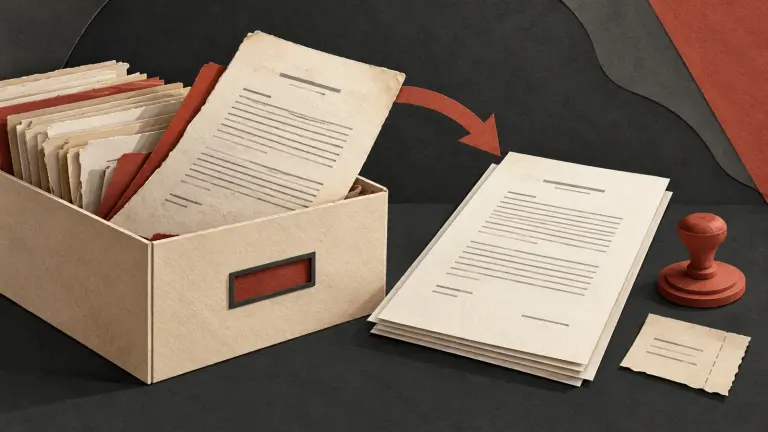
To get a certified copy of a court judgment in India, first identify the exact court, case, order date, and record, then apply through that court’s copying or registry process. A judgment found online can help you locate the document, but a browser printout is not automatically a certified copy. The court’s current rules determine who may apply, what details and fees are required, whether an urgent route exists, and how the copy is authenticated.
The practical example below uses the Allahabad High Court’s published rules. It is an illustration of one court’s process, not a national procedure.
Start by deciding what document you need
“The judgment” may mean several different records. A researcher may need the signed or authenticated final judgment; a party may need the decree or formal order that implements it; an appellate lawyer may need the impugned order, pleadings, or an exhibit; and a person tracing an old matter may need an order sheet or the complete paper-book. Ask the receiving court, authority, or lawyer which item is required and for what purpose before paying for a copy.
Record the exact description. “Order dated 5 March” is better than “the decision in the property case,” but it may still be insufficient if several orders were made that day. Identify whether you need:
- the final judgment, an interim order, a decree, or a formal order;
- one specified page or the full document;
- an annexure, deposition, exhibit, or pleading from the judicial record;
- a certified paper copy, a court-authenticated electronic copy, or simply a research copy; and
- the copy for filing, execution, appeal, service, due diligence, or background research.
The distinction matters. A plain download may be useful for reading and citation checking, while a filing rule or receiving authority may require a particular form of authentication. Do not order the whole case file if the actual requirement is only one final order.
Identify the court record accurately
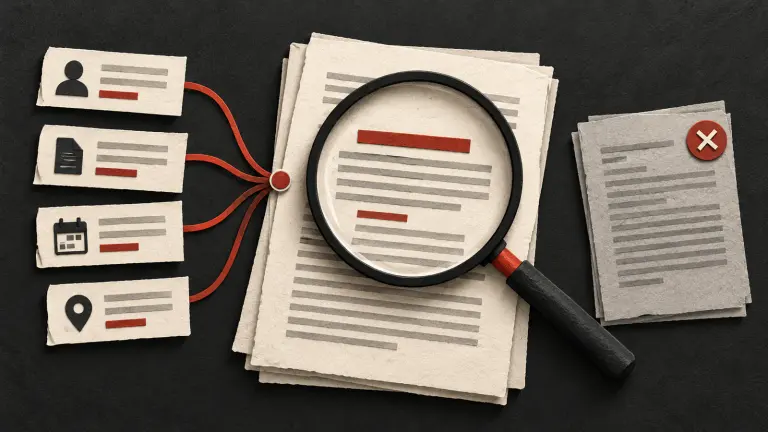
Collect as many identifiers as possible before applying: court and bench, case type, number and year, party names as they appear in the cause title, district or lower court, judge or coram, order date, and any appeal, revision, or connected case number. For a matter from decades ago, names may have been indexed with spelling variants, initials, old district names, or a predecessor court designation. An incomplete search should not be treated as proof that no record exists.
If you found the decision in a judgment database, use its citation and case number as leads, then verify those details against the court’s own repository, cause list, or registry. A citation database can point to a judgment text but does not itself issue a court-certified copy. See the workflow for finding a judgment on Indian Kanoon and the court filing readiness checklist for ways to organize the identifiers and source document.
Certified copy, authenticated e-copy, and portal printout are different things
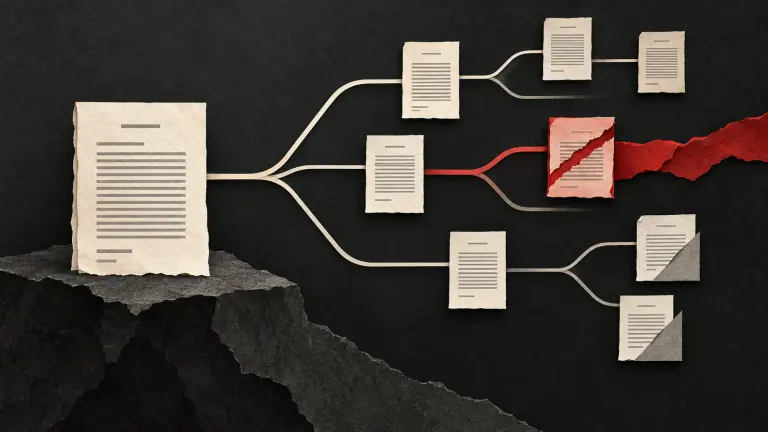
Courts may provide judgments through websites, e-filing systems, copying sections, or electronically maintained records. These routes do not all produce the same legal object. An electronic document may be specifically authenticated under a court rule; another file may be a public reading copy; and a print-to-PDF from a browser may contain no court authentication at all.
The Allahabad High Court’s Chapter XL-A amendment on electronic copies describes a route for applying for copies of orders or judgments maintained electronically on the High Court’s servers. It provides that a person, whether a party or not, may apply under that chapter for an available electronic judicial record. If the record is unavailable on the server, the application may be returned so the applicant can use the ordinary certified-copy process. That rule is specific to that High Court and its record system. The court’s 2023 Rules of Court should also be checked for the current applicable provisions and amendments.
An older Allahabad High Court FAQ expressly distinguishes website printouts from certified copies. Because the FAQ is not a substitute for current rules, use it as a helpful description and confirm the present treatment with the Copying Section. Across India, do not assume that the same language, certification, or acceptance rule applies everywhere.
The Code of Civil Procedure, 1908 also addresses copies in civil proceedings. For example, Order XX Rule 20 provides for copies of judgments and decrees to be furnished to parties on application and at their expense. The official India Code text of the CPC is a starting point, but it does not replace the relevant High Court or subordinate court rules.
Who may request a copy?
The answer depends on the type of record, the court’s rules, and whether the applicant is a party. A party may have a routine route for a judgment or order in their case. A non-party may need to state why the record is sought, attend in person, obtain permission for particular materials, or satisfy access and privacy restrictions. Access to a public judgment is not necessarily the same as a right to obtain every document in the file.
The Allahabad High Court rules illustrate this distinction. Under Chapter XL, Rule 2, some stranger applications must be presented in person to the Registrar General; Rule 7 requires the Registrar General to be satisfied that there is sufficient reason before granting a stranger’s request for an exhibit (whether before or after final order) or another paper while the case is pending. Rule 8 separately requires authenticated consent from the person who filed an exhibit before a stranger can receive its copy. Chapter XL-A’s separate electronic route addresses orders or judgments maintained on the High Court’s servers and allows any person to apply for those available records. These are distinct routes; access to an order does not establish access to every exhibit or paper-book item. Check the latest amendments and the specific rule before applying. Do not use a party’s login or credentials if you are not authorized to do so.
Confidentiality and access restrictions may arise in cases involving children, family disputes, sealed material, protected witnesses, trade secrets, or other restricted records. Ask the registry about the applicable process rather than assuming a searchable case record makes every document public.
A practical application sequence
- Confirm the target record. Write down the court, case number/year, parties, order date, document type, and whether you need a complete copy or selected pages.
- Check the court’s official site. Search for the order or case history, but treat the file as a locator unless the court identifies it as an authenticated or certified copy.
- Open current copying rules. Find the court’s rules, copying section page, form, fee schedule, and any e-copy procedure. Confirm the latest amendment and the court’s current filing channel.
- Choose the correct applicant route. Identify party or non-party status, whether personal appearance is required, and whether the request concerns a restricted record or exhibit.
- Submit a complete application. Include the identifiers, record description, purpose if required, ordinary or urgent category if available, and the prescribed fee or stamps.
- Keep the receipt and follow the application. Record the application or folio number, submission date, fee, and contact point. Check whether the application has a defect, whether the record is traceable, and whether the copy is ready.
- Inspect the issued copy. Confirm the case title, court, date, page sequence, authentication or certification, and whether attachments requested were included.
- Confirm acceptance with the recipient. If filing elsewhere, ask whether an authenticated electronic copy, certified paper copy, or another form is required.
The Supreme Court’s own information page for certified copies and judicial records points readers to the Supreme Court Rules, 2013 and separate search/download facilities. This is another reminder that the Supreme Court has its own process; a High Court’s copy rule should not be carried across by analogy without checking.
Fees, urgency, and delivery are court-specific
Courts may distinguish ordinary and urgent applications, charge by document or page, require folios or stamps, or use online payment. Older rule notifications may show amounts that have since changed. Do not rely on a search snippet or an old copying-rule amendment for the current payable amount. Check the court’s current fee schedule, the live copy application portal, or the copying counter.
Urgent processing is not a guarantee of same-day delivery. An urgent route may require a stated reason and additional fee, and the record still has to be located and prepared. A missing volume, damaged archive, unindexed old file, or mismatch in case details can delay the process. Ask for a realistic estimate from the registry and keep evidence of the application date if a limitation or filing deadline is approaching. A copy request does not itself extend a statutory deadline.
| Situation | First route to check | Key caution |
|---|---|---|
| Recent final order visible online | Court’s official copy or download instructions | A public PDF may not be certified |
| Party needs a copy for appeal or execution | Copying section and current appellate rules | Confirm which order/decree and form are required |
| Non-party needs an old order | Registry or copying rules for third-party access | Purpose, permission, or personal application may be required |
| Old physical record is not searchable | Registry/archive inquiry with exact identifiers | Absence from the portal does not establish destruction |
| Order is available in electronic record system | Court’s electronic-copy process | Confirm the output’s authentication and permitted use |
Worked example: an old Allahabad order
Fictional example: Asha is researching a 1987 civil appeal at the Allahabad High Court. A search result identifies a likely judgment, but the online text does not include an authentication mark and the case status page is incomplete. Asha is not a party and needs the order to understand a chain of title, not to file it in court.
She records the reported case number, parties, approximate date, bench, and the lower-court district. She checks the official judgment repository and compares the case title with the report. Because she needs a copy from the judicial record and is a non-party, she reads the High Court’s current copy rules and asks the Copying Section whether the electronic-copy route covers this record or whether an ordinary file search is needed. Her application states the purpose and identifies the order precisely. If the file is not in the electronic system, she asks whether an archive search can be made and what additional particulars are useful. She keeps the receipt and does not describe a downloaded printout as certified. If she later needs the document for a proceeding, she checks with counsel and the receiving court about the required form.
The process does not promise that an old record is intact, publicly accessible, or ready within a fixed number of days. Its value is that every uncertainty is directed to the court office that controls the record.
Common mistakes to avoid
- Applying for “the judgment” without identifying the order date or case number.
- Treating a commercial database copy or browser printout as court-certified.
- Assuming that party and non-party access rules are identical.
- Quoting an old fee chart as the current fee.
- Assuming a digital case-status page proves the entire physical record is available.
- Waiting for a copy before asking counsel about a running appeal or limitation period.
- Requesting exhibits or personal material without checking privacy, access, and permission rules.
- Filing a copy with a different court without checking its copy and authentication requirements.
Copy application checklist
- I know which court, bench, case number/year, parties, and order date I am targeting.
- I have identified whether I need a judgment, order, decree, exhibit, or other record.
- I checked the current official rules and copying route for that court.
- I have confirmed whether the application is by a party or non-party and any access conditions.
- I checked the current fee and ordinary/urgent process from an official source.
- I retained the application receipt and know how to check defects or readiness.
- I will inspect authentication and completeness on receipt.
- I have confirmed what the recipient requires before filing or relying on the copy.
Frequently asked questions
Can I use a judgment PDF downloaded from a High Court website?
It may be a reliable research copy, but its status depends on what the court says about that file and the purpose for which you need it. A normal download or printout is not automatically a certified copy. Check the court’s current rules and the receiving forum’s filing instructions.
Can someone who was not a party apply for a certified copy?
Sometimes, subject to the court’s rules and the type and status of the record. The Allahabad High Court’s rules provide specific electronic-copy and non-party procedures, including additional conditions for some pending-case material. Other courts may use different rules.
What information is needed to get an old judgment?
Provide every identifier you can: case type, number and year, party names, court or bench, order date, judge, lower-court details, and any appeal or connected number. For older matters, ask the registry whether spelling variants, predecessor districts, or archive references may help.
How much does a certified copy cost and how long does it take?
Fees and timing vary by court, copy type, page count, urgency, current schedule, and record availability. Use the live official fee information or ask the copying section. An “urgent” category does not guarantee a fixed turnaround.
Is a copy application enough to protect an appeal deadline?
Do not assume so. A copy request does not automatically extend or suspend a limitation period. Ask a lawyer to calculate the deadline under the applicable statute and rules, including any rule about time spent obtaining a copy.
What if the online case search does not show the old matter?
That does not establish that the case never existed or that the record was destroyed. Contact the relevant registry or archive with the best case and party particulars you have, and ask about historical registers and the appropriate search process.
Should I ask for the judgment or the decree?
That depends on your purpose. The judgment explains reasons; a decree or formal order may record the operative result in a civil matter. Ask the lawyer, court, or authority receiving it which document is required.
For litigation teams handling many matter records, a consistent source and copy log can make retrieval less fragile. Explore Gotham’s legal research workflow, practice workspace, or contact the team to discuss matter operations.
This article is general information, not legal advice. Copying procedures, access, fees, and delivery times depend on the court, record, applicant, and current rules.
How Gotham researches and reviews field guides