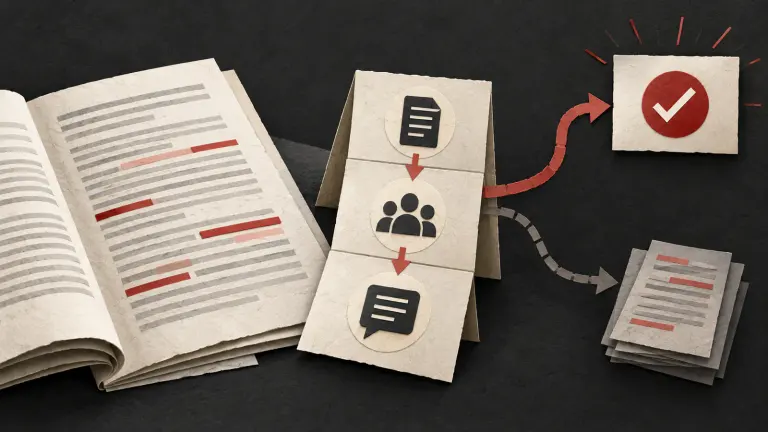
When a wedding supplier stops trading before the event, start by confirming who accepted the booking and payment, what the contract promised, and whether the business is merely closed or in a formal insolvency process. Keep the booking documents, transfer record, messages, refund request and response together. Then compare practical options: a written request or negotiation, a bank inquiry about the transfer, a claim against the correct legal party, or a creditor claim in a formal insolvency. None guarantees that money will be recovered.
In Northern Ireland, a family member may answer messages without being the supplier who contracted. A small-claims decree and money recovery are also separate stages.
First identify the person or business that took the booking
Read the quote, booking form, invoice, terms, email confirmation and payment record as one chain. Write down the name used at each step, the address or registration details shown, the bank-account payee, who accepted the deposit, and who promised to provide the catering. Different names may reflect a trading name, a sole trader, a partnership or a limited company. Do not assume they are interchangeable.
The Companies House company information service can help check a named company’s registered status and filing information. It will not establish who contracted in your particular booking, and a sole trader is not a company just because a trading name appears on a website. Compare register details with the contract and payment trail. If the company has ceased, dissolved, entered liquidation or changed names, save the record and seek advice before deciding who should be named in a claim.
A relative or employee who replies to an email is not automatically responsible for the supplier’s debt. The message may help document what the business said, but personal liability needs its own legal basis, such as that the individual was actually the contracting party or gave a legally effective guarantee. A reply saying “we have no funds” should not be treated as proof that the sender owns the business, can pay, or accepts personal responsibility.
Also identify who is entitled to make the claim. If one person booked and paid, but several people shared the cost, preserve each person’s contribution and any agreement about who would recover it. The court claim needs a coherent claimant and amount. Avoid adding every wedding guest or family member without a reason; an adviser can assess joint contracting and who suffered which loss.
Build one clear booking and payment file
Create a chronology with dates and source records. Keep original files, full message threads, bank statements and transfer confirmations. Annotate a working copy, not the only original, and retain uncropped records where available.
| Event | Evidence to keep | What it may help establish |
|---|---|---|
| Booking and promised service | Quote, booking form, terms, menu, event date, venue and delivery details | Who agreed to provide what, and when |
| Payments | Transfer confirmation, statement, recipient name, amount and date | What was paid, by whom and to which account |
| Supplier’s change in position | Messages, email, public closure notice, dates and sender identity | What the supplier said about performance, closure or refunds |
| Refund request | The request, amount sought, delivery record and response | Whether a clear request was made and how the supplier responded |
| Alternative arrangements | Replacement quote, extra costs, receipts and booking date | Any additional loss claimed and its connection to the cancellation |
| Business-status check | Company number, Companies House page, formal notice or insolvency correspondence | Whether a registered company or formal process is involved |
Separate facts from conclusions. “The message says no catering will be provided” is a fact if the message is preserved. “The parent owes the deposit” is a legal conclusion that does not follow just because a parent sent the message. “The company is bankrupt” should not be written unless a formal record supports it. This makes a demand more credible and helps an adviser spot what remains uncertain.
Check the contract and consumer-law fit
The Consumer Rights Act 2015 applies to covered trader-consumer contracts, including oral or implied agreements. Section 2 defines a consumer as an individual acting wholly or mainly outside their trade or profession, and a trader as a person acting for business purposes. The Act applies to trader-consumer contracts and recognizes that a contract may be written, oral or implied by conduct. Section 99(4) extends the Act to Northern Ireland subject to the exceptions in that section. A wedding booking made for personal use may fit this framework, but the exact contracting party and circumstances still matter.
For a covered service contract, section 49 implies a term requiring reasonable care and skill. Section 54 provides statutory remedies when a service does not conform, while preserving other remedies open on the facts, including damages, seeking to recover money where the consideration has failed, or treating the contract as at an end. The section also prevents double recovery. These provisions do not say that every cancellation automatically yields a full refund. Read the booking terms, what was supplied, the timing, any replacement performance, and the amounts already paid before calculating a demand.
A focused demand identifies the contracting party, booking, payment dates and amounts, service not supplied, basis and remedy sought. Attach a short schedule, ask for a response by a reasonable date, and preserve delivery proof. A “14-day letter” does not itself prove the claim or make a relative liable; check any applicable pre-action steps with an adviser.
If you need to structure the file before seeking advice, Gotham’s contract review guide explains a general way to compare agreed wording, events and records. Its legal notice management workflow covers organizing a notice and its response trail. Those are document-workflow guides, not Northern Ireland procedural rules.
A bank transfer is not a card chargeback
If the customer personally approved a bank transfer, it is not an unauthorised payment merely because the supplier later fails to perform. But authorisation alone does not rule out an authorised push payment (APP) scam: a person can authorise a transfer after being deceived by a fraudster. The Payment Systems Regulator says its reimbursement rules cover eligible UK Faster Payments and CHAPS transfers made on or after 7 October 2024 when the customer was tricked into paying a fraudster. It distinguishes those scams from civil disputes where a customer pays a legitimate supplier for goods or services that are not received, without intent to defraud. A supplier’s closure alone does not establish fraud. Tell the bank exactly what happened and ask whether APP-scam protections or any recall process may apply; do not label a genuine performance dispute as a scam without facts that support that description.
Chargeback and section 75 are separate card or credit routes, not a way to recover an ordinary bank transfer. The FCA describes chargeback as a card-scheme process and says section 75 may be relevant to certain credit-card purchases above £100 and below £30,000, subject to its conditions. If the payment was made by card or qualifying credit, ask the issuer to assess that route. Preserve the payment evidence and explain the sequence accurately.
“Stopped trading” is not the same as formal insolvency
A business can cease taking bookings or close its premises without a court or insolvency office having opened a formal process. First check the exact legal identity and available official records. If the supplier is a limited company, Companies House can show status and filings; other formal notices may identify a liquidator or office-holder. If it is an individual trader, company-register results will not answer the question.
For a company in formal compulsory liquidation, the Northern Ireland Department for the Economy’s creditor guidance says known creditors should receive notice from the Official Receiver or insolvency practitioner and can submit a proof of debt. It also explains that distributions depend on assets and claims and can be zero. In the formal process, unsecured creditors cannot simply continue action against the company after the High Court order without court consent; they should follow the liquidator’s process. Do not apply that rule merely because someone says a business is “closed.”
If a formal process is confirmed, note the case reference and contact details, submit the requested evidence on time, and ask how the claim will be recorded. If no formal process exists, assess the ordinary contract route separately. A judgment against a company with no recoverable assets may still not produce payment, and the owner or relative is not a substitute defendant unless there is an independent legal basis.
Northern Ireland small claims and enforcement are separate decisions
Northern Ireland has its own small-claims procedure. The current County Court Rules (Northern Ireland) 1981, Order 26 shows a £5,000 threshold for specified claims, but lists excluded claim categories and procedure requirements. It uses Form 125 and says hearings are informal and not subject to strict evidence rules. Check the current Department of Justice small-claims guide and forms before filing. A value below the threshold does not by itself prove that small claims is the right route or that the claim will succeed.
Before filing, list the claimant, the legal name and address of the respondent, the amount, the contract or other basis, the relevant dates, and the documents supporting each point. Decide whether the claim is for a particular sum already paid or includes disputed additional losses. Check current forms, fees, service details and exclusions. Ask a qualified adviser if the defendant identity, cross-border residence, insolvency status or amount is unclear.
If the court grants a decree, the Enforcement of Judgments Office is the central office for enforcing civil judgments in Northern Ireland. Enforcement options depend on the debtor and the information available about income or assets. The Office’s guidance describes a certificate of unenforceability where a judgment cannot be enforced within a reasonable time or there are no assets. Treat a judgment as an established legal result, not as a promise that the money will arrive.
| What you learn | Possible next step | What it does not prove |
|---|---|---|
| A current company and booking record match | Send a focused refund request to that company | That the company has funds to pay |
| A parent replies but is not named in the contract | Preserve the reply; verify who took the booking | That the parent is personally liable |
| A formal liquidation is confirmed | Contact the named office-holder and submit a proof of debt | That a dividend will be paid |
| The claim appears within the NI small-claims limit and no exclusion is apparent | Review current forms and obtain advice on filing | That the claimant will win or collect |
| The court issues a decree but payment is not made | Ask the NI EJO about enforcement steps and information needed | That every enforcement method will recover funds |
Worked example: keep a fictional booking dispute bounded
Suppose Alex and Morgan book catering from “Harbour Table” for £4,800, pay £2,400 by bank transfer, and receive an email from a family member saying the caterer has stopped trading. The booking form names “Harbour Table Events Ltd,” while the transfer payee is an individual. Alex saves both records but does not immediately assume that the company, individual payee and family member are the same legal party.
They check the company number on Companies House, preserve the booking terms and messages, and ask the supplier to confirm whether it will perform, what refund is offered, and who is handling the booking. If formal liquidation is listed, they contact the office-holder and ask how to file a creditor claim. If no formal process is shown, they assess a contract claim against the party named in the agreement and ask a Northern Ireland adviser whether small claims is appropriate. They also ask their bank whether any transfer recovery step remains possible without presenting the authorized payment as fraud.
The example does not predict an outcome. If there is a decree, they would then assess enforcement separately. If facts differ, such as a personal guarantee, a card payment, a different contracting party, or a cross-border respondent, the analysis may change.
Common mistakes to avoid
- Naming the person who replied instead of the contracting party. Identify the supplier from the agreement, invoice and payment trail before making a claim.
- Treating a closure message as proof of formal insolvency. Check for a formal process and follow its stated creditor route if one exists.
- Calling an authorized transfer fraud without evidence. Describe accurately who initiated the transfer and what happened afterward.
- Assuming a claim produces cash. Consider the cost, time and likely recoverability before filing.
- Using another UK jurisdiction’s procedure by habit. Northern Ireland uses its own court rules and EJO; verify the NI forms and current guidance.
- Claiming an automatic full refund. Link the amount sought to the terms, services promised, what was performed and the remedy supported by the facts.
Prepare a clean evidence pack before deciding
- Booking form, terms, quote, invoice and event details
- Proof of every payment, payer, payee, amount and date
- Full message and email records showing what was promised and later changed
- A dated chronology separating confirmed facts from assumptions
- Refund request, delivery proof and every response
- Correct legal identity of the supplier and any available company-status record
- Formal insolvency notice and office-holder details, if a process exists
- A calculation showing the sum sought and any separate additional loss
- Current NI court guide, forms and fee information if considering a claim
- A separate plan for enforcement if the court makes a decree
For a file that needs a repeatable intake and review path, see Gotham’s contract review guide and legal notice workflow. If you want help organizing a document set, contact Gotham or explore legal workflows. These tools can help structure records and review work; they do not decide legal liability, file a claim or guarantee recovery.
Questions about an NI wedding supplier that stopped trading
Can I claim back a wedding deposit if the caterer stops trading?
Possibly, but stopping work does not itself determine the amount owed or whether money can be recovered. Identify the contracting party, read the cancellation and refund terms, document what service was not supplied, and check whether a formal insolvency process exists. A court claim and actual payment are separate questions.
Can I sue the caterer's parent because they answered my message?
Not merely for replying or being related to the caterer. A claim normally needs a legal basis against the person or entity that contracted, guaranteed payment, or otherwise became liable. Check the booking and payment records before naming anyone.
Does Northern Ireland small claims cover a £2,500 wedding dispute?
The current NI rules show a £5,000 threshold for specified claims, but the rules also exclude categories and require the correct claimant, respondent and claim basis. Check the current NI guide and forms; a value below the threshold does not guarantee the procedure is suitable or a win.
Can I use chargeback after paying a supplier by bank transfer?
Chargeback is a card-scheme process, so it is not the route for a bank transfer. An authorised transfer can still be an APP scam if you were deceived into sending money to a fraudster, but an ordinary dispute with a genuine supplier who failed to perform is different. Contact your bank promptly and describe exactly what happened; closure alone does not establish fraud or guarantee reimbursement.
What if the supplier says it has no money but is not formally insolvent?
A statement that funds are unavailable does not prove a formal insolvency proceeding. Verify the correct business identity and any applicable public insolvency record, then consider the contract, likely recovery prospects and cost before taking a claim step.
What happens after I win a small claim in Northern Ireland?
A decree records the court's decision; it does not itself put money in your account. The NI Enforcement of Judgments Office handles enforcement of civil money judgments, and the practical options depend on information about the debtor and assets.
General information, not legal advice. This guide concerns consumer wedding-service disputes in Northern Ireland. The contracting party, consumer status, contract terms, insolvency status, claim type and current court rules affect the analysis. Consult a Northern Ireland solicitor, Citizens Advice or another qualified adviser about an individual claim.
How Gotham researches and reviews field guides