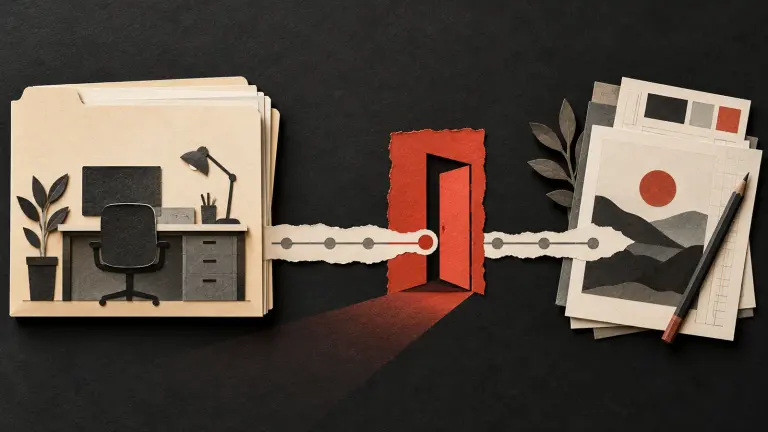
In England, the employer is generally the first copyright owner of a literary, dramatic, musical or artistic work made by an employee in the course of employment, unless an agreement says otherwise. A person who later leaves and works as a freelancer does not automatically regain or retain ownership of those earlier works. At the same time, the rule does not mean that every file created on a work laptop belongs to the employer: the statutory questions are whether the person was an employee, what kind of work was made, and whether it was made in the course of that employment.
Start by separating four issues that are often collapsed into “who owns my portfolio?”: copyright ownership, a licence to use or display a work, confidentiality and other employment restrictions, and ownership of later freelance work. A resignation date alone answers none of them. The written employment terms, any IP policy, the work's creation history and the proposed use all matter.
The statutory starting point
Section 11(1) of the Copyright, Designs and Patents Act 1988 starts with the author as first owner, subject to exceptions. Section 11(2) provides that where a literary, dramatic, musical or artistic work is made by an employee in the course of employment, the employer is first owner, subject to any agreement to the contrary. The statute refers to an employee, not simply someone who was paid by a business. A genuine contractor is not brought within the employment exception merely because the client supplied a laptop or reviewed the result.
The phrase “in the course of employment” is a factual and contractual question. Work assigned as part of the role is a clear candidate. A personal illustration made at home on a weekend using independent subject matter is a different fact pattern, even if the author has an office job. Grey areas can include side projects that use employer time, confidential information, equipment, source materials, customer data or a development idea closely connected to the employer's business.
Read the employment contract and policies together. Look for provisions about inventions, copyright, works created using company resources, side projects, confidentiality, open-source contribution, portfolio use and post-termination restrictions. A clause may define the parties' agreement “to the contrary,” but its scope still needs interpretation. Check definitions, schedules, incorporated handbook versions and any later variation. Do not assume that a broad label in a policy automatically resolves whether a particular work falls within the statutory rule.
Employment work is different from freelance commissions
For work made outside employment, the author is generally the first owner unless a valid arrangement changes that result. A company commissioning a freelancer does not necessarily become copyright owner merely because it paid for the work. The parties can agree on a licence or assignment, and the arrangement may be limited by rights, territory, duration, media or project.
Under CDPA section 90(3), an assignment of copyright is not effective unless it is in writing signed by or on behalf of the assignor. Section 91 addresses future copyright: a signed agreement by the prospective owner can cause later-created copyright to vest in the assignee when it comes into existence, subject to the statutory conditions. These formalities do not mean every document called a “contract” transfers every right. Identify the work, the rights, the scope and who had authority to transfer them.
An employment relationship and a freelance engagement can overlap in time. Someone may be an employee for one project and a separate contractor for another. Keep the roles, dates, deliverables and contracting entities distinct. If a former employer later hires you for consulting, use a new statement of work that states whether the work is new, whether pre-existing material is reused, and what licence or assignment is intended.
Copyright is not the only restriction
Owning copyright does not necessarily permit publication of every file. A work can contain confidential business information, customer data, personal information, third-party licensed material, trade secrets or security-sensitive details. A portfolio licence can coexist with confidentiality restrictions, but it should be drafted around redaction, timing, attribution, customer consent and permitted channels.
Moral rights also require separate review. Under CDPA sections 77 and 78, an author's right to be identified is subject to the assertion requirements in section 78. Section 87 permits waiver of moral rights in writing, signed by the person waiving them. An assignment of economic copyright is therefore not identical to a moral-rights waiver. Check the specific work and instrument rather than treating a generic “all rights” phrase as a complete analysis.
A decision table for a proposed reuse
| Situation | Main question | Safer next step |
|---|---|---|
| The file was a deliverable expressly assigned by employment terms | Was it made in the course of employment, and does the clause cover this work? | Obtain the contract and relevant policy version; seek written permission before public reuse |
| The work is a personal project created outside duties | Did employer time, resources, confidential material or a broad written clause affect it? | Preserve creation records and have counsel assess the clause and facts |
| The work was made as a separate freelance engagement | Is there a signed assignment, licence, or only a payment record? | Review the SOW, incorporated terms and delivery/acceptance record |
| The file is employer-owned but portfolio display is requested | Is there a portfolio licence or consent, and can sensitive content be removed? | Request written permission with scope, timing and redaction terms |
| The work includes customer or third-party material | Are those parties' rights and confidentiality terms respected? | Remove or obtain permission for components before sharing |
Worked hypothetical
Maya is employed by a product company as a designer. During the job she creates a dashboard mock-up assigned by her manager. Her employment contract has an IP clause and an internal policy. After leaving, she takes freelance work and wants to show the old mock-up on her portfolio site. Later, the former company asks her to build a separate interface as an independent consultant.
Maya should not start with the assumption that she owns the mock-up because she personally designed it. She should check whether it was made in the course of her employment and review the contract and policy versions in force at that time. Even if the company owns copyright, that does not itself decide whether she has permission to display it. She should ask for a written portfolio licence that specifies which version, whether the company name and customer data are removed, when publication may occur and where it may appear. The new consulting work should have its own SOW and rights clause, with any pre-existing design components identified. These facts illustrate the questions; they do not decide Maya's rights.
Build a rights file before reusing the work
Create a table with one row per work or component. Record the creator, creation date, role at the time, work request, project, relevant manager, contract version, policy version, source files, tools and materials used, delivery date and later modifications. Keep original files and version history rather than relying only on screenshots. Where multiple employees or contractors contributed, record each person's contribution and the terms governing it.
Separate the proposed reuse from ownership. Is the goal to show a screenshot in a portfolio, reuse a generic method, publish source code, commercialise the same asset, or use a former employer's name? Each can raise different copyright, confidentiality, trade mark, data or contract issues. A legal review is easier when the proposed use is concrete.
For related reading, see our US freelance copyright assignment-chain guide, California prior-software checklist, and contract records workflow. These are comparative or operational references, not England-specific advice. You can contact the team about organizing a document review or view document workflows; neither decides ownership.
Common mistakes
- Treating “I created it” as conclusive proof of first ownership.
- Treating every work-related file as employer-owned without checking employee status, work type and course of employment.
- Assuming a commission always transfers copyright to the customer.
- Treating a copyright assignment as the same thing as permission to show a work publicly.
- Uploading work that contains confidential information, customer data or third-party material.
- Relying on an oral understanding where a signed writing is required for assignment.
- Reusing a former employer's work in a new freelance project without defining background materials and new deliverables.
Questions people ask
Does my former employer own everything I made while I worked there?
No blanket answer follows from the fact that you were employed. Section 11(2) addresses specified categories of work made by an employee in the course of employment. The role, work, contract terms and facts matter. Personal work outside duties may need a different analysis, especially if company resources or confidential material were involved.
Does leaving the company transfer copyright back to me?
Not automatically. Leaving ends the employment relationship, but it does not itself reverse ownership that vested under the statute or an effective agreement. A later assignment or licence may change the position; check the actual signed documents.
If I was a freelancer, does the client own the work because it paid me?
Payment alone does not answer the copyright question. Review the written assignment or licence, any incorporated terms, and whether the person signing had authority. A client may have a licence for an agreed purpose without owning all rights.
Can I show an employer-owned design in my portfolio?
Only if the applicable terms or a permission allow it and the display does not breach confidentiality, data or third-party rights. Ask for specific written permission that addresses screenshots, company names, customer identifiers, timing and channels.
Is a copyright assignment the same as a moral-rights waiver?
No. Economic ownership, moral rights, assertion of the right to be identified and written waiver are separate statutory questions. Read the relevant terms and provisions rather than assuming one clause necessarily does every job.
What if the old project contains an open-source component?
The employer or freelancer cannot transfer rights they do not own. Identify third-party and open-source components, the relevant licence, and whether the proposed reuse complies with its conditions. A component inventory is important in both employment and contractor projects.
What records should I bring to a solicitor?
Bring the employment and freelance agreements, incorporated policies, amendments, work requests, project chronology, original and later files, contribution records, third-party licences, delivery messages and the exact proposed reuse. Preserve originals and note any uncertainty rather than editing historical records.
Final review checklist
Before publishing or reusing a past work, identify its author and category; determine whether it was created as an employee in the course of employment or under a separate commission; read the contract and policy that applied at creation; locate any signed assignment, future-rights clause, licence or waiver; separate economic copyright from moral rights; assess confidentiality and third-party data/materials; document contributors and changes; define the proposed use; obtain any necessary written permission; and have a UK solicitor review disputed or commercially important rights.
This is general information, not legal advice. Copyright ownership can depend on work type, employment status, contract wording, date and facts. England and Wales rules are not a substitute for advice in Scotland or Northern Ireland. Have a UK solicitor review disputed rights before reuse or enforcement.
How Gotham researches and reviews field guides