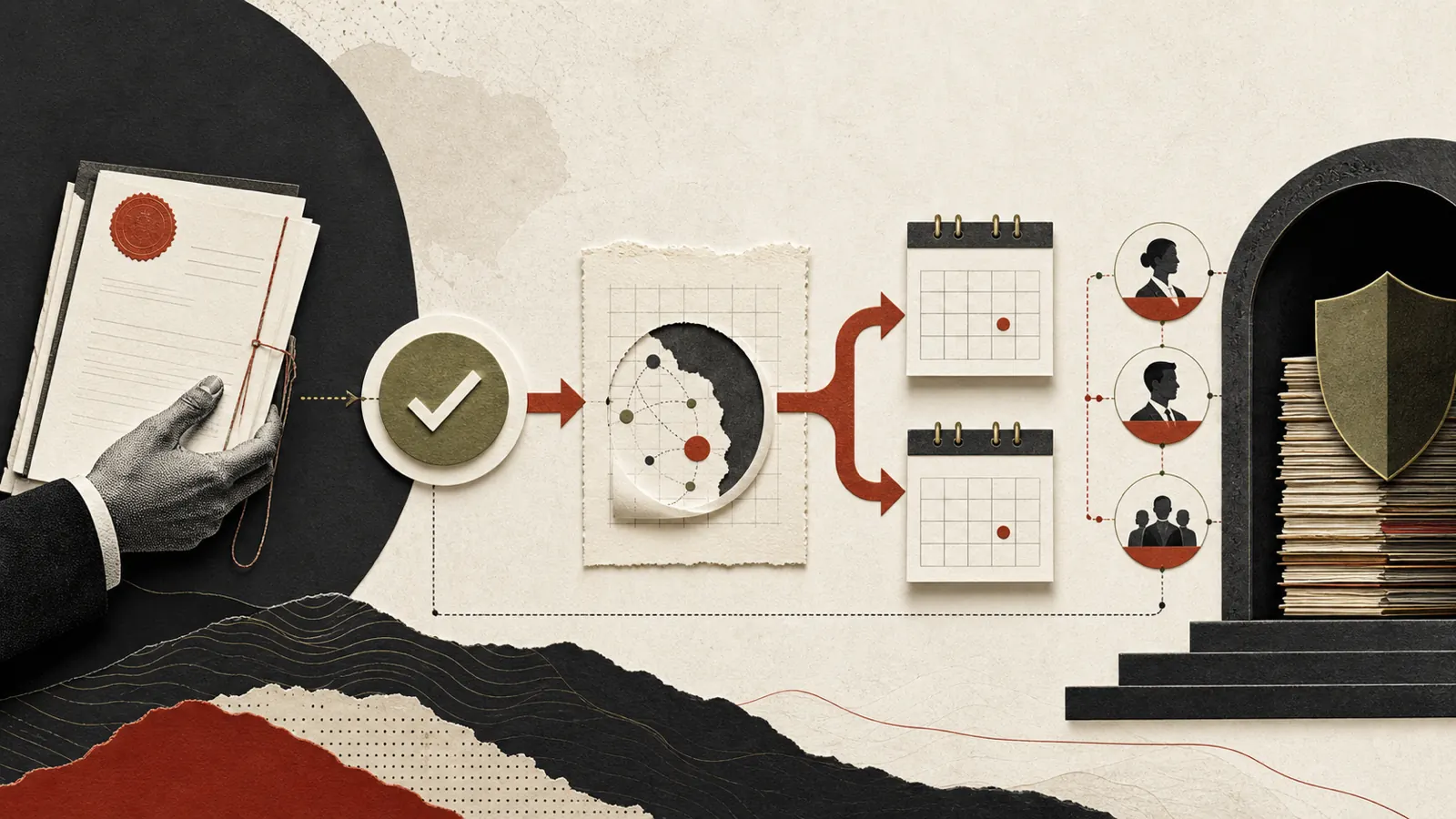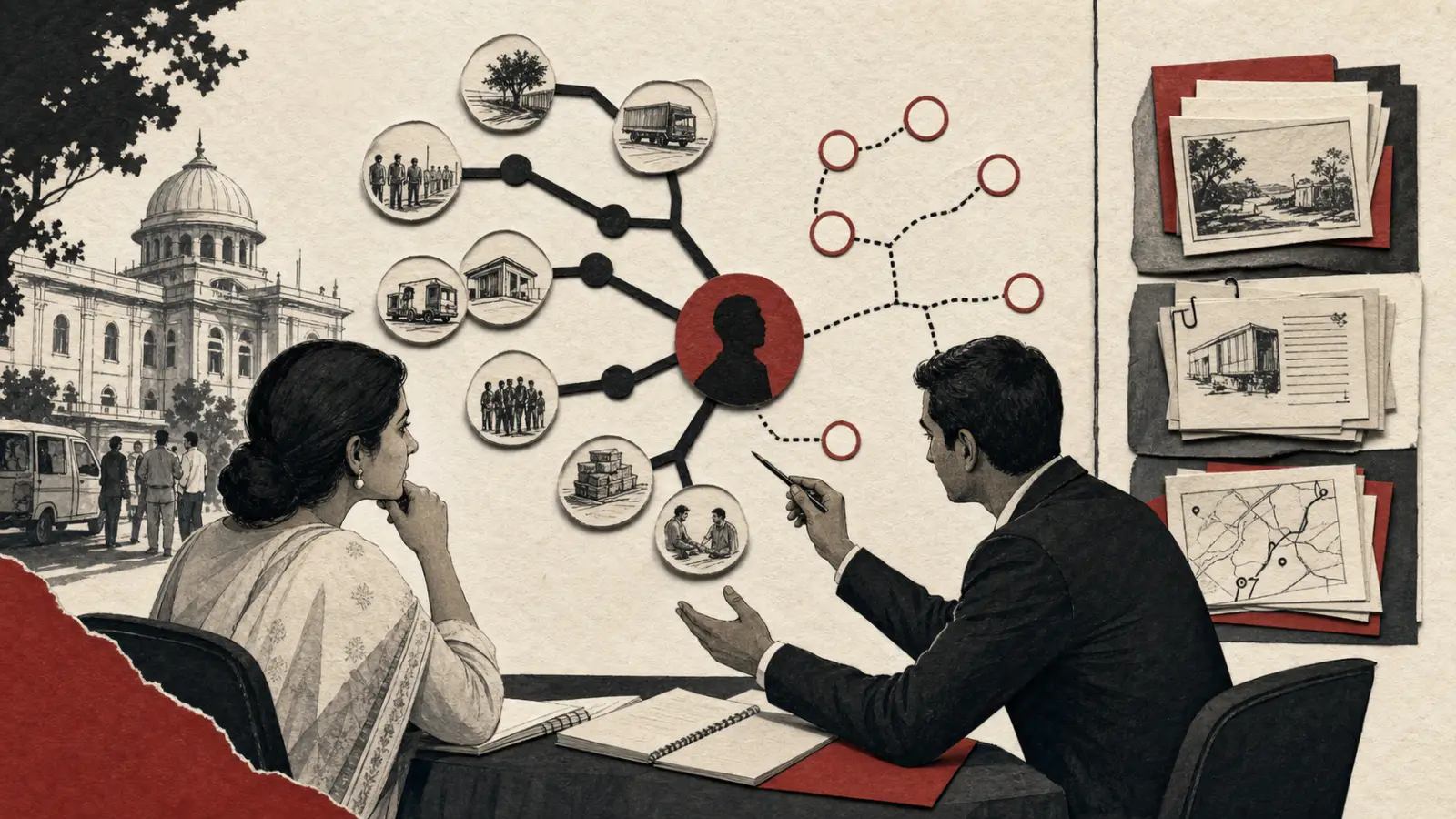
A deposition witness preparation workflow helps counsel organise the records, dates, logistics, and review tasks surrounding a witness session. In Indian proceedings, the precise process and terminology may differ by forum. The same operational principle still applies: build a source-linked workspace that lets authorised reviewers find what a document says, when the witness encountered it, and what remains uncertain.
This is not advice on shaping testimony, rehearsing preferred answers, or influencing a witness's recollection. Truthful evidence and independent recollection are not workflow outputs. The workflow supports counsel by keeping sources, annotations, questions, and administrative steps under disciplined control.
What should a witness preparation workflow accomplish?
The workflow should answer practical questions without merging distinct kinds of information. Which witness is involved? What role and relevant period are documented? Which records may be associated with that person? What events are source-supported? Which materials has counsel selected for review? What procedural and logistical steps remain?
Maintain separate layers:
| Layer | Contents | Important boundary |
|---|---|---|
| Source record | Pleadings, orders, messages, contracts, minutes, exhibits | Preserve provenance and version |
| Structured facts | Dates, people, document references, procedural events | Attribute allegations and uncertainty |
| Witness association | Authorship, receipt, attendance, custody, stated involvement | Association does not prove knowledge or truth |
| Counsel work product | Legal analysis, issues, planned lines of inquiry | Restrict access under the team's protocol |
| Logistics | Availability, location, interpreter, technology, notices | Do not mix with substantive conclusions |
This separation makes review more accurate and permissions easier to manage. It also prevents a generated summary from appearing to be part of the underlying evidence.
How do you build a source-linked witness file?
Begin with identity and role information supported by records. Normalise aliases carefully and avoid merging two people with similar names. Create a source register containing document ID, date, type, origin, custodian, version, access label, and review state.
Then connect the witness to records using explicit relationship labels: author, sender, recipient, copied recipient, signatory, attendee, mentioned person, custodian, or relationship unverified. Each label should link to a page, paragraph, signature block, header, or other source location. Do not infer that receipt means reading, understanding, agreement, or memory.
The Bharatiya Sakshya Adhiniyam, 2023 is official primary material concerning evidence, including electronic or digital records within its scope. The Code of Civil Procedure, 1908 provides primary statutory material concerning civil procedure, including examination-related provisions within its application. Counsel must determine the relevant process and evidentiary treatment for the actual proceeding.
Source-file checklist:
- identity and role references are sourced;
- date range and matter issues are stated;
- originals or authoritative copies are retained;
- duplicates and superseded versions are marked;
- witness relationships use neutral labels;
- OCR text points back to the source image;
- annotations are separated from extracted text;
- access matches confidentiality and privilege controls; and
- gaps and contested relationships remain visible.
How should a witness-specific chronology be prepared?
Filter the master litigation chronology rather than building an untraceable copy. Include events associated with the witness, relevant procedural events, and surrounding context selected by counsel. Retain the master event ID and source citation so corrections flow consistently.
Every chronology row should distinguish event date, document date, and review state. If the source says “around April,” keep that uncertainty. If one pleading alleges an event and another denies it, show attribution rather than resolving the dispute in the data layer.
| Chronology field | Review prompt |
|---|---|
| Date or range | Exact, approximate, inferred, or disputed? |
| Neutral event summary | What does the cited source actually establish? |
| Witness relationship | Directly documented or inferred? |
| Source location | Can counsel open the relevant context quickly? |
| Competing source | Does another record give a different account? |
| Review status | Candidate, verified, disputed, excluded, or restricted? |
A chronology is a navigation tool. It should not be handed to a witness or used in a session without counsel deciding whether that is appropriate under applicable obligations and strategy.
How can counsel organise document review without coaching?
Counsel should direct all substantive preparation. The operational system can assemble a reviewed document set, preserve the order and source context, record which version was used, and capture counsel's follow-up tasks. It should not generate suggested testimony, “ideal answers,” or instructions to reconcile personal recollection with a desired narrative.
A neutral document-review sequence is:
- Counsel defines the purpose and permitted scope of the session.
- The team verifies each selected document and its source location.
- Access restrictions and privilege handling are checked.
- Counsel decides what may be shown and in what context.
- The system records the document version and review status.
- New records or factual corrections are routed back to the source register.
- Follow-up actions are assigned without converting notes into evidence.
Useful controls include a visible “source,” “counsel note,” and “witness-provided information” label. If a witness identifies a missing record or corrects a biographical detail, preserve the report as a new item for counsel review. Do not overwrite the prior source silently.
What logistics should be tracked for a witness session?
Administrative readiness can be managed without entering the substance of testimony. Track counsel ownership, notice or scheduling source, date and time zone, location or approved remote arrangement, accessibility needs, interpreter or translator arrangements, identity verification requirements, authorised attendees, technology checks, document access, and contingency contacts.
The eCourts eFiling portal and the Supreme Court of India website are official starting points for court information within their scope. The applicable court, tribunal, arbitral institution, or other forum may publish its own current rules and directions. Counsel should confirm those sources for the proceeding rather than adopting a generic deposition checklist.
Administrative readiness checklist
- session authority and procedural basis confirmed by counsel;
- notice, order, or agreement stored with the matter;
- availability and time zone confirmed;
- approved location or remote platform recorded;
- interpreter and accessibility needs addressed;
- authorised participants and contact details verified;
- approved document set available to counsel;
- confidentiality and recording controls confirmed;
- equipment and connection tested where relevant; and
- interruption, adjournment, or technical-failure route documented.
Gotham's legal workflows, practice solutions, and security approach can help teams evaluate connected handling for documents, tasks, and access.
How should AI-assisted summaries be used in witness preparation?
AI can help locate names, dates, duplicate records, and candidate relationships. Its output should remain a review aid. Models can attribute a statement to the wrong speaker, flatten a qualification, confuse a document date with an event date, or invent a connection that sounds plausible.
Require citations for every extracted proposition. Let counsel open the source in context. Mark generated text clearly, keep it separate from evidence and witness statements, record corrections, and re-run review when source material changes. Confidence labels can help prioritise review but do not establish accuracy.
For sensitive data, evaluate storage, access, encryption, provider routing, retention, deletion, incident handling, and export. A vendor description is only one input to that diligence. Actual configuration and contractual commitments matter.
What should happen after the witness session?
Counsel should determine the appropriate substantive follow-up. Operationally, the team can secure permitted notes or records, document attendance and logistics, reconcile documents used, assign source-acquisition tasks, update the chronology with separately reviewed material, and restrict access appropriately.
Keep a clean distinction between a witness's evidence, counsel's notes, session administration, and later analysis. If a transcript, statement, affidavit, or official record becomes available, register it as a new source with its status and provenance. Do not treat an unofficial note as though it were the formal record.
Post-session checklist:
- documents used are reconciled to source IDs;
- newly identified records have owners;
- disputed or uncertain dates remain labelled;
- permitted notes are stored in the correct access area;
- chronology updates await source review;
- procedural follow-up and dates are assigned by counsel; and
- superseded preparation packs are retained or disposed of under policy.
A strong deposition witness preparation workflow protects the line between evidence and work product while making the source trail easy to inspect. Explore Gotham's litigation discovery workflow or talk to the team about source-linked witness review.