A contract consistency check asks whether the document’s defined terms, clause references, schedules, order forms and amendments still point to the same deal. It is a final review of internal logic, not a substitute for deciding whether the commercial terms are acceptable or the document is legally enforceable. The reviewer should trace every important obligation from its definition to the clause that creates it, then check that each schedule and incorporated document supports the same result.
This work matters because a contract is often assembled from templates, negotiated edits, commercial forms and older amendments. A definition may be changed in one location but not another. An order form may describe a different service start date from the master agreement. A cross-reference can point to the wrong paragraph after renumbering. A schedule can contain a term that conflicts with the main body. Even where a court could interpret the agreement in context, the team should identify the inconsistency before execution and record the intended resolution.
Section 29 of the Indian Contract Act, 1872 addresses agreements whose meaning is not certain, or capable of being made certain. Section 10 states general requirements for agreements to become contracts. Section 37 addresses the obligation to perform promises, while section 62 addresses novation, rescission and alteration by agreement. These are starting points for legal review, not a mechanical test that turns every drafting inconsistency into a void agreement.
What should a consistency review include?
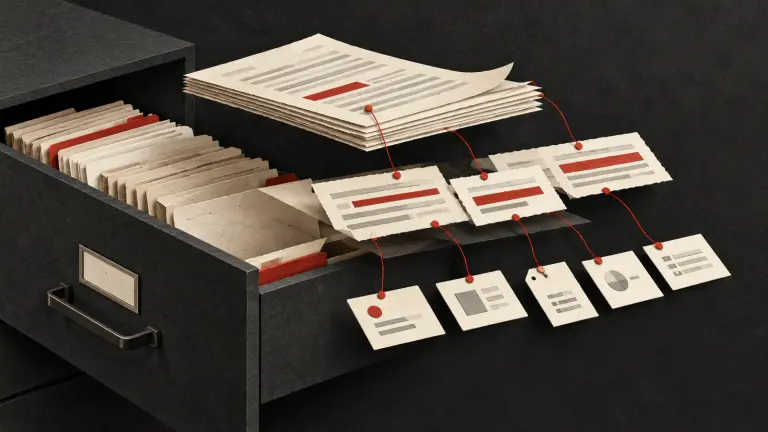
Begin with the complete contract set. Do not review only the signature PDF if the deal also relies on an order form, statement of work, data-processing schedule, service description, online terms, pricing exhibit or earlier amendment. Record each document’s name, version, date, parties, signatories, effective date and relationship to the others.
Then identify the source of truth for each commercial fact. The order form may control price and subscription term, the statement of work may control deliverables, and the master agreement may control liability and termination. The document hierarchy should be explicit. If two documents conflict, a precedence clause may resolve priority, but it does not eliminate the need to determine whether the parties intended the conflicting language to apply.
A useful review table is:
| Review object | What to compare | Common inconsistency |
|---|---|---|
| Parties and affiliates | Defined customer, supplier, group entities, signatories | Parent is named in the body but subsidiary signs the order form |
| Defined terms | Definition, use, capitalization and scope | “Customer Data” includes support logs in one clause but excludes them elsewhere |
| Dates and terms | Effective date, service start, renewal, notice, expiry | Renewal runs from signature in one document and go-live in another |
| Scope | Services, deliverables, exclusions and dependencies | SOW adds work not covered by the fee or acceptance clause |
| Fees | Currency, tax, billing interval, usage, credits | Order form price and main-body adjustment clause use different periods |
| Liability | Cap base, carve-outs, indemnity and remedies | Indemnity appears uncapped despite a general cap |
| Termination | Cause, notice, cure, exit and transition | One schedule promises data export while another permits immediate deletion |
| Cross-references | Section numbers, schedules, defined terms | Clause points to a moved or deleted paragraph |
| Incorporated material | URL, version, date, attachment and precedence | Online policy can change without a captured version |
| Amendments | Parties, scope, changed clauses and effective date | Amendment updates a definition but leaves connected clauses untouched |
How should reviewers test defined terms?
Start with the definitions section, but do not stop there. For each term that drives a right, fee, deadline or risk allocation, record where it is used and what the agreement makes it do. Terms such as “Affiliate,” “Services,” “Deliverables,” “Confidential Information,” “Customer Data,” “Security Incident,” “Fees,” “Claim,” and “Effective Date” often affect several clauses at once.
Use a simple defined-term ledger with these fields: exact term, definition source, operative use, connected schedule, owner, issue, and disposition. Search for singular/plural variants, capitalization changes and near-synonyms. A term may be defined but never used, used without definition, or used in a way that narrows or expands its original scope. The reviewer should check substance, not merely flag every phrase that differs in capitalization.
Test definitions against a realistic example. If “Service Data” excludes personal data, but an incident clause requires notice of a breach involving “Customer Data,” does the latter include Service Data? If “Business Day” is defined by one city’s holidays but the notice clause requires performance in another location, what calendar did the parties intend? If “Affiliate” includes all group entities, which entity is entitled to use the service or receive confidential information? Examples expose gaps that a word search cannot resolve.
Do not silently “fix” a definition to make the language uniform. A repeated term may intentionally have different meaning in distinct schedules. Confirm the intended scope with the contract owner, compare negotiation history if available, and record the change that the parties approve.
How do you validate cross-references and document precedence?
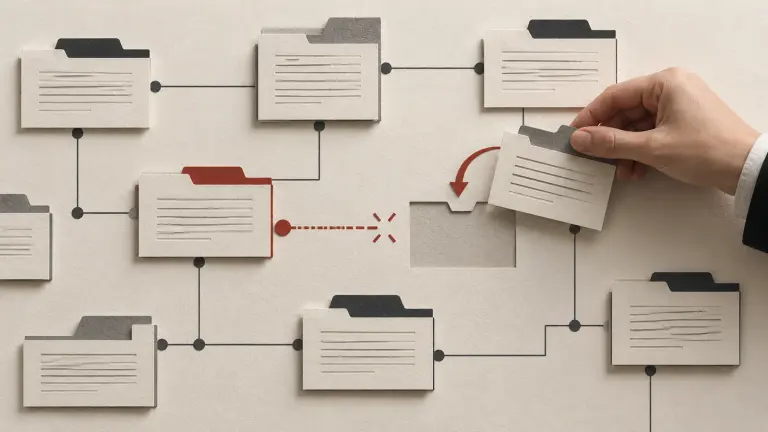
Check each reference at two levels. First, confirm that the cited clause, schedule, exhibit or attachment exists and points to the intended section. Second, read the destination in context to see whether it actually supplies the rule the referring clause needs. A reference can be technically valid but substantively wrong after a redline.
Review references affected by renumbering, deletion, inserted definitions, changed schedule names, and amendments. If a clause says “subject to Section 8.4” but that provision now governs audit rights rather than termination, the number alone will not reveal the mismatch. Confirm that defined terms within the reference have not also changed.
Then read the order-of-precedence clause against actual conflicts. Does it specify how the main agreement, order form, SOW, security schedule and online policies rank? Does it distinguish a specific negotiated term from general boilerplate? Does a later amendment supersede only the named clause or an entire prior document? If the hierarchy is missing or unclear, ask counsel and the business owner to resolve the conflict expressly rather than infer an answer from document labels.
For online terms, preserve the exact version incorporated into the contract, the date accessed, and the method by which later changes become effective. A URL alone may lead to changing text. The contract data extraction guide explains how to preserve source links and document metadata for review; it does not remove the need to inspect the incorporated text.
How should amendments and schedules be reconciled?
Build a contract-family index. For every base agreement, list each amendment, order form, SOW, renewal, notice, waiver and side letter. Record which entity signed it, when it took effect, the clauses it changes, and whether it contains a replacement or precedence rule. An amendment should be read with the base agreement and earlier amendments, not as a standalone document.
Use a delta table to track changes:
| Topic | Base agreement | Amendment/order form | Required resolution |
|---|---|---|---|
| Service scope | Master service description | SOW adds modules and integration | Confirm which specification controls acceptance |
| Effective date | Agreement date | Order form starts billing at activation | Define service, billing and renewal triggers separately |
| Fees | General payment clause | Order form has annual prepaid fee | Align invoice timing, taxes and disputed amounts |
| Termination | General 30-day cure | SOW has project-specific exit | State whether the project can end without ending the master |
| Liability | General cap | Data schedule has a separate limit | Confirm whether caps stack, apply separately or aggregate |
| Data and deletion | Main agreement requires return | Security schedule sets backup retention | Align timelines and permitted residual copies |
Where a term is amended, check every connected obligation. A revised renewal date may affect notice reminders, pricing adjustments, data export and purchase orders. A new deliverable may affect IP ownership, acceptance, warranty, support and fee clauses. A new data category may change privacy/security duties and subcontractor approvals.
Section 62 of the Contract Act addresses novation, rescission and alteration by agreement. The existence and effect of a change still depend on what the parties agreed and the surrounding documents. Use a signed amendment or other agreed method that clearly identifies the change, affected clauses, effective date, and documents that remain in force. Do not rely on a spreadsheet or internal note to modify the contract.
Preserve the electronic review and approval record
Retain the received draft, the reviewed version, approved changes and final comparison as separate records with the responsible reviewer and dates. Where another law requires records to be retained for a specified period, section 7 of the Information Technology Act, 2000 addresses when electronic retention satisfies that requirement, including accessible information, accurate representation and available origin, destination and dispatch or receipt details, subject to the section’s qualifications. It does not prescribe one retention period for every contract or make this consistency checklist mandatory. Identify the actual retention requirement before deleting a source or approval record.
Worked example: a renewal clause and notice date disagree
Fictional example. A technology company signs a master agreement with a 12-month term from the effective date. The order form says the service term starts when the customer’s production workspace goes live. The renewal clause requires notice 60 days before “the end of the then-current term.” A later amendment changes the subscription to 24 months but does not mention the renewal clause. The sales team has entered a cancel-by date 60 days before the master agreement anniversary.
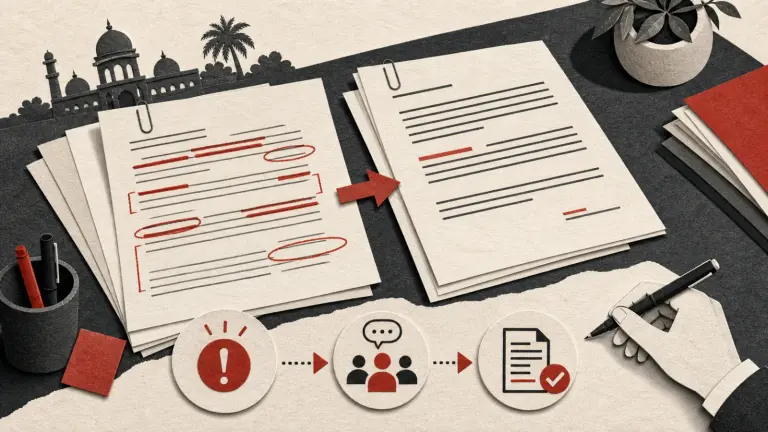
The review should not assume which date is right. The team should locate the effective-date definition, activation evidence, order-form precedence clause, amendment scope, and notice provision. The business owner should decide whether the service or subscription term starts at signature or activation. Counsel should draft an amendment that states the start date, duration, renewal date, notice deadline, and precedence between the master, order form and amendment. Operations can then replace the provisional reminder with the approved deadline and retain the source clause.
A pre-signature consistency checklist
- Assemble the complete signed or proposed contract family, including schedules and incorporated web terms.
- Confirm legal entities, signatories, effective dates and document versions.
- Identify terms that control price, scope, data, ownership, liability, deadlines or exit.
- Check each defined term at its operative uses, including variants and nested definitions.
- Validate every internal cross-reference and schedule name after redlining.
- Review order of precedence against every actual document conflict.
- Compare the base agreement with each amendment and order form as a cumulative set.
- Trace the impact of each material change into connected clauses and operational tasks.
- Record unresolved inconsistencies as decisions with an owner, evidence and due date.
- Confirm the final execution copy matches the approved wording and attachments.
A structured review can surface repeated terms and missing links, but a person must decide whether an apparent inconsistency is intentional and what the agreement should say. Do not describe a consistency check as a guarantee of legal validity, completeness or compliance. Use the in-house contract review playbook to route issues and the contract redlining workflow to control versions and approvals. For post-signature duties, see the contract obligation tracking workflow. Gotham’s India contract review workflow provides product context; contact Gotham for information about workflows.
Questions about contract consistency
Does a broken cross-reference make the entire agreement invalid?
Not automatically. The effect depends on the document, the importance of the provision, whether its meaning can be determined from context, the parties’ agreement, and applicable law. Section 29 addresses uncertainty, but a specific defect requires legal analysis.
Should every defined term be capitalized consistently?
Consistent capitalization helps readers, but capitalization alone does not determine meaning. Check whether the term is defined, where it is used, and whether different schedules intentionally assign a narrower meaning.
Can an order form override the master agreement?
It depends on the contract’s precedence and amendment language and the parties’ actual agreement. Read both documents and any specific conflict clause; do not assume a later date automatically controls.
Does a signed amendment replace the entire earlier contract?
Not necessarily. It may alter only specified clauses or replace the whole agreement if it says so. Identify its scope, effective date, superseded documents and surviving terms.
Can a checklist or automated scan decide which clause wins?
A checklist or scan can identify possible mismatches and point to the relevant text. A qualified reviewer must interpret the document hierarchy, negotiation history and facts and approve any correction.
What should be fixed before signature versus tracked after signature?
Resolve conflicts affecting parties, scope, fees, ownership, liability, term, termination, privacy and critical deadlines before signing where possible. A post-signature tracker can manage obligations, but it should use the final signed clause and must not be used to silently amend it.
Check formation, authority and execution in the relevant jurisdiction
Consistency review should also identify the applicable formation and execution requirements. These guides examine distinct local questions:
- Swiss Founders Before Incorporation: Put the Interim Deal in Writing
- Japan E-Contracts: Electronic Signature Validity and Evidence
- Brazil Electronic Signatures: Verify Identity, Authority and Evidence
- Swiss Court Rejects Your Signed PDF? Check the Channel and Signature
This article provides general workflow information, not legal advice. Consistency checks identify issues for human review and cannot determine the legal effect of an agreement without its full text, facts, and applicable law.
How Gotham researches and reviews field guides