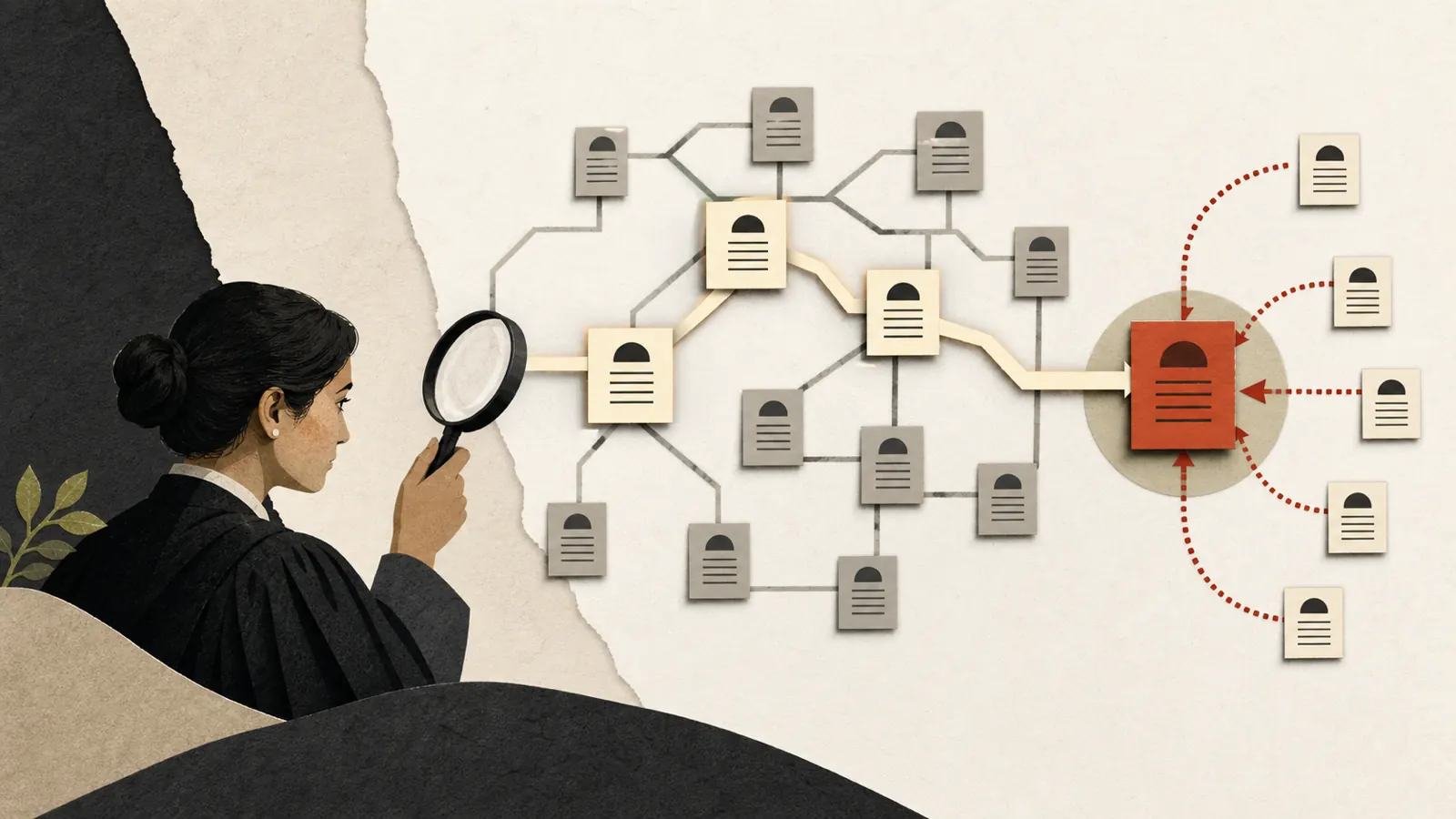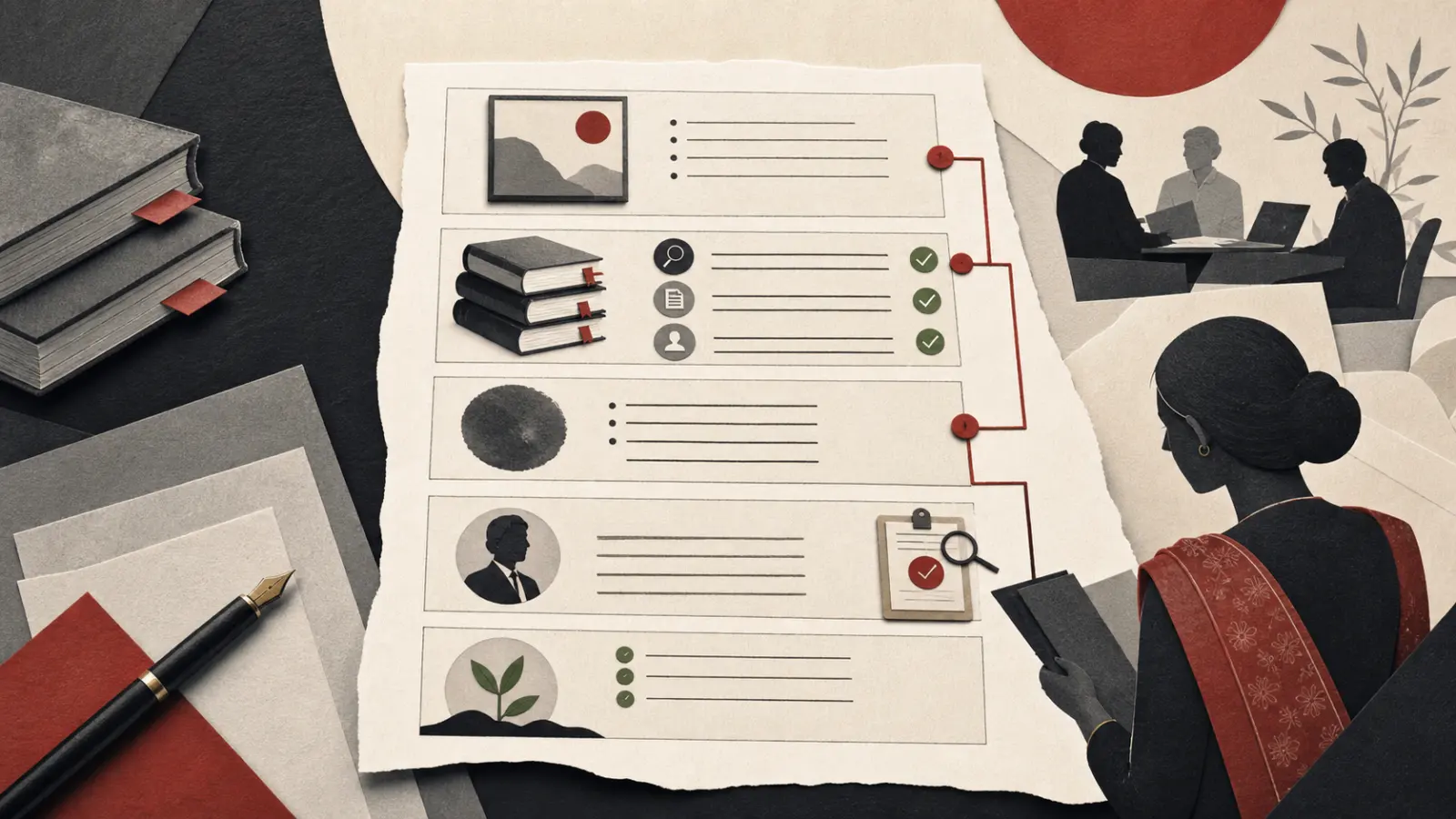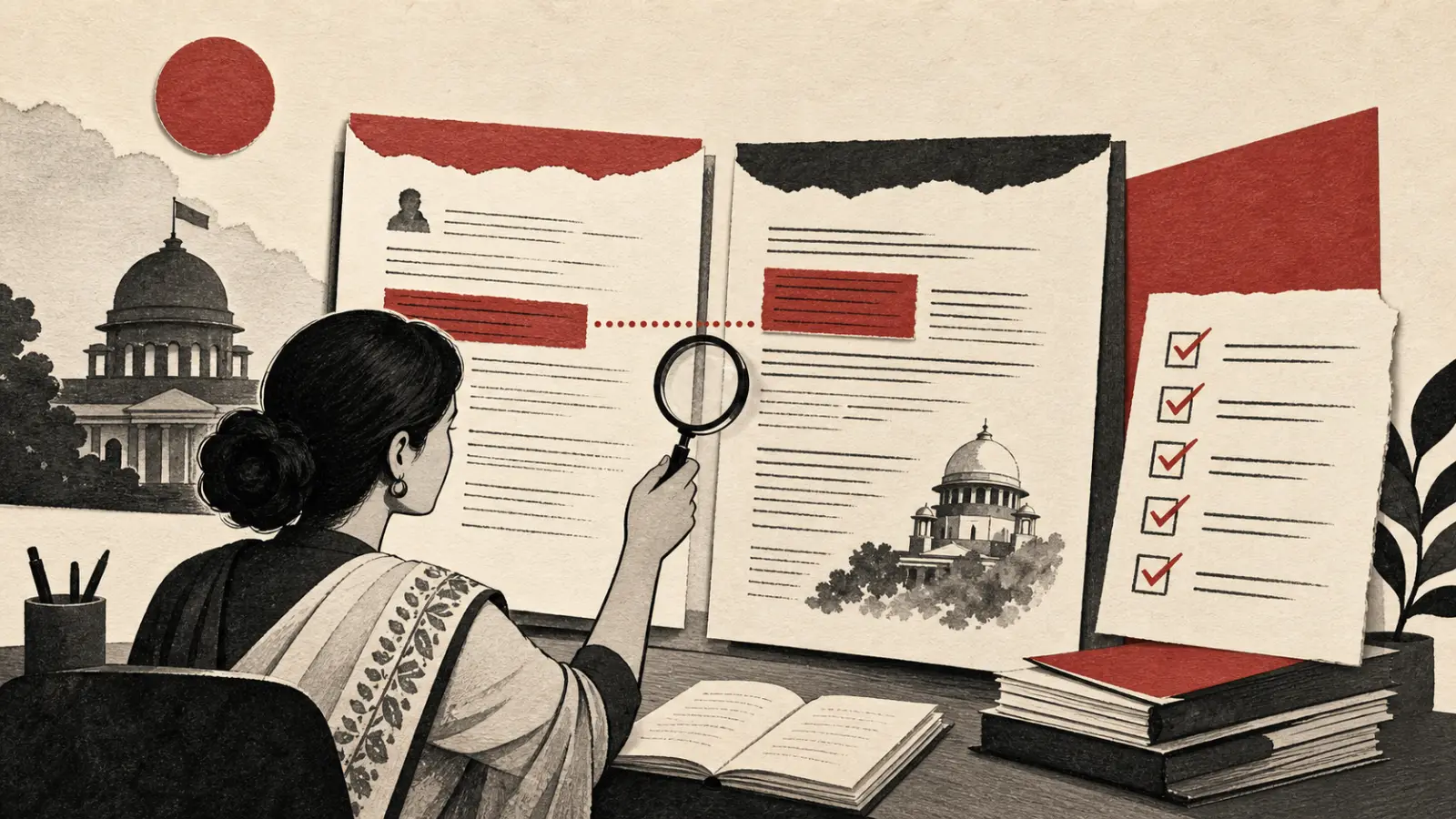
Case-law citation verification means proving four things about every authority in a brief, memo or opinion letter. The case exists and is the one you meant. Any quotation matches the source. The case is still good law. And the passage you rely on actually supports the proposition you cite it for. In US practice, that work is not optional polish. It is part of what a lawyer certifies when signing a filing.
This guide sets out a practical routine for federal practice, with notes on where state rules differ.
Why does citation verification matter in US practice?
In federal district courts, Rule 11(b) of the Federal Rules of Civil Procedure applies whenever an attorney presents a pleading, written motion or other paper. The attorney certifies, after "an inquiry reasonable under the circumstances," that "the claims, defenses, and other legal contentions are warranted by existing law or by a nonfrivolous argument for extending, modifying, or reversing existing law or for establishing new law."
The Second Circuit has spelled out what that means for citations. In Park v. Kim, No. 22-2057 (2d Cir. Jan. 30, 2024), counsel cited a state court decision that did not exist, having relied on a generative AI tool without reading the case. The court held: "At the very least, the duties imposed by Rule 11 require that attorneys read, and thereby confirm the existence and validity of, the legal authorities on which they rely." It referred the lawyer to its Grievance Panel.
A district court imposed sanctions for the same failure in Gauthier v. Goodyear Tire & Rubber Co., No. 1:23-CV-281 (E.D. Tex. Nov. 25, 2024). There, a response brief cited two cases that did not exist and quotations that could not be found in the cited authorities. The court ordered counsel to pay a $2,000 penalty into the court registry, attend a continuing legal education course on generative AI, and give a copy of the order to his client.
Three features of Rule 11 shape the risk:
- Under Rule 11(c)(3), the court can act on its own by ordering a lawyer to show cause why the conduct has not violated Rule 11(b). You cannot count on the other side to raise the error first.
- Under Rule 11(c)(5)(A), the court must not impose a monetary sanction against a represented party for violating Rule 11(b)(2). The monetary exposure for unsupported legal contentions falls on the lawyers and the firm, not the represented client.
- Rule 11 governs civil cases in federal district courts. State courts have their own rules, so check the equivalent rule wherever you file.
Professional conduct rules add a second layer. ABA Model Rule 3.3(a) says a lawyer shall not knowingly make a false statement of fact or law to a tribunal, or fail to correct a false statement of material fact or law previously made to it. It also requires disclosure of legal authority in the controlling jurisdiction known to be directly adverse and not disclosed by opposing counsel. Model Rule 1.1 requires competent representation, and Comment 8 tells lawyers to keep abreast of "the benefits and risks associated with relevant technology." The Model Rules are a template. Each state adopts its own version, so check the rule in your licensing state and in the forum. Park v. Kim, for example, cites New York's Rule 3.3(a).
What should you verify for each cited authority?
Run two passes. The first confirms identity and source. The second tests legal weight, currency and fit. A search hit is not a substitute for either pass.
| Check | What to compare | Where to confirm | Record in the log |
|---|---|---|---|
| Existence and identity | Case name, court, docket number, decision date, reporter citation | Official opinion from the court or an official repository | Full citation and source link |
| Court and weight | Court level, circuit or state, published or unpublished | Opinion caption and the court's publication designation | Binding or persuasive, and why |
| Quotation | Exact words and pinpoint page | Opinion text, with reporter pagination where you cite it | Pinpoint and version used |
| Proposition | Holding, dicta, concurrence, dissent, or a party's argument | Full section of the opinion, not the headnote | One-line statement of what the case decides |
| Subsequent history | Affirmed, reversed, vacated, rehearing, certiorari | Appellate dockets and later opinions in the same case | History as of the check date |
| Later treatment | Followed, distinguished, questioned, overruled | Citator report plus reading the key citing cases | Treatment note and date |
| Underlying law | Statute or rule amended after the decision | Current code or rule text | Version relied on |
For federal opinions, govinfo's United States Courts Opinions collection is run by the Government Publishing Office with the Administrative Office of the U.S. Courts. It provides opinions from selected appellate, district and bankruptcy courts, generally from 2004, with digital signatures that authenticate the files. Coverage is not complete, so a missing case there is a prompt to check the court's own website, not proof the case is fake.
For the Supreme Court, the Court's opinions page explains that slip opinions stay posted "until replaced with opinions edited to reflect the usual publication style of the United States Reports," including final pagination. If you pin cite a slip opinion, recheck the pin when the final version appears.
How do you confirm you have the right case?
Start with the most specific identifier you have. A docket number and decision date narrow the search faster than party names. Then open the opinion itself and compare at least four fields: court, date, docket number and parties.
Watch for these traps:
- Same parties, different opinion. One case can produce a panel opinion, an amended opinion, an en banc decision and an order on remand. Make sure the cited version is the one that says what you need.
- Wrong court. A state appellate decision and a federal decision applying that state's law can share parties and facts but carry very different weight.
- Headnotes and summaries. Editorial headnotes and research summaries are not the court's words. Do not quote them as if they were.
Does the authority actually support the proposition?
Find the quoted words or the cited page. Read the whole section, then the court's conclusion. Ask:
- Is this the court's holding, or dicta, a concurrence, a dissent, or a description of a party's argument?
- What issue was the court deciding at this point in the opinion?
- Are there limiting facts, conditions or exceptions nearby?
- Does the disposition match your characterization?
- If the case applies state law, is that state's highest court still in agreement?
Quote only what you need and keep the pinpoint. Many lawyers format citations in Bluebook style or as local rules require. Formatting is a separate step, though. A perfectly formatted citation to a case that does not say what you claim still fails Rule 11.
How do you check that a case is still good law?
Check two things separately: the case's own history and how later courts have treated it.
Subsequent history. Look for later decisions in the same case: affirmance, reversal, vacatur, rehearing en banc, certiorari and remand. If the opinion was vacated or reversed, you must know that before you rely on it.
Later treatment. Run the case through a citator tool, then read the citing cases that matter. Citator flags are a starting point. A red or yellow signal may relate to a different point of law, and a clean signal does not mean a later case has not narrowed your proposition.
Unpublished opinions. FRAP 32.1(a) says a federal court may not prohibit or restrict citation of unpublished federal opinions issued on or after January 1, 2007. Under FRAP 32.1(b), if the opinion is not available in a publicly accessible electronic database, you must file and serve a copy with your brief. The committee note says the rule "says nothing about what effect a court must give" to unpublished opinions, so check the circuit's local rules on weight. State courts set their own rules on citing unpublished decisions.
Record the date of every check. "Good law" without a date and a proposition is not a useful statement.
How should you check AI-assisted research and drafts?
ABA Formal Opinion 512 (July 29, 2024) addresses generative AI tools. It warns that relying on or submitting a tool's output without "an appropriate degree of independent verification or review of its output" could violate the duty of competence under Model Rule 1.1. It also says that, before submitting materials to a court, lawyers must review AI outputs, "including analysis and citations to authority," and correct errors.
Opinion 512 notes that some courts now require lawyers to disclose their use of generative AI. Requirements vary by district and by judge. Gauthier quotes Eastern District of Texas Local Rule AT-3(m), which tells lawyers who use such technology that they "must review and verify any computer-generated content." Before filing, check the local rules and the assigned judge's standing orders for any certification or disclosure requirement.
In Gauthier, the other side flagged the missing cases in its reply, but counsel did not try to locate and verify them until after the court's show-cause order. Use a stop rule instead. If one AI-assisted citation fails, treat the whole output as unverified:
- Extract every case, statute, quotation and pinpoint from the draft.
- Confirm each authority exists, using an official or authoritative source.
- Check every quotation word for word against the opinion.
- Check subsequent history and later treatment.
- Rebuild the argument from verified authorities rather than patching single citations.
- Record what changed, who checked it and the research cut-off date.
The same applies to work you supervise. Model Rules 5.1 and 5.3 address supervisory duties, and Opinion 512 discusses them for AI use. A partner signing a brief drafted by an associate, a contract lawyer or a tool still makes the Rule 11 certification.
Case law citation verification checklist
- Copy each material proposition and its citation into a verification log.
- Locate the opinion on an official or authoritative source and save the link.
- Match court, date, docket number and parties.
- Confirm which version you are citing: slip, amended, en banc or final reporter.
- Find each quotation word for word and record the pinpoint.
- Read the surrounding section and confirm the passage is a holding, not dicta or argument.
- Check subsequent history in the same case.
- Run a citator check and read the key citing cases.
- Check whether the statute or rule behind the case has changed.
- For unpublished opinions, check local rules and attach copies where FRAP 32.1(b) requires.
- Search for directly adverse controlling authority you must disclose.
- Check local rules and standing orders for AI certification requirements.
- Have a second reviewer check authorities that decide the motion or the advice.
What should you do when a citation fails?
| Failure | Immediate action | Follow-up |
|---|---|---|
| Case cannot be found | Stop relying on it and search the court's own site | Ask the author for the source; remove it if unresolved |
| Wrong case or version | Remove it from that proposition | Recheck every argument that leaned on it |
| Quotation does not match | Correct the words and pinpoint from the opinion | Check other quotations from the same source |
| Passage does not support the point | Rewrite or delete the proposition | Find real support; do not reverse-engineer it |
| Reversed, vacated or overruled | Pause use of the proposition | Analyze the later decision and escalate |
| Error found after filing | Escalate to the responsible lawyer at once | Consider correction duties under Rule 3.3 and Rule 11 |
| AI-generated citation fails | Quarantine the whole output | Re-verify every authority in it |
Under Rule 11(c)(2), a sanctions motion must be served before it is filed, and it must not be filed if the challenged contention "is withdrawn or appropriately corrected within 21 days after service." That is a reason to correct quickly, not a reason to wait.
How can teams make citation checks repeatable?
Set a minimum evidence standard and scale review to the stakes. A background memo can sample peripheral citations. A dispositive motion needs full source, quotation and treatment checks on every authority. The responsible lawyer sets the tier.
Keep the log with the work product: proposition, citation, source link, pinpoint, history and treatment, reviewer and date. Build the check into your filing calendar so it is not squeezed out on deadline day. Our litigation readiness plan guide covers the wider controls that sit around a matter, and the guide to evaluating legal AI accuracy shows how to test research tools against the same citation standard. If your team also files in England and Wales, see the UK version of this checklist.
Gotham lets US legal teams research federal and state case law, the U.S. Code and federal regulations, review contracts at scale and draft in Word, in one workspace, and every answer cites the passage it relies on. To see how that fits your review process, talk to Gotham with one representative research task.
This checklist is general information, not legal advice. Court rules, local rules and judges' orders vary, so a qualified lawyer should review the authorities in each filing.
Questions about citation verification in US practice
What does Rule 11 require when I cite a case in federal court?
By presenting a paper, an attorney certifies under FRCP 11(b)(2), after an inquiry reasonable under the circumstances, that its legal contentions are warranted by existing law or by a nonfrivolous argument to change it. The Second Circuit said in Park v. Kim (2024) that, at the very least, this requires attorneys to read and confirm the existence and validity of the authorities they rely on.
Can I cite an unpublished federal opinion?
FRAP 32.1(a) bars federal courts from prohibiting or restricting citation of unpublished federal opinions issued on or after January 1, 2007. If the opinion is not in a publicly accessible electronic database, you must file and serve a copy with your brief. Rule 32.1 does not decide what weight the opinion carries, so check the court's local rules.
Do I have to tell the court I used AI to draft a brief?
It depends on the court. ABA Formal Opinion 512 notes that some courts require lawyers to disclose their use of generative AI, so check the local rules and the assigned judge's standing orders. Whatever the disclosure rule, you remain responsible for verifying every citation and quotation before filing.
What should I do if I find a fake or wrong citation after filing?
Act promptly. ABA Model Rule 3.3(a)(1) bars a lawyer from failing to correct a false statement of material fact or law previously made to the tribunal, and your state's version of the rule will apply. Under FRCP 11(c)(2), a sanctions motion must not be filed if the challenged contention is withdrawn or appropriately corrected within 21 days after service of the motion.