If your time records, pay statement and own shift notes do not match, start by preserving each version and rebuilding the hours one workday at a time. A difference may be a correction, a rounding or entry error, a disputed meal period, or unpaid work; the documents and surrounding facts matter. In California, employers generally must keep accurate time records for nonexempt workers, and employees must be paid for compensable time the employer knew or should have known was worked. A mismatch is a reason to ask clear questions, not proof by itself that anyone acted intentionally.
This guide is for California workers reviewing hours, overtime, meal periods or short-shift pay. It is not a decision about whether a particular worker is exempt, which wage order applies, or what a particular period at home counts as. A customer-facing, production, healthcare, agricultural or other job may be covered by different detailed rules. Start with a record that lets you and the employer discuss the same shifts.
Preserve the records before trying to reconcile them
Save the schedule or appointment list, clock-in and clock-out entries, timecard versions, pay statements, bank deposits, messages about assignments, and any written explanation for a change. If an app or portal may overwrite old entries, download or photograph what is visible and note when you captured it. Keep original files unchanged; annotate a separate copy. Do not access systems you are not authorized to use or copy other employees’ personal information.
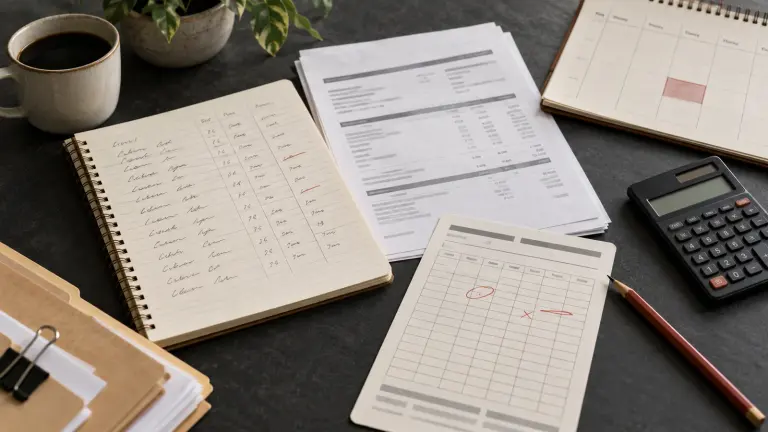
Create a table with one row per workday. Record scheduled start and finish, actual start and finish, each assignment, travel or preparation the employer required, meal-period start and end, time you were asked to remain available, and the source supporting each entry. Label estimates as estimates. If a time is uncertain, write a range or mark it unknown rather than supplying a precise minute you cannot support.
A useful sequence is: (1) your contemporaneous notes or timekeeping record; (2) employer time records; (3) pay statement and payroll calculation; and (4) communications explaining the shift or correction. Each source answers a different question. A pay statement may show total hours without explaining the schedule; a message may establish an instruction but not the exact duration of the work.
For a repeatable recordkeeping process, see Gotham’s case chronology guide and evidence-linked chronology workflow. If the terms that define your pay, workday or scheduling duties are scattered across an offer letter, handbook and later messages, the contract document extraction guide explains how to locate and compare clauses. These are organization tools, not legal authorities.
Ask for the payroll records and the reason for each change
California Labor Code section 226 gives current and former employees a right, on reasonable request, to inspect or copy records pertaining to their employment. The employer generally must respond as soon as practicable and no later than 21 calendar days after the request. Section 226 also governs itemized wage statements, which generally show gross wages, total hours for covered workers, deductions, net wages, pay-period dates, employer identity, and applicable rates and hours. The Labor Commissioner’s records guidance summarizes the request process.
Make a short, dated request identifying the pay periods and the records you need. For example: “Please provide the time and payroll records for [dates], including the original and corrected time entries, the recorded meal periods, and the calculation for overtime and any short-shift pay. Please identify when each correction was made and the reason for it.” Keep proof that the request was sent and the response. Avoid accusations in the first request unless you have evidence supporting them; a neutral question is easier to answer and preserves a clear record.
A discrepancy may have a legitimate explanation, such as a corrected punch or an entry that was not a work period. Compare the employer’s explanation against your notes, schedule and communications. If the employer says you were not working, list what you actually did, who assigned it, and whether a supervisor saw or received the result. California’s wage rules generally require pay for work the employer suffers or permits, even if the work was not authorized; the employer may address policy violations separately. The key factual issue is what work occurred and what the employer knew or should have known.
Recalculate overtime only after checking coverage
For many nonexempt employees, California’s general overtime rule requires one-and-one-half times the regular rate for hours worked above eight in a workday through twelve, and above forty in a workweek. Double time generally applies after twelve hours in a workday and for specified hours on a seventh consecutive workday. The Labor Commissioner’s overtime FAQ explains the general rules and exceptions. But the worker’s exemption status, occupation-specific Wage Order, alternative workweek arrangement and other statutory exceptions can change the analysis.
Use actual hours worked, not just hours paid, and keep each workday and workweek distinct. A missed meal period or reporting-time payment is not necessarily an hour worked for overtime calculations. Bonuses, commissions and other compensation can also affect the regular rate used to calculate overtime. Do not multiply the $24.75 hourly rate in an online example by a guessed number of hours and treat the result as the legally correct amount; identify all pay components and the correct workweek first.
The employer’s own labels are not decisive. A worker described as “hourly,” “part-time,” or “independent” may still need a separate legal classification analysis. Likewise, not every hourly employee is automatically nonexempt. If the role includes commission or piece-rate pay, an exemption, a union agreement or an industry-specific schedule, ask an adviser to identify the rule before calculating a claim.
Treat meal periods and short shifts as separate questions
For covered employees, California Labor Code section 512 generally requires an uninterrupted meal period when work exceeds five hours, with a second meal period generally required when work exceeds ten hours, subject to statutory exceptions and valid waivers. The Labor Commissioner’s meal-period guidance explains the baseline and exceptions. Whether a period was a lawful off-duty meal depends on whether the employee was relieved of all duty. A timecard entry showing a meal is evidence of the recorded entry; it does not settle whether the person actually received an uninterrupted break. Record when the break began, whether work continued, who interrupted it, when duties resumed and any instruction to remain available.
Reporting-time pay is a distinct issue from unpaid hours actually worked. Under the applicable wage-order rule, an employee who is required to report but is not put to work, or is furnished less than half the usual or scheduled day, may be owed half the usual or scheduled day at the regular rate, subject to a two-hour minimum and four-hour maximum. A second required report in the same workday that provides less than two hours has a separate two-hour payment rule. The wage orders also contain exceptions, including certain interruptions outside the employer’s control.
Do not assume that an empty appointment calendar or a day spent waiting at home automatically qualifies. The question’s facts say the employee was expected to remain available at home between possible appointments, but the restrictions, scheduling instructions and actual response requirements matter. California’s published Court of Appeal decision in Ward v. Tilly’s held that a required call-in procedure for an on-call shift can constitute reporting for work in the circumstances alleged; it did not decide every form of remote availability. The Labor Commissioner’s reporting-time FAQ gives examples such as logging on remotely, calling at the employer’s direction, or setting out on a route. Record exactly what the employer required and did, then ask whether the applicable wage order and case law cover it.
Build the question around evidence
Before raising the issue, prepare a one-page comparison with the pay period, scheduled hours, actual hours, employer-recorded hours, meal entries, rate, pay received, and the difference you are asking about. Attach only records needed to explain that comparison. Keep copies of originals and note any later correction. If a supervisor explains a change orally, send a calm follow-up confirming what you understood and inviting correction.
A fictional example: A worker’s shift note says 9:00 a.m.–6:00 p.m. with a 30-minute meal. The time system later shows 9:00 a.m.–5:30 p.m. and the pay statement totals eight hours. The worker should not immediately conclude that one hour was stolen. They can ask whether the system deducted a meal, whether the end time was corrected, and what record supports the change. If messages show a customer appointment at 5:45 p.m. or a supervisor requested a close-out task afterward, preserve those records and compare them with the response. The example illustrates a method, not a finding about any employer.
If you were asked to stay home for possible appointments, make a separate row for each interval. Note whether you had to answer within a fixed time, stay in a particular place, monitor a phone or application, travel to collect a vehicle, or perform work between assignments. Also note how much notice you received and whether you could use the time freely. These details may matter to an hours-worked analysis, but they do not establish pay entitlement by themselves.
Keep a separate record if you fear retaliation
The question says the employee is still working and is worried about retaliation. California Labor Code section 98.6 protects specified activity, including making an oral or written complaint that wages are owed, from retaliation within the statute’s scope. That protection does not decide whether a particular time entry is wrong or prove that a later schedule change was retaliatory. If something changes after a pay complaint, record the date, what changed, who communicated it, and any stated reason. Save schedules, evaluations, messages and pay records from before and after the complaint. The Labor Commissioner lists a separate retaliation complaint process and generally states a one-year filing period for most of its retaliation laws; exceptions and other legal routes can differ. Check the current deadline promptly rather than assuming a payroll discussion pauses it.
Gotham’s document workflow overview describes ways to organize records into a review-ready matter. It cannot determine which wage order applies or predict a claim outcome. If the amount or legal route is important, consider speaking with the Labor Commissioner’s Office or a California employment lawyer before signing a release or waiting on a deadline.
Consider an appropriate next step
After you have asked for the records and compared them, you can decide whether to raise an informal payroll question, submit a written wage claim, or seek individual legal advice. The California Labor Commissioner’s Office explains how to file a wage claim and what information to bring. The right route depends on the claim, dates, employer and evidence; an administrative claim is not the right mechanism for every workplace dispute.
Keep a copy of any complaint, claim form, employer response and settlement proposal. Do not sign a release or cash a check with disputed terms without understanding what it covers. Deadlines can differ by legal theory, so do not assume that asking payroll a question pauses a filing deadline. A lawyer or official agency can help identify the relevant time limit and forum based on the actual records.
Source notes
The main legal references are California Labor Code sections 226, 510 and 1174; the applicable Industrial Welfare Commission Wage Order; the California Labor Commissioner’s overtime, meal-period and reporting-time guidance; and Ward v. Tilly’s, Inc., 31 Cal. App. 5th 1167 (2019). The wage order and facts determine how the general rules apply. This article is an evidence-organizing overview, not a legal opinion about the online question or any individual claim.
Questions about California hours and pay records
Can a California employer edit a time record?
A correction is not automatically unlawful, but the employer must keep accurate records and pay for compensable hours worked. Compare the original entry, the changed record, the explanation, and the wage statement; preserve evidence and ask for the payroll records rather than assuming intent from a discrepancy alone.
Do all California hourly workers receive daily overtime after eight hours?
Many nonexempt employees do, but exemptions and occupation-specific rules can change the calculation. Under the general rule, daily hours above eight through twelve and weekly hours above forty are generally paid at one-and-one-half times the regular rate, with double time for specified longer hours. Check the worker’s status and applicable Wage Order.
Does waiting at home for an appointment count as paid time?
Not automatically. The answer can depend on the restrictions, required response, location, control over the time, and applicable Wage Order. Keep the schedule and instructions, and separate time actually worked or spent under employer control from time merely available for a possible assignment.
When can California reporting-time pay apply?
Generally, when an employee is required to report for work but is not put to work or receives less than half the usual or scheduled day, the Wage Order may require half that day’s work, with a two-hour minimum and four-hour maximum. A second report with under two hours of work has a separate rule. Exceptions and the meaning of reporting depend on the Wage Order and facts.
How can I request California payroll records?
A current or former employee may request to inspect or copy payroll records relating to their employment. Labor Code section 226 generally requires compliance as soon as practicable and no later than 21 calendar days after the request. Keep a dated copy of the request and check the current law for the exact scope and any exception.
Where can I raise a California unpaid-wage concern?
The California Labor Commissioner’s Office accepts wage claims and explains other complaint routes. Choose a process only after identifying the employer, work dates, pay periods, records, and relief sought; deadlines and the right forum can differ by claim. A claim filing does not guarantee recovery.
General information, not legal advice. This guide concerns California wage-and-hour records. Overtime exemptions, reporting-time rules, meal periods, and record requirements depend on the worker’s classification, occupation, applicable Industrial Welfare Commission Wage Order, schedule, and facts. A home-availability period is not automatically compensable or automatically reporting time. Contact the California Labor Commissioner’s Office or an employment lawyer about a specific claim.
How Gotham researches and reviews field guides