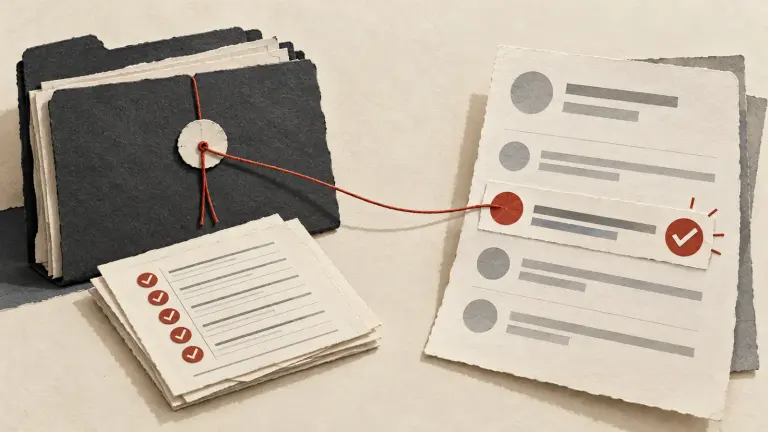
An unfamiliar loan account or credit enquiry on your report does not by itself prove identity theft. It may reflect a reporting error, an application you do not recognize, or identity misuse. Save the report, contact the named lender through a verified channel, and dispute the entry with the credit information company (CIC) that issued the report. Keep both reference numbers and record what each institution says it will investigate.
This guide covers first steps for an unfamiliar account or enquiry in India. A credit enquiry is not the same as an opened loan account. The right escalation route and any remedy depend on the lender, the CIC, current rules, and what the records show.
Start by identifying the report entry
Download a current copy from the official website of the CIC whose report shows the item. Record the report date and the exact details displayed:
- lender or credit institution name;
- account or enquiry reference, if shown;
- date opened or date of enquiry;
- reported balance, status, and payment history; and
- any unfamiliar address, telephone number, or other profile detail.
Save the original report securely because it contains sensitive personal and financial information. Make a separate working copy with only the relevant page or entry. Check the other sections for related accounts or enquiries, but do not assume an unfamiliar enquiry became a loan.
If the entry is in a TransUnion CIBIL report, its current consumer dispute process says that only reports from the past 60 days are eligible for dispute. Check the current report date and CIBIL's instructions promptly. That is CIBIL's process; do not assume the same report-age rule applies to another CIC.
Contact the lender named on the entry
Use the lender's official website, published grievance channel, or branch contact details. Do not use a phone number or payment link supplied by an unsolicited caller. Send a concise written complaint that:
- identifies the report field and reference;
- says clearly that you do not recognize the account or enquiry;
- requests an investigation and asks what application, identity-verification, and disbursal records the lender can provide;
- asks the lender to mark the item as disputed while it investigates, where its process permits; and
- requests correction of information it supplied if the investigation finds it inaccurate.
Keep the submission, date, acknowledgement, complaint number, and any reply. Do not pay a caller or agent who promises to remove an account from a credit report. Avoid sending an OTP, password, or a complete identity document through an unverified channel.
If the facts suggest identity misuse or an online financial fraud, consider reporting them to local police or through the National Cyber Crime Reporting Portal. The portal includes online financial fraud among reportable cybercrime categories. Its FAQ says a complaint under the portal's cybercrime section can be withdrawn before it is converted into an FIR. A portal acknowledgement is not itself an FIR or a finding about who is responsible. The 1930 helpline is for online financial fraud; an unfamiliar report entry alone may not establish that such fraud occurred. Follow current portal and local police instructions for your circumstances.
Dispute the entry with the credit information company
Use the official dispute process of the CIC that issued the report. Identify the exact account, enquiry, or profile field and state whether you dispute ownership, accuracy, or both. Attach only relevant supporting material through the CIC's verified submission route. Save the dispute ID and a copy of everything submitted.
TransUnion CIBIL says it can take up to 30 days to resolve a dispute depending on the financial institution's response, and that it cannot change or delete information without confirmation from the institution that supplied it. Its consumer dispute page also says disputes are free. These points describe CIBIL's process; if another CIC issued the report, check that CIC's current instructions and fees directly.
The lender and CIC may need to coordinate. A dispute marker or acknowledgement shows that an issue is being reviewed; it does not decide who applied, establish criminal responsibility, or guarantee that a report will be changed. If the lender says the account is yours, ask what records support that conclusion and how to provide contrary evidence. If it identifies an error, ask for its correction to be sent to each relevant CIC and obtain the date it was sent.
Understand the delayed-correction compensation rules
RBI's 26 October 2023 compensation circular sets a combined 30-calendar-day resolution framework for complaints initially filed with a credit institution (CI) or CIC. Its explanation says a CI has 21 days to send corrected information after it is informed, leaving the CIC effectively the remaining nine days within that overall period. These are parts of one 30-day period, not consecutive periods that create a 51-day allowance.
The circular separately states conditional compensation duties. It provides ₹100 per calendar day when a complaint remains unresolved beyond 30 calendar days from initial filing, apportioned among the concerned CIs and CICs. It also identifies when a CI must pay for missing its 21-day correction step and when a CIC must pay if it misses the stated 30-day resolution condition despite the CI having sent its update within 21 days. The responsible institution and calculation depend on who was informed when, whether corrected information was sent, and when the resolution report was delivered. Read the complete circular and keep the dates and acknowledgements needed to assess the conditions; do not infer automatic or overlapping payments from the headline rate.
The circular lists exclusions, including specified disputes under section 18 of the Credit Information Companies (Regulation) Act, credit-score computation or model disputes, and matters already decided or pending before another forum. It applies to the institutions named in the circular, but a particular dispute may still fall outside its compensation framework. Seek qualified Indian advice if the applicable payer, exclusion, or calculation is disputed.
Escalate a service complaint only after checking eligibility
First use the lender's formal grievance route and keep its final response or proof of when the complaint was received. The Reserve Bank–Integrated Ombudsman Scheme, 2026 FAQ describes a grievance process for deficiency in service by regulated entities covered by the Scheme, which took effect on 1 July 2026. It has prior-complaint, timing, and maintainability requirements, and the FAQ identifies certain credit-information grievances with a remedy under section 18 of CICRA among the exclusions.
Do not assume that every credit-report correction dispute qualifies for the RBI Ombudsman route. Check the current Scheme and RBI complaint system for the exact entity and issue. An Ombudsman complaint is a service-grievance route, not an identity-theft investigation or a decision about criminal responsibility. Filing does not guarantee admission, correction, compensation, or a particular outcome.
Protect accounts and keep a dated record
If you suspect account credentials were exposed, change affected passwords using a trusted device, enable available multi-factor protection, and contact your bank if payment or banking credentials may be at risk. Share identity documents only through a verified lender, CIC, police service, or official portal when needed. Redact unrelated information if the recipient accepts a redacted copy.
Maintain a simple log with the date, institution, channel, complaint or dispute number, documents sent, response, and next step. Save later reports so you can compare the exact field and status. Do not install remote-access software at a caller's request or share an OTP.
Final checklist
- Downloaded and securely saved a current report from the CIC that shows the entry.
- Identified whether the item is an account, enquiry, or profile detail.
- Contacted the named lender through a verified channel and saved its reference.
- Filed a specific dispute with the report-issuing CIC and saved its dispute ID.
- Kept a dated record of submissions, replies, and later report copies.
- Checked the current compensation and escalation conditions instead of assuming eligibility.
- Reported suspected cybercrime through the appropriate official route when the facts support it.
An unfamiliar entry deserves prompt investigation, but the report alone cannot show who applied or determine liability. The lender and CIC must review the source records. If collection action, police contact, court papers, or significant financial exposure is involved, seek qualified Indian legal advice.
For a separate issue involving a loan that was repaid but still appears open, see our guide to a closed loan still showing as active on a credit report. Legal and operations teams can also review Gotham's document organization guide and workflow overview for general ways to keep source documents, dates, and ownership findable. These product workflows do not replace an official credit-report dispute process. Contact Gotham to discuss a team's document workflow.
Official sources
- RBI framework for compensation for delayed correction of credit information, 26 October 2023
- Reserve Bank–Integrated Ombudsman Scheme, 2026 FAQ
- TransUnion CIBIL consumer dispute process
- National Cyber Crime Reporting Portal and portal FAQ
- Ministry of Home Affairs update on helpline 1930 for online financial fraud reporting, 28 July 2026
Questions
Does an unfamiliar loan entry prove that someone stole my identity?
No. A report entry alone does not establish who applied or whether identity misuse occurred. Ask the named lender to investigate and compare the entry with the lender's application and account records.
Should I contact the lender or the credit information company first?
Contact the lender named on the entry and raise a dispute with the credit information company that issued the report. Keep each acknowledgement and reference number because they may investigate different parts of the issue.
Can a credit information company delete an account without the lender's confirmation?
TransUnion CIBIL says it cannot make a correction, deletion, or addition without confirmation from the concerned bank or financial institution. Other credit information companies have their own current processes; check the issuer of your report.
Will every delayed credit-report correction qualify for ₹100 per day?
No. RBI's framework sets a conditional compensation process for qualifying complaints that remain unresolved beyond 30 calendar days. Who must pay and whether an exclusion applies depend on the institutions involved and the complaint history.
General information only, not legal, financial, or credit-repair advice. An unfamiliar report entry may be an error, a reporting issue, an application you do not recognize, or identity misuse; the records and available process depend on the lender, credit information company, and facts. Verify current official instructions and obtain qualified Indian advice for a specific dispute.
How Gotham researches and reviews field guides