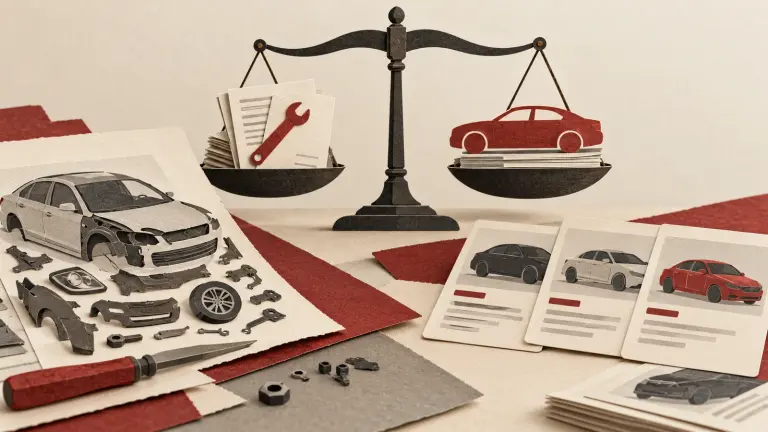
A repair quote and a write-off offer answer different questions. The garage estimates what identified repairs may cost. The insurer may decide the vehicle is a total loss and offer its pre-accident market value under the relevant claim route. A lower repair estimate can be useful evidence, but it does not by itself require the insurer to repair the car or prove that its valuation is wrong.
The practical first step is to identify who is handling the claim and what decision you are challenging. If you are claiming under your own comprehensive policy, the policy wording and the insurer's claims process matter. If the other driver's insurer is dealing with your property-damage claim, the claim is against the person said to be responsible and their motor liability insurer; your own third-party-only policy may not cover damage to your own vehicle. Do not assume that a third-party insurer's offer creates a right to a repair under your own policy.
This guide is for UK vehicle owners disputing a total-loss decision, valuation or salvage offer after a collision. It is general information, not a determination of liability or entitlement. The claim documents, policy, vehicle condition and route can change the analysis. For a separate issue involving a privately sold car with a defect, see our guide to a disclosed defect in a German private car sale; the legal rules there are different.
First separate three decisions
People often use “write-off” to mean the insurer has decided not to repair. There are usually three distinct questions to clarify:
- Is the vehicle being treated as a total loss? The insurer decides whether it will settle on that basis under the claim route or policy terms. GOV.UK explains that an insurer generally pays the vehicle's current value instead of the cost of repairs when it writes a damaged vehicle off.
- What was the vehicle worth just before the accident? The valuation is a separate amount from a garage's repair estimate. Under most motor policies, the insurer's liability is based on the vehicle's pre-accident market value, subject to policy terms and any applicable deductions.
- What happens to the damaged vehicle? A settlement may involve transferring the salvage to the insurer or agreeing that the owner keeps it for a reduced amount. Ask who owns it after settlement, what category applies, and what steps are needed before it can be used again.
The insurer's estimate that repairs exceed a threshold does not itself prove the payout is too low. Keep the total-loss decision and the value calculation separate while you ask for supporting information.
Identify the claim route before disputing the offer
Check the letters and policy schedule. Record whether the handler acts for your policy or the other driver's insurer. Ask in writing:
- Is this an offer under my policy or a third-party liability offer?
- Has liability been admitted, denied or left open?
- Is the offer for the vehicle's pre-accident value, repairs, or a settlement that includes salvage?
- Does the figure include an excess, salvage retention deduction, policy limit or other deduction?
- If I reject the offer, what happens to storage, inspection, hire-car or recovery charges?
Third-party cover ordinarily covers liability to other people rather than damage to your own vehicle. Do not assume your own insurer will pay for your car; a claim against the at-fault driver's insurer is a different route, dependent on liability and evidence.
For a third-party motor claim involving a UK-based vehicle, FCA rules in ICOBS 8.2 set a process for reasoned offers and replies. If liability is not contested and the damages have been quantified, the at-fault driver's insurer generally must make a reasoned offer within three months after receiving the claim. If liability is denied or unclear, or the amount is not fully quantified, the insurer must provide a reasoned reply. The rules define a fully quantified claim by written evidence supporting the amounts claimed. If liability was first denied and is later admitted, or the amount is quantified later, different three-month timing provisions apply. This does not mean the insurer must accept your preferred figure, and it does not make an unsubstantiated estimate a fully quantified claim.
Test the valuation with like-for-like evidence
The FCA's motor-valuation review says firms should identify a fair estimate of market value and be able to justify deductions using the evidence in the individual case. It notes that insurers commonly use retail motor-trade guides and that a single guide may not always be enough where guide values differ. The Financial Ombudsman Service's public approach also considers specialist valuation guides and other evidence such as adverts or expert opinion.
Build a comparison set for the vehicle's value immediately before the accident, not the value of a repaired vehicle after it. Look for cars matching:
- same make, model, generation and trim;
- similar first-registration date, mileage and engine or battery specification;
- comparable optional equipment and modifications;
- similar service history, MOT status and pre-existing condition;
- listings or transactions close to the accident date and in a relevant UK market.
Keep each listing's URL, capture date, asking price, mileage and differences from your car. Asking prices are not completed sale prices; explain why each is comparable.
Add evidence about your own vehicle: purchase invoice if recent, service history, MOT records, receipts for recent work, photographs taken before the accident, option/specification documents and any independent valuation. If the insurer made a condition deduction, ask what defect it found, how it affected market value and what evidence supports the amount. The FCA says deductions should be based on the available evidence, not a blanket amount that ignores the individual vehicle.
A repair quote serves a different purpose. Ask what was inspected, what parts and labour are included, whether the quote is provisional, and whether hidden damage or safety work could change it. Request the insurer's engineer report and ask the garage to address any different scope.
Ask for the total-loss basis and salvage calculation
Ask for the key documents and calculations, not only a reconsideration:
- the pre-accident valuation and date it relates to;
- valuation guides or other comparables used, with the vehicle details entered;
- each deduction and its reason, including condition, mileage, previous history or policy excess;
- the engineer's inspection findings and repair estimate;
- the damage category and any information on structural or non-structural damage;
- the net amount payable and the calculation if you retain the salvage;
- the deadline for responding and whether accepting an interim amount affects any disputed balance.
Before accepting part of an offer, ask whether it is an interim payment or full and final settlement and whether it depends on transferring the vehicle. Read any release or salvage terms before signing.
For Category N, GOV.UK says the vehicle may be used again if repaired to a roadworthy condition. Category S involves structural damage and has different registration-document steps if retained. Categories A and B cannot be returned to the road in the same way. The category alone does not certify that a particular repair is complete or safe. Arrange competent inspection and repairs, confirm MOT/roadworthiness requirements, and check the insurer's terms before driving.
Escalate through the route that fits
For a claim under your own policy, make a formal complaint to the insurer if the explanation or handling remains unsatisfactory. State the decision you dispute, the evidence you supplied, what answer you want and a reasonable response date. GOV.UK's complaint guidance says a consumer can usually refer an unresolved financial-service complaint to the Financial Ombudsman Service after the business's final response or if it has not responded within eight weeks, but eligibility and jurisdiction rules still apply. The Ombudsman's motor valuation approach considers the evidence, valuation guides and policy terms; it does not guarantee a particular outcome.
For a direct claim against another driver's insurer, do not assume that you can use the Financial Ombudsman in the same way as a policyholder complaining about their own insurer. The third-party motor liability process does not replace the injured party's separate ability to pursue proceedings against the person responsible or the insurer. If the insurer will not explain its position or you are considering court action, obtain independent legal advice about the claim, evidence, costs and limitation period. Do not rely on a general article to calculate a deadline for your specific accident.
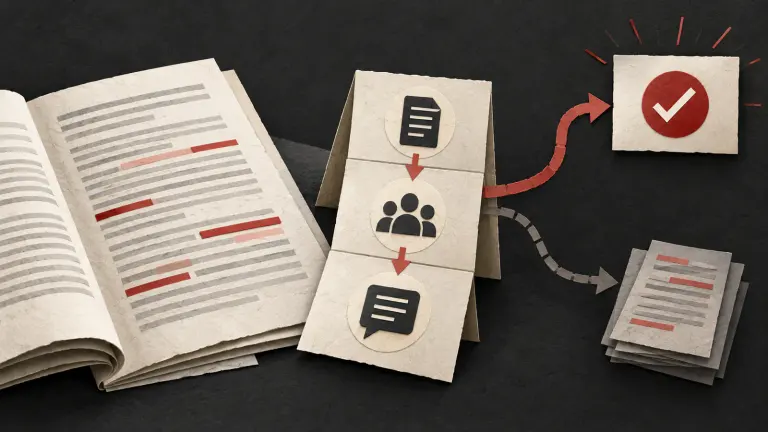
If you received a repair offer or engineer's report, organize it with the policy and valuation evidence before seeking advice. Gotham's contract review playbook shows a structured way to compare terms and related documents. For coordinating correspondence and next steps, see the legal case-intake workflow or Gotham's document workflows.
Evidence checklist before you reply
- Claim reference, accident date, insurer and whether it is your policy or a third-party claim.
- Written confirmation of whether liability has been admitted, denied or remains unresolved.
- Policy schedule and the relevant settlement, excess, salvage and vehicle-condition terms.
- Total-loss decision, vehicle category, engineer's report and itemized repair estimate.
- Valuation calculation, valuation date, guide data and each proposed deduction.
- Comparable listings with capture date, mileage, trim, condition, location and differences.
- Your repair quote, vehicle photographs, service/MOT history, purchase and upgrade records.
- Storage, recovery, hire and other claimed expenses with invoices and dates.
- A short written request stating what you dispute and asking for a reasoned response.
Keep copies of messages and note when you sent each document. If the insurer changes its offer, compare the new calculation with the old one and ask what evidence caused the change. Be careful about removing the vehicle, authorizing repairs, accepting salvage or signing settlement wording before you understand how that affects the claim.
Bottom line
A write-off decision, a pre-accident valuation and a repair estimate are related but separate. Establish the claim route, get the engineer's and valuation evidence, make a like-for-like comparison, and ask the insurer to explain the offer and any salvage deduction in writing. The next step may be an insurer complaint, a reasoned response under the motor-liability process, or legal advice about a claim; the right route depends on who is handling the claim and what has been agreed.
Questions about disputed UK car write-offs
Can an insurer write off my car even if a garage can repair it?
Often, yes. [GOV.UK's write-off guidance](https://www.gov.uk/scrapped-and-written-off-vehicles/insurancewriteoffs) says the insurer decides whether to write off a damaged vehicle and, when it does, generally pays its current value instead of the repair cost. A repair quote is relevant evidence, but it does not by itself establish that the insurer must repair the car. Ask for the engineer's report, valuation basis, category and the policy or claim terms relied on.
Does a cheaper repair quote prove the insurer's decision is wrong?
No. A repair quote addresses the cost and scope of repairs; a total-loss valuation usually concerns the vehicle's market value immediately before the accident. Check whether the quote includes all identified damage, parts, labour, VAT, safety checks and any further inspection. Send it with photographs and ask the insurer to explain how it affects the decision.
How do I challenge a low pre-accident value?
Ask for the valuation breakdown and any deductions, then provide comparable vehicles of the same make, model, age, mileage, specification and condition near the accident date. Include dated adverts, service and repair records, option details, photographs and an independent report if proportionate. The FCA expects policyholder valuations to be fair and deductions justified by case evidence; no single advert guarantees a revised offer.
What does Category N mean if I want to keep the car?
Category N means non-structural damage; [GOV.UK's write-off guidance](https://www.gov.uk/scrapped-and-written-off-vehicles/insurancewriteoffs) says a Category N vehicle can be used again after it is repaired to a roadworthy condition. If you keep it, clarify the insurer's salvage deduction, who owns the salvage, whether the offer changes, what repairs and checks are needed, and how the vehicle's recorded history may affect later sale or insurance. Do not drive it until it is safe and legally roadworthy.
What if the other driver's insurer is handling my claim?
That is different from claiming under your own policy. For a UK accident with admitted liability and a quantified claim, FCA ICOBS 8.2 generally requires the at-fault driver's motor liability insurer to make a reasoned offer within three months after your claim is presented; if liability or the amount is unresolved, it must provide a reasoned reply. Written evidence is needed to quantify damages. The rule does not decide what amount is fair in your case or require acceptance of an offer.
Can I take the valuation dispute to the Financial Ombudsman?
If you are complaining about your own insurer's handling of a policy claim, first use its complaint process; the [Financial Ombudsman](https://www.financial-ombudsman.org.uk/consumers/complaints-can-help/insurance/motor-insurance/vehicle-valuations-write-offs) may be available if you meet its eligibility and jurisdiction rules. A claim directly against another driver's insurer is not automatically the same type of complaint. Check the Ombudsman's current rules or get advice before relying on that route; legal proceedings against the responsible driver or insurer may be a separate option.
General information about UK motor insurance and vehicle-damage claims, not legal advice. The route and available remedy depend on whether you claim under your own policy or against another driver's insurer, the policy wording, liability, evidence and vehicle condition. FOS access also depends on its jurisdiction rules.
How Gotham researches and reviews field guides