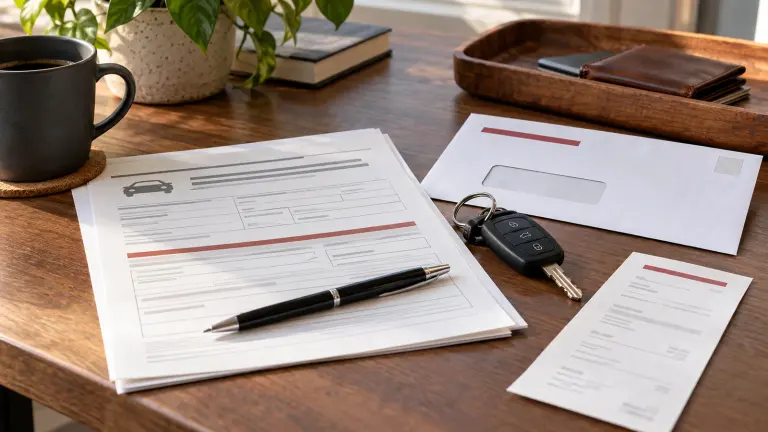
A Texas vehicle transfer notice can help document when a vehicle was sold, but it is not a title transfer and it does not automatically remove every toll invoice. When bills arrive after a private sale, the useful first question is chronological: what happened before the sale, what was recorded with TxDMV, and which tolls were incurred afterward? Separate those dates before deciding how to respond.
This guide is about organizing records and checking the official process. It does not decide whether a specific invoice is valid or whether an individual seller is liable. The toll authority, invoice form, sale details, timing, and governing statute all matter.
Identify the sender and the event dates
Start with the invoice itself. Record the issuing toll authority or collection contractor, account or reference number, license plate, vehicle description, toll dates, invoice-mail date, amount, and response or payment date printed on the notice. Keep the envelope if the mailing date is relevant. Do not assume that every Texas toll road uses the same invoice rules or appeal route.
Make a separate timeline with at least four dates:
| Record point | What to write down |
|---|---|
| Sale | Date ownership was transferred and what records support it |
| TxDMV notice | Submission date, receipt or confirmation, and information entered |
| Toll events | Each listed date and whether it falls before or after the sale |
| Invoice | Date mailed or received, issuer, and stated response deadline |
If a bill mixes tolls from before and after the sale, mark each event separately. A seller's disagreement with post-sale charges does not erase earlier tolls. Conversely, a later buyer's use should not be casually grouped with the seller's own trips. Keep the original invoice intact and make a working copy for notes.
Understand what TxDMV records
TxDMV's vehicle-sale guidance says a seller should submit a Vehicle Transfer Notification (VTN) and that the buyer is responsible for applying to transfer the title. A VTN puts a sold-date remark on the motor-vehicle record; it does not make the new owner the titled owner. Until a new title is issued, the state title record can still show the previous owner.
TxDMV says a VTN submitted within 30 days can provide statutory protection from specified liability for acts involving the vehicle and purchaser. The current VTR-346 instructions say the department can still note a late transfer, but a late filing may not provide the same protection. The form requires accurate transfer details, including buyer information. If the record lacks required fields, the filing may not be recorded as intended.
A useful set of separate records is: the signed title or transfer paperwork; the VTN submission receipt; a TxDMV confirmation or title-history record; and any toll-invoice response. The TxDMV service page says a seller who needs documentation for toll or parking violations can request a confirmation letter or use the vehicle-records process, including Form VTR-275 where applicable. Ask which record fits the request rather than assuming the online receipt is the only available proof.
Send a focused request to TxDMV
If you filed online, save the confirmation page, confirmation number, date, and any email. If you cannot find a confirmation, contact TxDMV and ask whether it received and recorded the notification. Give the vehicle details through the official channel, not in a public post. If you filed late, ask what record now shows the transfer and what it does or does not establish for the dates on the invoice.
If the online filing appears incomplete or inaccurate, ask how to correct it. Do not submit duplicate notices without checking the instructions; the VTR-346 form specifically says not to submit the same VTN both online and by mail. Do not invent a buyer address, change a sale date, or create a replacement bill of sale that falsely appears contemporaneous. If required buyer information is missing, ask TxDMV what options remain and preserve the answer.
TxDMV's vehicle-record request instructions explain how to request vehicle information. The appropriate record may show the transfer date or the state record history. Follow the current form requirements, fee instructions, and permitted-use rules. A record of the notice is evidence of what was reported to the department; it is not necessarily a complete account of every event or a decision by the toll issuer.
Respond to the toll authority separately
The toll issuer decides how to receive an invoice review request. Read the back of the invoice and its current website instructions. Use the deadline on the exact notice. When you write, identify each toll date you dispute and why, attach relevant records, and ask for a written response showing how the dispute was handled. Keep proof of delivery or submission.
The North Texas Tollway Authority's current ZipCash guidance gives an example of a toll authority's process for a vehicle sold to an individual: submit a TxDMV transfer notification, then contact the authority to verify the record update. That process is specific to NTTA; a different issuer may require a different channel or supporting record. If the invoice is from another authority, follow that authority's own instructions.
Texas Transportation Code chapter 228 contains rules for state highway toll projects. Section 228.055(e) provides a particular exception involving a transferred vehicle when the ownership transfer predates the toll, the seller submitted transfer notice under section 501.147, and the seller provides the buyer's name and address to the department before the 30th day after the invoice is mailed. The details and statutory context matter. Section 228.059 also addresses toll collection by other entities and their fee or fine structures. Do not assume section 228.055 resolves every invoice from every Texas road or authority; identify the issuer and get advice if the classification is unclear.
Do not ignore an invoice while waiting for TxDMV. Follow the stated review, payment, or hearing instructions and ask the issuer in writing whether a review request affects the due date. A phone call can help locate the correct department, but save the written request, response, and supporting documents. If a contractor contacts you, compare its notice with the original issuer's records and the applicable deadline.
If the bill of sale or buyer contact is missing
Use records that existed at the time: a signed title copy, payment receipt, bank or cash-withdrawal record, text messages, email, online listing, appointment messages, photographs, insurance change, or a dated witness note. The records have different strengths. A payment record may show money moved but not which vehicle it concerned; a message may show a sale discussion but not prove transfer was completed. Present them accurately and let the authority assess what it accepts.
If the buyer has resold the vehicle, do not assume the second sale changes the first transfer date or resolves the state record. Note what is known, how it is known, and what remains unverified. Avoid confronting or publishing personal information about a buyer. If there are immediate safety concerns, report those through appropriate local authorities; this article does not determine collision liability or law-enforcement action.
For a fictional example, a seller submits a VTN on the day a truck changes hands and saves a screenshot, but toll invoices arrive later. The seller first compares the toll dates with the sale date, requests TxDMV confirmation, and separately sends the toll authority the invoice numbers and sale evidence before the deadline shown on the notices. The example illustrates record sequence only; it does not guarantee that every charge will be removed or that a screenshot alone satisfies an issuer's evidence requirements.
Keep a compact evidence packet
A useful packet contains the invoice and envelope, vehicle plate and VIN, dated sale and payment records, transfer notice receipt, TxDMV confirmation or title-history response, and the correspondence with the issuing authority. Label each item with the date obtained and what it shows. Keep a copy of what you submitted and the response deadline beside it.
Gotham's case chronology guide explains how to distinguish an event date from the date a record was created. Its document naming and version guide can help preserve the original invoice, submitted packet, and later response as separate versions. For teams handling source files across a matter, Gotham's workflow overview describes a general way to organize dated records for review; it does not determine whether a particular toll charge is owed.
If several toll authorities or invoices are involved, sort them by issuer before writing. Ask each issuer to confirm the vehicle, date range, amount, and review route it is handling. A qualified Texas lawyer or legal aid service may help assess a disputed liability or court notice. To discuss a records workflow for a legal team, see Gotham contact options; product workflows do not replace legal advice.
Questions to resolve before you close the file
Before treating the issue as resolved, confirm which invoices were challenged, whether the authority acknowledged the response, what toll dates remain disputed, and whether any payment, review, or court deadline remains. Keep a final status note that separates confirmed facts from assumptions. If the new title record later updates, preserve that confirmation too; it may be useful alongside the transfer notice and toll correspondence.
The practical aim is a record that lets the responsible authority or adviser see the sale date, TxDMV record, invoice dates, and response history without reconstructing them from scattered messages. The documents help frame the question. They do not guarantee a particular legal result.
Questions
Does a Texas Vehicle Transfer Notification transfer the vehicle title?
No. TxDMV says the notification records that a sale occurred, but the title record remains in the seller's name until the buyer files a title application and a new title is issued. Keep the transfer notice separate from the signed title and sale documents.
What should I do if toll invoices arrive after I sold the vehicle?
Check each invoice's issuing authority, plate or vehicle details, toll dates, and response deadline. Preserve the sale and transfer records, ask TxDMV for confirmation or an appropriate title-history record, and send the issuing authority a dated written dispute through its stated process. A notice alone does not decide whether a particular charge is owed.
Can I submit a Texas vehicle transfer notice after 30 days?
TxDMV accepts a late notification and records the transfer, but its instructions say late filing may not provide the liability protection associated with a timely notice. Submit accurate information and ask TxDMV what record is available; do not backdate or assume a late filing erases an existing invoice.
Does a TxDMV transfer notice automatically cancel every toll invoice?
No. TxDMV records the reported transfer; the toll authority applies its own invoice and review process under the law governing that facility. For some state highway toll invoices, Transportation Code section 228.055(e) sets conditions involving transfer before the toll, transfer notice, and timely delivery of buyer information. Check the exact issuer, statute, and invoice deadline.
What if I do not have a bill of sale?
Do not create or backdate one. Gather accurate records that already exist, such as the title copy, payment record, transfer receipt, messages, buyer details, and dated notes. Ask TxDMV and the toll issuer what documentation they will accept for the specific record or dispute.
General Texas vehicle and toll-record information, not legal advice. The issuing toll authority, invoice type, sale record, dates, and applicable statute can affect the process; verify the current instructions on the notice and obtain qualified advice for a disputed or escalated matter.
How Gotham researches and reviews field guides