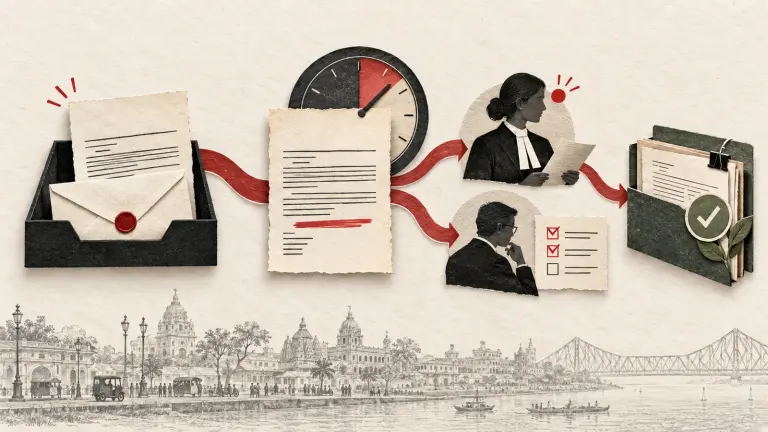
In India, there is no general rule that every recipient must hire a lawyer to answer every private legal notice. A person may send a reply themselves, but the safer choice depends on the notice type, stakes, deadlines, evidence and legal issues. A simple factual correction may be manageable; a cheque-dishonour notice, court summons, injunction threat, government notice or high-value claim deserves prompt professional review. This guide helps you decide, organise the facts and avoid common drafting mistakes.
First classify the document
Before drafting anything, establish what arrived. A private lawyer's demand, statutory notice, court summons, court order, police notice, tribunal communication and government notice do not follow one universal process. Look for the sender, client, case number, statutory section, court or authority name, service method, requested action and deadline.
If the paper is a summons, order or official process, do not treat a self-written letter as a substitute for appearing or filing what the court requires. Contact a lawyer promptly. If it is a statutory notice, identify the statute and calculate the timeline from the legally relevant event, not just the date printed at the top.
For example, a notice under section 138 of the Negotiable Instruments Act has a specific statutory framework around cheque dishonour and demand for payment. The official Act should be reviewed with its service dates and bank memo. A generic response template can miss a deadline or an essential issue.
When a self-written reply may be reasonable
A self-written response may be considered where the matter is low value, the facts are straightforward, no statutory or court deadline is involved, the contract is simple, the sender's demand is clearly mistaken, and you can explain your position without speculating about law. Even then, proofread carefully and retain service evidence.
Professional advice is especially important when:
- the notice cites a criminal offence, cheque dishonour, fraud or alleged misconduct;
- a court, tribunal, regulator, tax authority or police body is involved;
- the amount is significant or your business, licence, job or property is at risk;
- the facts are disputed and documents may be interpreted differently;
- the other side seeks an injunction, admission, undertaking or waiver;
- limitation may be near, or the notice claims an unusual deadline;
- you need to make a counterclaim or accuse someone of crime or defamation; or
- you are replying for a company, minor, estate or another person.
A consultation can be limited to reviewing a draft and deadline. You do not always need to ask counsel to manage every administrative step, but obtain enough advice to understand the consequences of the words you plan to send.
Build your evidence file before writing
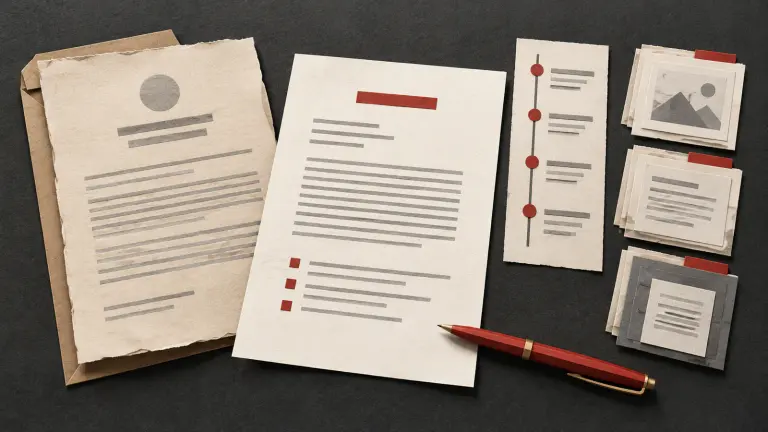
Create a folder with the notice, envelope or delivery proof, email headers, attachments, contract, amendments, invoices, payment records, relevant chats, work product, photographs and prior correspondence. Preserve originals. Do not alter a screenshot or delete a message because it seems unhelpful.
Then write a neutral chronology. Keep to dates, actors and events. Mark a fact “confirmed” only if a record supports it. Identify disputed statements, missing records, witnesses and questions for the sender. This prevents the reply from becoming an emotional narrative that never answers the actual demand.
| Drafting question | Your notes |
|---|---|
| Who sent the notice and on whose behalf? | Verify names, address and authority |
| What does each paragraph allege? | Summarise without exaggeration |
| What does the sender demand? | Amount, action, cessation, apology, deadline |
| Which statements are admitted, denied or unknown? | Be precise and consistent |
| What document supports your position? | Keep an exhibit list for counsel |
| What deadline comes from law or court? | Separate statutory date from sender's demand date |
| What outcome do you want? | Correction, documents, payment, settlement, no further action |
A measured structure for a private notice reply
If after review you decide to reply yourself, a clear letter often follows this order. The format is not a mandatory legal form and should not be used for a court filing or specialised statutory response without checking the applicable rules.
- Date and delivery method. Include your address and the sender's verified address or email.
- Reference. Identify the notice date and subject, without adopting its allegations as true.
- Receipt statement. Say when and how you received it, if material.
- Position in brief. State that you dispute specified claims or are reviewing them; avoid overbroad conclusions.
- Paragraph-wise factual response. Address material allegations with dates and records. Admit only facts you know to be correct.
- Documents or particulars requested. Ask for the contract version, calculation, invoice, authority or other details needed to respond.
- Proposed next step. If appropriate, propose a meeting, reconciliation, correction or reasonable time to provide information.
- Reservation and signature. State that the response is based on presently available records and does not waive rights, if counsel considers suitable.
Do not paste a long legal argument from the internet. Avoid making factual statements about people or events you cannot verify. Do not promise payment, admit breach or sign an undertaking without understanding its effect. Do not make threats that are unrelated to resolving the dispute.
Avoid these common errors
- Using a template without matching the facts. A template may contain admissions or provisions that do not fit your dispute.
- Arguing every sentence. Address material claims and the requested remedy; do not bury the key point.
- Missing a special deadline. Section 138, court process, limitation and statutory procedures may have rules that a private notice does not.
- Assuming every stated deadline is legally binding. A sender's seven-day demand does not become a court deadline merely because it is printed in bold. Still, assess it promptly.
- Threatening defamation automatically. A disputed allegation does not by itself prove that a defamation claim is available.
- Sending confidential documents indiscriminately. Disclose only what is appropriate and authorised.
- Using informal channels only. Keep proof of dispatch and delivery through a reliable method.
- Replying before checking limitation. A notice reply does not ordinarily reset the limitation clock.
The Limitation Act, 1963 includes specific rules for a written acknowledgment signed by the liable party before the existing limitation period expires (section 18) and qualifying payment on account of a debt (section 19). A creditor's unilateral notice or your denial is not automatically such an acknowledgment. Check the official Limitation Act, and do not use a reply deadline to calculate when a suit becomes time-barred.
Worked example: a small unpaid invoice dispute
Nikhil receives a lawyer's letter from a former customer demanding ₹35,000, alleging that he failed to deliver a small website project. Nikhil has a signed scope, two acceptance emails, a final invoice and proof that the customer paid all but ₹10,000. The notice asks for a response in ten days and threatens a civil case.
Nikhil first verifies the lawyer and customer, saves the envelope and notice, and checks whether any court case number appears. It is a private demand, not a summons. He builds a chronology from the scope, delivery and approval emails, and bank statement. He asks whether ₹10,000 remains genuinely disputed and whether there are later messages explaining it. He does not say the customer committed fraud or threaten defamation just because the notice's summary is inaccurate.
If the matter is simple and the amount is manageable, Nikhil may draft a brief factual response: identify the amount received, point to the approval record, explain the remaining invoice balance, and request the basis for the customer's ₹35,000 figure. He can propose a reconciliation call. If the contract has an arbitration clause, the customer alleges a criminal offence, or the notice is followed by a court filing, he should consult counsel before taking the next step.
Sending and preserving the reply
Check names, dates, amounts, attachments and paragraph references twice. Use a delivery method that creates a record, such as registered post with acknowledgment or a suitable tracked courier, and email the same signed PDF if appropriate. Keep the final exact copy and dispatch receipts. Avoid sending an editable draft where the signed version is intended.
Do not send money to an account merely listed in a suspicious notice. Verify payment instructions independently. If you settle, use a written settlement that records amount, timing, release scope, confidentiality if appropriate, and what happens on payment. Obtain advice before agreeing that a payment is “full and final” if related claims remain.
FAQs
Is it illegal to reply to a legal notice without an advocate?
There is no general rule requiring an advocate for every reply to a private notice. However, specialised statutory, court or official proceedings may require specific steps and deadlines. The risk is substantive: a poorly worded reply can create admissions or miss a defence.
Is there a compulsory reply format?
Not for every private notice. Use a clear, dated structure that identifies the notice and answers material points. Court pleadings and statutory replies have their own procedural requirements, which should not be replaced by a generic letter.
Must I respond within the number of days stated by the sender?
Not always. A private sender may set a requested deadline, but it is not automatically a court order. A statutory deadline or court deadline is different. Check the source and calculate it carefully.
Should I admit a small part of the claim to appear reasonable?
Only if the admission is accurate and you understand its effect. You can identify undisputed facts without admitting legal liability. For payment or settlement proposals, state clearly whether they are without prejudice only when that legal treatment is appropriate; get advice before relying on labels.
Does a reply stop a lawsuit?
No. The other side may still file a case. A reply may help clarify facts or support settlement, but it does not control the sender's decision or suspend applicable limitation unless a specific law provides otherwise.
Can I send the reply by email or WhatsApp?
Check the notice, contract, statute and any required mode of service. Email may create a useful record, but it may not satisfy every formal requirement. Use trackable delivery when the consequences justify it and retain proof.
Quick checklist
- Identify private notice, statutory notice, court summons or official notice.
- Verify the sender and calculate real deadlines.
- Preserve the notice, envelope, headers and relevant evidence.
- Write a neutral timeline and answer only material allegations.
- Avoid admissions, unsupported accusations and automatic counter-threats.
- Check limitation and any specialised procedure.
- Keep the exact signed reply and delivery proof.
Related reading: urgent legal notice email workflow, legal notice management workflow, and India legal research memo template. Explore India legal research workflows, contract review workflows, or contact Gotham. This article is general information, not legal advice. Ask a qualified Indian lawyer to review significant disputes and all statutory or court deadlines.
This article provides general information, not legal advice. The law and procedure may depend on the facts, forum, state, and current rules; consult qualified counsel about a specific matter.
How Gotham researches and reviews field guides