Short answer: A missing signature does not automatically erase an agreement or the value of work already accepted. A freelancer may still prove the agreed scope, price, performance and non-payment through emails, messages, proposals, invoices, work files and the client’s conduct. The result depends on evidence, the terms agreed, the client’s response and the correct recovery route. Act promptly: limitation periods can run while negotiations continue.
This guide gives a practical evidence-first approach for freelancers in India. It is general information, not advice on a particular dispute. A lawyer can assess the documents, the amount, the client’s location and any contract terms that were accepted online.
Can you claim payment when there is no signed agreement?
Often, yes. Indian contract law does not impose a general rule that every ordinary service contract must be signed on paper. Under sections 2, 3, 7, 8, 9 and 10 of the Indian Contract Act, 1872, a contract may be formed through communicated proposals and acceptance, including conduct that accepts an offer by performing its conditions. Section 9 recognises promises made expressly or by implication.
That does not mean every conversation proves a contract. The evidence should show enough certainty about the essential bargain: who hired whom, what work was requested, the fee or a method to calculate it, important delivery conditions, and what the client did after receiving the work. A client may dispute the fee, say the work was only a sample, claim it was rejected, or argue that a different company was the contracting party. Those facts matter.
Where there was no enforceable agreement on a fee, section 70 may sometimes be relevant. It concerns a person who lawfully does something for another, without intending it as a gift, where the other person enjoys the benefit. It can support a claim for reasonable compensation in the right circumstances, but it is not an automatic substitute for a contract and does not guarantee the price you hoped to receive.
Build a proof file before sending another message
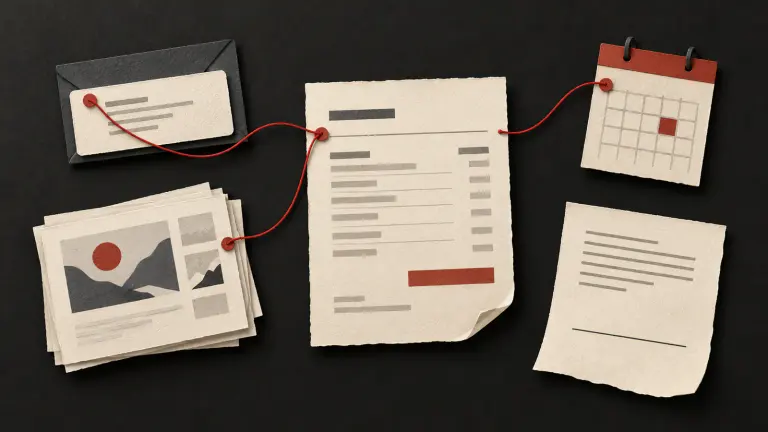
Keep one copy of every relevant record in its original form. Do not rely only on cropped screenshots. Export the email thread with headers, preserve chat exports, retain the original invoice and proposal, and keep copies of delivered files and version history. Avoid altering metadata or deleting messages that appear unhelpful; the full sequence gives the evidence context.
| Question to prove | Useful records | What the records should show |
|---|---|---|
| Who hired you? | Email domain, profile, proposal, purchase order, payment history | The client’s identity and the person’s authority or role |
| What was agreed? | Scope messages, quote, estimate, milestones, change requests | Deliverables, exclusions, price and payment timing |
| Did you perform? | Source files, delivery links, timestamps, task logs | The work completed and when it was sent |
| Did the client accept or use it? | Approval, revision request, publication, access logs | Acceptance, benefit, or continued use after delivery |
| What remains unpaid? | Invoice, ledger, bank statements, reminders | Amount due, due date, credits and part-payments |
Fictional example: Mira agrees by email to design a landing page for ₹48,000, payable half at kickoff and half on delivery. The client asks for two extra banners in chat, receives the page files through a dated link, requests a colour change and publishes the page. The client pays the first instalment but ignores the balance invoice. Mira’s signed contract would have made the terms easier to prove, but the email, messages, files, payment and use can help show the second milestone was performed and the work was accepted. If the parties never settled the extra-banner fee, Mira should separate that disputed amount from the original agreed balance.
Electronic records can be evidence, but admissibility and proof have rules. The Bharatiya Sakshya Adhiniyam, 2023 recognises electronic and digital records; sections 61–63 address their proof. Keep the source device/account and records available. A printout alone may not answer questions about authenticity, completeness or who controlled the account.
Send a clear payment demand
Before escalating, send a short, factual message to the person and legal entity that hired you. Identify the project, the agreed or invoiced amount, the work delivered, the payment date, any undisputed part, and a reasonable deadline. Attach the invoice and a compact delivery summary. Ask the client to identify any specific defect or contractual basis for withholding payment by that deadline.
Keep the tone professional. A threat to expose the client publicly or contact their customers can create separate problems and distract from the claim. Do not publish confidential files or personal information to pressure payment. If the client raises a genuine quality issue, preserve the response and compare it with the agreed scope and acceptance history.
A lawyer’s demand notice can help present the documents and identify a suitable claim, especially where the amount is substantial, the client is a company, or the parties are in different states. A notice is not itself a court order and does not guarantee payment. Avoid saying that a legal notice is mandatory in every private freelance dispute; the right pre-suit step depends on the claim, contract and proposed forum.
Check limitation before relying on further negotiation
Many ordinary civil money claims have a three-year limitation period, but the start date depends on the legal basis and terms. Article 18 in the Schedule to the Limitation Act, 1963 specifically covers the price of work done at the defendant’s request where no payment time was fixed; it runs from when the work is done. A claim based on breach of an agreed due date may raise a different article, including Article 55. Do not assume that a later invoice, reminder, or promise to pay restarts time.
A written and signed acknowledgment made before limitation expires may affect the calculation under section 18 of the Limitation Act. A part-payment may also matter under section 19 when statutory conditions are met. Whether an email, chat, or electronic signature satisfies those requirements should be checked by counsel rather than assumed. Keep negotiating if useful, but do not let negotiation silently consume the time to file.
Choose a proportionate recovery route
Start by asking whether the client is identifiable, solvent and willing to discuss a documented settlement. If you, as the supplier/claimant, qualify as a micro or small enterprise and the transaction meets statutory requirements, the MSMED Act’s delayed-payment framework may be relevant; see our guide to MSME Samadhaan for freelancers. Portal filing eligibility and substantive entitlement are not identical questions, and registration timing has unsettled law.
If the amount is modest, compare likely recovery with filing costs, time, travel and enforceability. If there is an arbitration clause, examine its scope, seat, procedure and costs before choosing court proceedings. If the client is outside India, identify the correct contracting entity, governing law, jurisdiction clause, service requirements and whether a judgment could practically be enforced where the client has assets. A lawyer familiar with the relevant forum can help assess these issues.
| Situation | Sensible next step | Important caution |
|---|---|---|
| Client agrees amount is due but requests time | Written instalment plan with dates and default consequence | Avoid vague promises without a calendar |
| Client disputes only part of the invoice | Seek payment of the admitted amount and itemise the balance | Do not concede disputed scope without checking records |
| Client stopped responding | Send a final documented demand and assess limitation | Repeated reminders do not necessarily extend limitation |
| Contract has arbitration wording | Have counsel review the clause before filing | Arbitration can cost more than the claim |
| Client is overseas | Identify entity, governing law and enforceability | A demand in India may not reach foreign assets |
Frequently asked questions
Is a WhatsApp message enough to prove the agreement?
It can be relevant evidence, especially when the account is attributable to the client and the messages show scope, price, approval or delivery. Preserve the complete conversation and related records. A single screenshot may omit context and does not by itself prove every disputed fact.
Can I claim payment if the client never approved the final file?
That depends on the agreed acceptance process, whether the client had a fair opportunity to review, what was delivered, and whether the client used or retained the work. A client’s silence is not automatically acceptance in every contract. Preserve any acceptance window and the follow-up messages.
Should I keep working while an invoice is overdue?
Check the agreed terms first. If they allow suspension, give the required notice and explain what will pause. If they do not, get legal advice before stopping where the consequences could be serious. Avoid adding work or expenses without written approval.
Can I charge late fees if we never agreed to them?
Do not assume a fee added after the work was agreed is binding. A written term, statute or established course of dealing may matter. You may still claim legally recoverable interest or damages in appropriate proceedings, but the basis and amount depend on the facts and forum.
Does using my work without paying automatically make it a copyright case?
Not necessarily. Non-payment and copyright infringement are distinct issues. Ownership, licence terms, payment conditions and the client’s use need separate analysis under the Copyright Act and the agreement. Preserve evidence and avoid threats before getting advice.
Can I post the client’s name online to warn others?
Public accusations can create defamation, confidentiality and privacy risks, and may harm settlement prospects. Use private documented channels and seek legal advice before publishing identifying allegations.
A checklist before you escalate
- Identify the contracting person or company and confirm its legal name.
- Preserve the full proposal, communications, files, delivery records and invoice.
- Separate agreed work from later changes and disputed extras.
- Calculate the unpaid balance and credit any payments or agreed adjustments.
- Send a factual demand with a reasonable response date.
- Check limitation, arbitration terms, applicable law and the client’s location.
- Ask a lawyer to review the evidence where the amount or consequences justify it.
For future projects, put scope, acceptance, changes, payment dates, IP transfer and pause rights in writing before starting. Our freelance contract clause guide covers those provisions. Teams handling repeat agreements can explore contract review workflows, Gotham’s legal workspace, or contact the team. These links describe general workflow options; they do not promise a recovery outcome or provide case-specific legal advice.
This article provides general information, not legal advice. The law and procedure may depend on the facts, forum, state, and current rules; consult qualified counsel about a specific matter.
How Gotham researches and reviews field guides