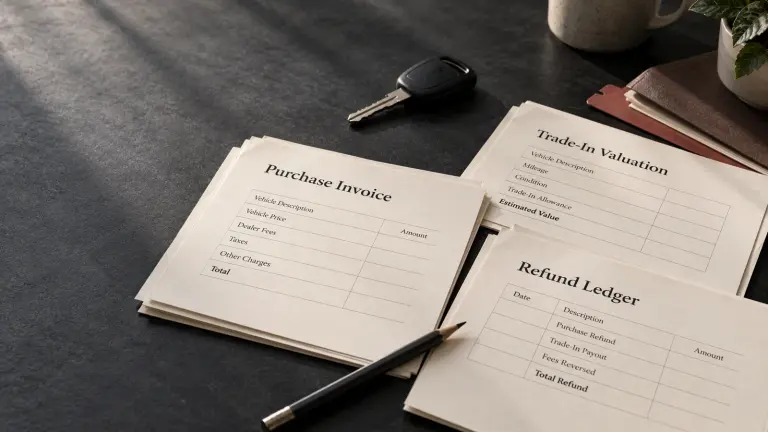
When a used car has serious safety problems soon after purchase, a refund offer can solve one part of the problem and leave important questions unanswered. If you traded in another vehicle, you need to know what the refund actually reverses, where the trade-in is, whether a loan payoff is involved, and what the seller wants you to sign. The written deal matters more than the word “refund.”
This guide explains how to document a Pennsylvania used-car condition dispute, compare the seller’s offer with the purchase and trade-in paperwork, and identify a suitable public complaint route. It does not assume that a dealer knew about a defect, that every severe mechanical issue fits a statutory disclosure list, or that a refund automatically pays transportation costs or restores the traded vehicle.
Make safety and records the first priority
If a mechanic says the vehicle may be unsafe, do not drive it merely to complete a return. Ask the mechanic to describe the specific safety concern in writing and ask the seller how it wants the vehicle returned or transported. Keep the tow receipt, inspection report, photographs and any recommendation not to operate the vehicle. Ask the seller to confirm in writing who will arrange and pay for a tow before you move it.
Preserve the condition information as it appeared when you bought the vehicle. Save the online listing, photographs, inspection history provided by the seller, vehicle condition report, buyer’s guide, sales contract and messages with the salesperson. Take screenshots that show the date and URL, and download original files where possible. A listing may change after a sale, so keep what you saw before agreeing to buy.
A mechanic can identify present conditions and estimate repair needs. The report does not by itself establish when each defect developed, whether it existed at the sale, or what the dealer knew. If those questions matter, ask the mechanic to separate observed facts from opinions about cause and timing. Do not ask the mechanic to make a legal conclusion.
Review the sale, trade-in and financing as separate documents
A vehicle purchase with a trade-in often includes several linked records: the buyer’s order or agreement of sale, a trade-in valuation, title and odometer paperwork, financing documents, a payoff authorization, and receipts for taxes or fees. Gather the versions you signed and check that each page belongs to the same transaction.
Pennsylvania’s automotive trade-practice rules require certain contract information, including the purchased vehicle’s identification and the trade-in vehicle if one was provided. The rules also address written copies of transaction documents, trade-in reappraisal, warranties and “AS IS” disclosures. These provisions can help identify what to inspect, but they do not determine the outcome of every refund dispute. The precise seller, agreement, vehicle location and facts still matter.
Make a simple transaction ledger:
| Item | Record to compare | Question to ask |
|---|---|---|
| Vehicle price | Buyer’s order and signed sales contract | What price and charges did the seller use? |
| Trade-in | Trade-in valuation, title and transfer documents | What amount was credited, and has the vehicle been resold or transferred? |
| Loan or lien | Payoff statement and lender confirmation | Was any part of the trade-in value used to pay a loan? What balance remains? |
| Taxes and fees | Contract, receipt and title paperwork | Which amounts are included in the proposed refund or handled separately? |
| Refund terms | Seller’s written proposal | What amount will be paid, to whom, by what date, and what claims or documents are part of the resolution? |
| Vehicle return | Tow instructions, delivery receipt and condition record | Who arranges transport, and what condition or mileage will be recorded at handoff? |
Do not assume the refund must equal the vehicle’s advertised price, or that a return of money automatically returns the trade-in vehicle. Ask the seller to show the calculation and explain how it treats the trade-in allowance, any payoff, taxes, fees and the vehicle’s current status. If the trade-in may still be available, ask whether the seller will return it as part of a written agreement. Do not rely on a telephone assurance about a vehicle that may already have been transferred.
What Pennsylvania’s used-car rules can help you check
Pennsylvania’s Automotive Industry Trade Practices regulations apply to specified conduct in new and used vehicle sales. Section 301.2 treats certain false or misleading representations as unfair or deceptive practices. It also requires written disclosure of a set of listed roadworthiness conditions when the seller knows or should know that they exist. The listed conditions include some serious frame, engine, transmission, inspection, flood and differential problems. The provision does not say that every defect a mechanic finds is automatically a covered condition.
The same section contains inspection requirements for certain covered vehicles offered for sale. Section 301.4 addresses the written transaction documents and restrictions around trade-in reappraisal, warranties and “AS IS” sales. Under the current text, an “AS IS” label does not eliminate the required disclosure for a vehicle that is not roadworthy when offered for sale, and the contract notice may not contradict an oral or written representation about vehicle quality or mechanical condition. Whether those provisions apply depends on the facts, including the exact statement, the condition, what was known, the form of the sale and whether the regulation covers the seller and transaction.
For a consumer claim, Pennsylvania’s Unfair Trade Practices and Consumer Protection Law may also be relevant. A particular private claim depends on its elements, evidence, causation and loss. A vehicle description that says “pristine” and a later inspection report may be evidence to preserve, but they do not alone prove a legal violation or establish that a seller knew the condition. Have a Pennsylvania consumer lawyer compare the advertisement, disclosures, inspection findings and agreement.
Pennsylvania’s Automobile Lemon Law is a separate, narrower route for certain new vehicles. The statute defines the covered vehicle as new and unused. A used-car buyer should not treat the new-vehicle repair, replacement or refund procedure as the automatic path for a used vehicle. Other contract, warranty or consumer-protection rights may be available depending on the documents and facts.
Put the refund offer in writing before signing
Ask the seller for a written proposal that answers these questions:
- Is the seller accepting return of the purchased vehicle, and what agreement or policy governs the return?
- What exact sum will be paid, and how was it calculated from the contract and trade-in credit?
- What happens to any loan payoff, remaining balance, taxes, registration charges and other fees?
- What is the status of the trade-in, and will it be returned, or is the seller offering a separate amount instead?
- Who arranges and pays for towing, and when does the seller take custody of the purchased vehicle?
- Does the proposal require a release, and what claims, costs or future rights would that release cover?
- When will funds be sent, to whom, and what confirmation will be provided about title or lien records?
Read the settlement and any release before signing. A refund document can resolve the purchase price while also waiving other claims or requiring title, financing or transportation steps. If a term is unclear, ask for a revised written explanation and get advice before accepting. Do not alter a check, title document or contract yourself. Keep copies of anything signed and proof of the vehicle’s return.
Consider the complaint route that matches the problem
If the seller will not explain the transaction or resolve a documented concern, the Pennsylvania Attorney General’s Bureau of Consumer Protection accepts consumer complaints. The Bureau may review and refer a complaint, attempt mediation, or take formal action in selected cases involving public interest. Its complaint process is not the same as a private lawsuit, and the Bureau does not act as the buyer’s personal lawyer or as a judge who can order payment in every case.
A complaint packet is clearer when it includes a short chronology, the advertisement, signed agreement, trade-in and loan records, mechanic report, photographs, tow invoices, refund proposal and the buyer’s written request to the seller. Identify what remains unresolved, such as the amount of the refund, the trade-in disposition, loan payoff, unsafe-condition disclosure or documented transportation expense. Separate what the records show from what you suspect.
A private lawyer can assess whether the facts support claims under the contract, warranty, or consumer-protection law and what remedies may be available. Small claims court may be appropriate for some monetary disputes, but the forum and available remedy depend on the amount and legal theory. Do not assume that filing an Attorney General complaint tolls a deadline or preserves every private claim. Ask counsel about deadlines and venue before waiting for mediation to finish.
For legal teams managing a consumer transaction record, Gotham supports research and coordination around the documents, issues and follow-up that need review. A litigation document organization plan or evidence export checklist can help keep sale records, inspection evidence and communications together; these are general workflow resources, not Pennsylvania consumer-law guidance. To discuss a team’s workflow needs, visit Gotham’s contact page or explore legal workflows.
A fictional example: refund amount and trade-in status
Imagine a Pennsylvania buyer trades in an older car and purchases a used vehicle. The buyer’s signed order lists a trade-in allowance and a separate amount financed. A mechanic later documents serious defects, and the seller offers to refund the purchase. The buyer should not treat the offer as proof that the seller admitted it knew about the defects, nor assume that the traded car will come back.
The buyer can ask the seller to show the total proposed payment, how the trade-in credit and lender payoff are handled, what happens to the old vehicle, who pays for towing, and whether a release is required. The buyer can preserve the listing and inspection report, then ask counsel whether the written statements and Pennsylvania disclosure rules fit the facts. The example illustrates a review process; it does not predict the result of a real dispute.
Primary sources
- 37 Pa. Code § 301.2, Advertising and sales presentation requirements
- 37 Pa. Code § 301.4, General provisions for motor vehicle dealers
- Pennsylvania Unfair Trade Practices and Consumer Protection Law
- Pennsylvania Automobile Lemon Law
- Pennsylvania Attorney General consumer complaint process
Questions about a Pennsylvania used-car refund
If a dealer refunds my car purchase, does it have to return my trade-in?
Do not assume the vehicle itself will be returned. Ask for a written settlement accounting that shows the cash price, trade-in allowance, any loan payoff, fees, taxes, refund amount and what will happen to the trade-in. The purchase and trade-in documents, title status and agreed refund terms matter; Pennsylvania's used-car rules do not create a universal promise that a traded vehicle can be recovered.
Does Pennsylvania's Lemon Law cover a used car with serious safety defects?
Pennsylvania's Automobile Lemon Law is written for covered new vehicles. A used-car buyer may have other rights based on the agreement, warranty, sales representations and applicable consumer-protection rules, but the new-vehicle Lemon Law process should not be treated as an automatic remedy for a used-car purchase.
Do Pennsylvania used-car rules require a dealer to disclose every defect?
The rules address specified representations and certain listed roadworthiness conditions that the seller knows or should know, along with written disclosure and inspection requirements. Whether a particular condition is covered depends on the exact rule and facts. A mechanic's finding alone does not prove what the seller knew before the sale.
What records should I keep after a used-car safety problem?
Keep the listing and condition report, buyer's guide, signed purchase and trade-in agreements, title and financing records, inspection report, photographs, tow and rental receipts, repair estimates, and every refund or return message. Preserve the originals and ask the seller to put the proposed resolution and deadlines in writing.
Can the Pennsylvania Attorney General make a dealer refund me?
The Attorney General's Bureau of Consumer Protection accepts complaints and may try mediation or refer a matter. It does not act as the buyer's private lawyer or judge, and a complaint does not guarantee payment. Ask counsel whether a private contract or consumer-protection claim is available on the facts.
General information about Pennsylvania vehicle-sales and consumer-protection rules, not legal advice. The applicable contract, seller, vehicle location, disclosures, knowledge and refund terms matter. Pennsylvania's Automobile Lemon Law covers new vehicles, not every used-car dispute. Confirm current law and the documents with Pennsylvania consumer counsel before signing a release or deciding what you may recover.
How Gotham researches and reviews field guides