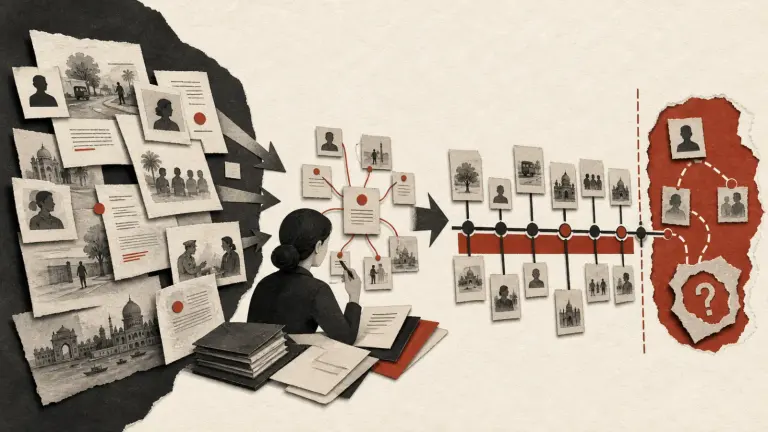
A pay statement that lists one hour does not, by itself, explain what happened across a week of shifts. If your Ontario schedule shows longer shifts, required training, or time spent completing a handover, compare the work record with the wage statement and the pay-period total. That comparison can identify a calculation question. It cannot decide the legal result without the job, dates, coverage, and records.
This guide focuses on the Ontario Employment Standards Act, 2000 (ESA) and related provincial guidance. Some employees and employers are outside provincial ESA coverage, including relationships within federal legislative jurisdiction. Some occupations have special rules or exemptions. Employee status depends on the actual relationship, not only the label on a contract, schedule, or pay stub. If coverage is uncertain, get advice before drawing conclusions from the examples below.
Start with one pay period and the actual work record
Collect the wage statement, payment record, schedule, and any written rate or shift arrangement for the same pay period. Write down each date, start and end time, unpaid eating period, required training block, and work completed before or after the scheduled shift. Keep a separate note of what each record says, rather than editing the original pay statement or schedule.
Ontario guidance says minimum-wage compliance is assessed on a pay-period basis. Most employees are covered whether they are paid hourly, by commission, piece rate, flat rate, or salary, although some jobs have statutory exemptions or special rules. For the general minimum wage, the rate effective October 1, 2026 is $17.95 per hour. Other rates can apply, including the student rate in specified circumstances, and the rate can change with the date of work. The Ontario minimum-wage guide lists current rates and categories. Use the rate for the period being checked, not today’s rate for an earlier period.
A useful first calculation is a comparison, not a claim amount:
| Check | What to compare |
|---|---|
| Hours | Actual work time for the pay period, including required training and work during handover where applicable |
| Regular wages | Regular wages paid for those hours, with premiums and overtime treated separately |
| Rate | The applicable minimum wage for the job category and dates |
| Statement | Gross wages, deductions, and how gross wages were calculated, or where that calculation is provided |
| Employer record | The dates, times, daily and weekly hours, and wage information the employer is required to keep, subject to statutory exceptions |
For a simple general-rate illustration, a fictional employee records 28 covered hours in a weekly pay period from October 5 through October 11, 2026. At $17.95 per hour, the rough base comparison is 28 × $17.95, or $502.60 before deductions and before considering any additional entitlements. This is only a calculation example. A real review must use the employee’s category, the exact pay period, the work actually done, and any applicable premium, overtime, exemption, or special rule.
A flat shift payment still needs a period-level check
An employer and employee can agree on a flat shift payment. The label does not answer whether minimum-wage requirements are met. For most covered workers, compare regular wages with covered hours for the entire pay period, applying the statutory method and keeping overtime or premium hours separate where required. Do not assume that a line showing a high hourly equivalent proves every hour was recorded, or that a flat amount automatically violates the ESA.
Suppose a fictional pay statement shows five hours at $100 per hour, while the employee’s records show five seven-hour shifts. The records create a concrete question: what hours were worked, what time was excluded as an eating period, whether training or handover work occurred, and how the pay-period amount was calculated. The statement alone may not resolve the question. Nor does the arithmetic alone establish the answer, because the pay-period calculation, applicable rate, job category, and complete records matter.
Compare the schedule to the statement by date. Separate gross wages from net deposit, deductions, vacation pay, tips, bonuses, and any amounts treated under a special rule. If the employer says that the shift payment covers more hours than the statement lists, ask for the pay-period calculation and preserve the response. Do not alter or annotate the employer’s original record; make your own dated comparison.
Required training and time after a scheduled shift
Ontario’s hours-of-work guidance says training required by an employer or by law is work time for the relevant ESA calculations. Optional training that is not required for the job can be treated differently. There are also statutory conditions for when a person receiving training is considered an employee, including provisions about training related to skills used by employees. For a new-hire or trial-period situation, do not reduce the analysis to whether someone signed a form or was told that training was unpaid. The actual training, work performed, statutory conditions, and facts matter.
Time spent doing work after the scheduled end of a shift can matter as well. If a worker must complete a handover, perform assigned tasks, or remain available and carry out work, record what occurred and when. Distinguish that from voluntarily staying for a personal conversation or choosing to arrive early. The employer’s records and the employee’s contemporaneous notes can be compared later.
A dated note can be simple:
| Date | Scheduled shift | Actual work | Training or handover | Break | Source kept |
|---|---|---|---|---|---|
| Fictional example | 3 p.m. to 10 p.m. | 3 p.m. to 10:18 p.m. | Required onboarding 2:30 p.m. to 3 p.m.; handover 10 p.m. to 10:18 p.m. | 30-minute eating period | Schedule, personal time note, and pay statement |
This example is not a finding about any employer or person. It shows why a schedule and payroll line may not capture every fact needed for a period-level review.
Pay statements and the employer’s records answer different questions
Under ESA section 12, the employer must provide a written wage statement on or before payday containing specified information, including the pay period, wage rate if applicable, gross wages, deductions, and net wages. The Ministry wage-payment guide explains these statement requirements. The statement must also explain how gross wages were calculated unless that information is provided another way. That does not mean every wage statement must display a full daily timecard.
ESA section 15 separately requires the employer to keep employee records, including hours worked in each day and week and wage statement information. A narrow exception applies to certain employees paid a fixed salary for each pay period where the amount does not vary with hours, subject to the statutory conditions and the rule for work beyond 44 hours in a week. The Ministry record-keeping guide describes what records are required and how long they must be retained. This distinction matters: a short pay statement may not prove that no underlying time record exists, while an employer’s separate record duty does not automatically tell an employee what the statement must display.
When a statement seems inconsistent, request an explanation and the calculation for the pay period. Keep the request factual: identify the dates, the hours you recorded, the line on the statement, and the specific difference. Save the original statement and any schedule or message that changes a shift. If a correction is made, keep both the original and corrected version with the date received.
Make a focused record before escalating
A useful evidence file includes:
- The original wage statements and payment records for each disputed period.
- Schedules, messages changing a shift, and any clock or sign-in records available to you.
- A personal log of actual start and finish times, work tasks, required training, handover time, and eating periods.
- The agreed rate or shift payment, any later changes, and the date each change was communicated.
- A written question to the employer and the response, including any calculation or record supplied.
- A short table comparing period, actual hours, gross wages, applicable rate, and the unresolved difference.
Keep the original files and do not add confidential customer information to a personal log. If you need a date-based evidence list, Gotham’s case chronology guide explains how to separate event dates from the dates on which records were created. Its document naming and version guide can help keep original statements and later corrections distinct.
If the issue is specifically about final wages after employment ends, see the separate Ontario final-pay timing guide. It addresses when wages become due after employment ends; this guide addresses how recorded hours and pay-period calculations relate to a wage statement. The distinction keeps a timing question separate from a question about the amount or time recorded.
A practical next step
Start by asking for a clear reconciliation of one pay period. Include the dates, the time record you kept, the pay statement line, and the calculation you are trying to understand. Ask whether required training, handover tasks, or other time was included, and request correction if the records do not match the work you performed. Avoid describing the situation as fraud or theft before the evidence and legal characterization have been reviewed.
If the discrepancy remains, Ontario’s Ministry of Labour provides current ESA guidance and information about filing an employment standards claim. Check coverage, claim timing, employee status, and the exact wages in question through official sources. A worker may also seek qualified employment advice. Do not assume that a pay-stub discrepancy guarantees recovery, establishes intentional misconduct, or resolves possible overtime, vacation, deduction, or other issues.
The ESA also prohibits specified reprisals for exercising or trying to exercise rights under the Act, including asking an employer to comply or asking questions about ESA rights. Whether a particular action falls within section 74 depends on the facts and statutory process. See the Ministry’s reprisal guide and section 74 of the ESA.
For legal teams handling workplace records, Gotham’s workflow overview shows how source documents and dated events can be organized for review. The goal is a clear record that lets a qualified reviewer test the calculation, not a prediction of the result. This article is general information, not legal advice, and does not replace advice on a specific employment relationship.
Questions
Does Ontario minimum wage apply to a flat amount paid per shift?
Most employees are covered whether paid hourly, by commission, piece rate, flat rate, or salary. Minimum-wage compliance is calculated for the pay period using covered work hours and the applicable rate. Some jobs have exemptions or special rules, so check the current Ontario guidance for the work and period.
Is employer-required training counted as work time in Ontario?
Ontario guidance treats training required by the employer or by law as work time in relevant standards calculations. Optional training that is not required for the job can be treated differently. New-hire training and trial-period facts may also affect employee status, so review the statutory conditions rather than relying only on a label.
What should I do if my pay statement shows fewer hours than I worked?
Keep the pay statement and a separate dated record of scheduled and actual work, required training, handover time, breaks, and pay received. Compare the full pay period, then ask the employer to explain the difference in writing. A discrepancy is a reason to verify records, not by itself proof of an unlawful underpayment.
Must every Ontario pay stub list every hour worked?
A wage statement must include specified pay information, including gross wages and how they were calculated unless that calculation information is supplied another way. Employers also keep hours and wage records, subject to a limited statutory exception for certain salaried employees. The employee-facing statement and employer's underlying records are separate obligations.
Can a worker be punished for asking about missing wages in Ontario?
The ESA prohibits specified reprisals for exercising or trying to exercise rights under the Act, including asking an employer to comply or asking questions about ESA rights. Whether a particular action falls within section 74 depends on the facts and statutory process. See the Ontario Ministry of Labour's reprisal guide and preserve relevant communications.
General Ontario employment-standards information, not legal advice. Coverage, employee status, exemptions, pay-period calculations, and remedies depend on the applicable facts and law; check current official guidance or obtain qualified advice.
How Gotham researches and reviews field guides