A leak that spreads, damages belongings or makes a room unsafe calls for two separate steps: deal with immediate safety and water control, then create a clear written record of what needs repair and what part of the home cannot be used. In Japan, the Civil Code places necessary repairs for use and enjoyment generally on the lessor, while also providing for proportionate rent reduction when part of a property becomes unusable for a reason not attributable to the tenant. Those rules do not set a universal rent percentage, guarantee a hotel or relocation, or decide who caused a particular leak.
This guide covers private residential rentals in Japan. It explains how to report an active problem, preserve evidence, coordinate access and repair, and separate repair, rent, personal-property, temporary-housing and contract-termination questions. It is not an assessment of any tenant's claim. Commercial leases, short stays, company housing, subleases and individual contract clauses may require a different analysis.
First protect people and limit further damage
If a ceiling is sagging, a section has fallen, water is near electrical equipment, or anyone may be injured, keep people away from the affected area and use the property's emergency contact or relevant local emergency service. Do not climb into a ceiling space, touch wet electrical equipment or try to stabilize a structure yourself. If water is actively spreading and it is safe to do so, follow building management's instructions for a shutoff or temporary measure. Keep a record of what you did and when.
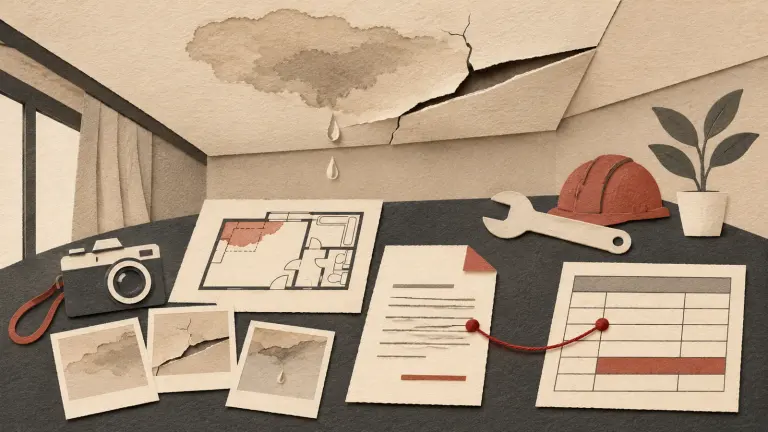
Safety comes before collecting evidence. Once it is safe, take a wide photograph or short video showing the room, then closer views of the leak, ceiling, walls, flooring and damaged belongings. Capture the date and time, but retain the original file rather than editing over it. Note when the leak began, when it worsened, which rooms or fixtures are affected, when you contacted management, who responded, what inspection occurred and what repair date was promised. Separate what you saw from what someone told you about the cause.
If a room is not safe to enter, do not enter just to photograph it. Ask management whether an inspection record or contractor photographs can be shared. Keep receipts for necessary emergency purchases, temporary lodging or damaged items, but do not assume that keeping a receipt proves another party must reimburse it.
Notify the landlord or manager in writing
Contact the landlord or the management company promptly through the emergency number and a written channel such as email or the resident portal. A phone call can be useful for urgent action, but send a short follow-up that records the time, location, visible damage, safety concern, unusable area and the specific response you need. Ask who will inspect, when access is required, what immediate measures are planned, and when a repair plan will be provided.
Japan's Civil Code sets out a lessor's duty to make repairs necessary for use and enjoyment, subject to the statutory exception where the need for repair is attributable to the lessee. The code also requires the tenant to notify the landlord when repair is needed, subject to the statutory wording. The Ministry of Land, Infrastructure, Transport and Tourism's restoration Q&A says that repair responsibility generally rests with the landlord and that the tenant should notify the landlord; it warns that failing to notify can matter if damage spreads. The Q&A is government guidance, not a judgment about a particular leak.
Use neutral language. For example: “Water is entering the bedroom ceiling at these locations. It began on [date/time], has spread to [areas], and the ceiling is now [condition]. We are keeping clear of the affected area. Please confirm the inspection and emergency repair plan, the access arrangements, and how you will handle any room that cannot safely be used.” Attach a small number of clear files, refer to them by date, and keep the full originals.
If the first contact receives no answer, follow up through the lease's emergency and ordinary contact channels, preserve proof of each message and record any call. A building manager, owner, insurer, upstairs resident or repair contractor may each have different roles. Ask who is coordinating the response; do not assume that the first person who answers is the party legally responsible for every loss.
Check the lease and separate the questions
Find the signed lease, move-in condition report, repair clauses, house rules, guarantor documents and any insurance policy. Check the landlord's legal name and the management contact details. Keep separate notes for each issue rather than treating “the leak” as one claim:
| Issue | What to record or ask for | What it does not prove by itself |
|---|---|---|
| Repair of the building or fixture | The defect, notice, inspection, proposed work and access dates | Who caused the defect or who must pay every resulting loss |
| Use of the home or a room | Which part cannot be used, since when, and what function is affected | A fixed rent-reduction percentage or full rent suspension |
| Belongings or furniture | Photos, purchase or repair records, condition, date and insurer notification | That the landlord or a neighbour is automatically liable |
| Hotel or temporary move | Written offer, dates, reason, cost, receipts and reimbursement terms | A general right to a hotel or a comparable unit at the same rent |
| Tenant-arranged work | Written notice, urgency, scope, quotes, permission and invoices | That any self-selected contractor bill must be reimbursed |
The MLIT standard rental contract is a model, not a mandatory set of terms for every lease. Read your actual agreement. It may set out repair notice, emergency contacts, access, insurance, temporary arrangements and procedures for disputes. If your home is managed through an employer, housing company or sublessor, identify who signed the lease and which party handles repairs.
For a lease signed electronically, preserve the signed version and any audit record showing the parties, version and completion. Our guide to Japan electronic-contract evidence explains how to keep contract versions and signing records together. If the problem later becomes a formal claim, the evidence-export workflow covers a separate process for preserving source files, copies and a record of what was collected.
Ask for a repair plan, and be careful about arranging work yourself
Article 606 of the Civil Code generally requires the lessor to make repairs needed for the tenant's use and enjoyment, unless the need arose from a reason attributable to the tenant. The article does not answer the factual question of how a pipe failed, whether a tenant's act contributed, whether the defect is within the rented premises, or what work is reasonably necessary. Ask management to identify the contractor, the affected area, any interim safety measures and the expected repair schedule.
The Civil Code's Article 607-2 allows a tenant to carry out repairs in specified circumstances, including when the tenant has notified the landlord of the need for repair and the landlord does not complete it within a reasonable period, or when urgent circumstances exist. That is not a blank cheque to choose extensive work and deduct the entire bill from rent. Before non-emergency work, document the notice and response, ask for written permission or instructions, get a scoped quote, and check the lease and advice from a qualified Japanese professional. In an immediate emergency, prioritize safety and preserve the reason, scope and cost of any necessary action.
Do not cover, discard or repair damaged building materials before management or its insurer has had a reasonable opportunity to inspect, unless immediate safety or damage control requires it. If an emergency repair must happen first, photograph the condition if safe, keep any removed materials where practical, and save the contractor's notes, work order and invoice. Keep receipts separate from estimates; an estimate is not proof that work was completed or that a particular party is responsible.
Understand the limited rent-reduction rule
Civil Code Article 611 addresses the case where part of the leased property becomes unusable or unprofitable for a reason not attributable to the tenant. It provides for a proportionate reduction in rent for that partial loss of use. If the remaining part cannot serve the purpose of the lease, the article provides a termination right. Whether those conditions are met depends on the facts, contract, cause, area and duration of the impairment, and the practical use of the remaining home.
There is no universal statutory table in this article assigning a percentage to “one bedroom,” “a leak,” “mold” or “a ceiling repair.” A room that is difficult to use, a room that is unsafe to enter and an apartment whose essential facilities have failed are not necessarily equivalent. The reason for the damage matters too: the statutory rent-reduction rule specifies that the partial loss must not be attributable to the tenant. A management company's assurance, a landlord's refusal or a number in an online comment does not settle the amount.
Ask the landlord to confirm in writing how rent will be treated during the affected period and what facts or method support its proposal. Record the start and end dates of impairment, which space was unavailable, whether the landlord offered a usable alternative and when it became available. If you disagree, request the basis and seek advice before paying less than the amount demanded. Withholding all rent, unilaterally setting a percentage or treating an unresolved hotel invoice as rent credit can create a separate dispute. For other fact-specific landlord disputes, see our Japan rental deposit guide; deposit deductions at move-out are a different question from rent during an active repair.
Hotel, another unit, belongings and damages are separate issues
Ask whether the landlord or manager will offer another unit, temporary lodging or a move, and get the terms in writing. Clarify the dates, rent, utilities, moving costs, storage, access to the original home and what happens if the repair takes longer than expected. A tenant may need temporary accommodation because a room is unsafe or key facilities are unavailable, but a particular hotel, same-rent replacement apartment or moving-cost payment is not automatically established by the fact of a leak. Contract terms, the cause of the damage, the scope of unusability, any agreement and the applicable law all matter.
If personal property has been damaged, make an itemized list with photographs, date, location, age, purchase information if available, and whether it can be cleaned or repaired. Contact your own renter's insurer using the policy's stated procedure and ask what evidence it needs. If another tenant or a building defect may be involved, do not accuse a particular person before the cause is established. A possible Civil Code contract or tort damages claim requires its own analysis of duty, breach or fault, causation, loss and evidence; rent reduction is not the same remedy as compensation for a bed, clothing or temporary hotel.
Keep each proposal and response, not just the final one. If you accept a temporary arrangement, state whether it is interim and what questions remain open. Do not sign a full-and-final settlement, waiver or rent adjustment that you do not understand. A simple record of what the parties agreed about can prevent a temporary solution from being mistaken for resolution of every later loss.
A practical response checklist
- Move people away from an unsafe area and use the emergency contact when immediate action is needed.
- Notify the landlord or manager promptly; follow urgent calls with written details.
- Record dates, locations, affected use, inspections, promises and repair milestones.
- Preserve original photos, messages, lease versions, receipts, work orders and estimates.
- Ask who will inspect, who will perform the work, when it will start and what temporary measures are proposed.
- Ask for the rent treatment in writing and keep a timeline of each affected area.
- Separate building repair, tenant belongings, rent adjustment, temporary lodging and termination questions.
- Do not make non-emergency repairs or unilateral rent deductions without checking the contract and applicable procedure.
- Notify your insurer and ask what it requires; retain copies of every submission.
- Seek qualified local legal or housing advice if safety, a substantial loss, a contested rent adjustment or a termination decision is involved.
This guide is general information, not legal advice or an assessment of any reader's claim. Keep the lease, repair correspondence and condition records together. Our guide to organizing documents for a dispute provides a general file-organization workflow; it does not determine whether a tenant is entitled to a particular rent reduction, hotel cost or damages award. For contract and evidence workflows, contact Gotham.
Questions about rental leaks and repairs in Japan
Does a landlord have to repair a leak in a Japanese rental home?
Civil Code Article 606 generally places necessary repairs for use and enjoyment on the lessor, unless the need for repair is attributable to the lessee. The contract, cause, urgency and facts matter.
Is rent automatically reduced when one room cannot be used?
Article 611 provides for a proportionate reduction when part of the leased property becomes unusable for a reason not attributable to the tenant. It does not give one fixed percentage for every leak or room; the affected use and period must be assessed.
Can I stop paying rent or subtract repair costs myself?
Do not assume that withholding full rent or deducting a contractor's bill is safe. The amount, notice, repair procedure, contract and evidence can be disputed. Get written advice before making a unilateral deduction.
Can I arrange repairs if the landlord has not acted?
Article 607-2 allows tenant-arranged repair in specified circumstances, including after notice and failure to repair within a reasonable period or where urgent circumstances exist. Scope, necessity and cost recovery depend on the facts; document the issue and seek advice before non-emergency work.
Must the landlord pay for a hotel or a different apartment?
There is no general guarantee of a particular hotel, comparable apartment or moving-cost payment from the facts alone. Check the lease, the extent and cause of unusability, any written agreement and insurance terms; preserve receipts and ask for any offer in writing.
This is general information about Japanese private residential tenancies, not legal advice. A lease, the cause and extent of damage, any period of impaired use, and local facts can change the analysis. It does not determine an individual tenant's rent, relocation, insurance or damages claim.
How Gotham researches and reviews field guides