A large admission-fee deduction can feel decisive, especially when a student says they withdrew before classes began or that seats remained vacant. Those facts may matter, but they do not by themselves answer whether an institute could retain a particular amount. Start with the exact programme, published refund terms, payment breakdown and dates.
This guide is for students reviewing an MBA admission withdrawal at an Indian Institute of Management (IIM). It explains how to assemble the record and check possible grievance routes. It does not decide whether a specific forfeiture is lawful or whether any UGC rule applies to a particular IIM.
Start with the fee decision, not the online conclusion
Write down the institute’s name, programme and cohort, when you accepted the offer, each payment date, the date you requested withdrawal, the date the institute recorded it, any registration or course commencement date, and the refund received so far. Separate application fees, deposits, tuition, term fees, accommodation, mess, insurance and other charges. A single “total fee” figure can hide different rules for different payment heads.
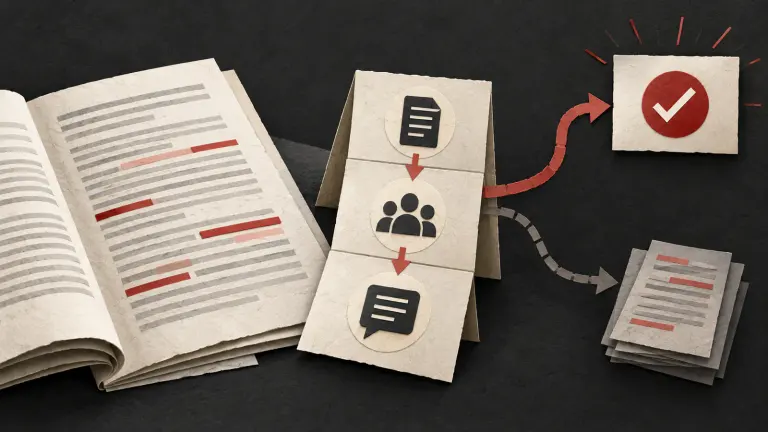
Then collect the exact admission offer, prospectus or brochure, fee schedule, withdrawal/refund policy, portal acknowledgements, payment receipts and institute communications that applied when you accepted and withdrew. Save copies with dates. If the policy changed, keep both versions and ask the institute which one it applied and why.
Do not assume that a vacant seat proves a refund right. A student might report that seats remained empty after withdrawal, but the institute may have a published rule tied to registration, course start or a specific withdrawal date. The seat information may help explain the timeline or support a request for reasons; it is not automatically a legal test.
Read the prospectus and refund terms line by line
The University Grants Commission (Redressal of Grievances of Students) Regulations, 2023 include provisions about prospectuses. Regulation 1(b) says the regulations apply to higher education institutions established or incorporated under a Central or State Act, among other categories. Regulation 4 requires covered institutions to publish fee components and payment terms, together with the refundable percentage, timing and manner of refund. Regulation 3(1)(f)(xiii) defines a grievance to include delay in, or denial of, a refund for a student who withdrew within the time mentioned in the prospectus, subject to UGC guidelines issued from time to time.
The application clause is broad, while Regulation 3(1)(g) uses a defined term “Institution” for a university, deemed university or college. Section 4 of the Indian Institutes of Management Act, 2017 constitutes each IIM as a body corporate under that Act. Read together, those provisions warrant checking how the regulations apply to the named institute and programme; they should not be treated as a blanket exclusion of IIMs or as a conclusion that every individual refund is due. Check the applicable prospectus, institute regulations and withdrawal dates, and seek advice if the interaction is disputed.
The regulations identify important records and possible grievance steps, but they do not decide every dispute. The exact programme, applicable prospectus and policy, whether the withdrawal met the stated timing, and the fee components all matter. If the institute says the UGC rules do not apply, ask it to identify the provision or governing rule supporting that position. A general reference to the IIM Act is not enough to determine which amount was refundable or what a student can recover.
A UGC notice index also lists a letter dated 16 October 2026 titled “Intervention on Non-Compliance with UGC Fee Refund Policy.” The title and date are visible on the UGC website, but this guide does not rely on the letter’s operative contents or claim it creates a refund right for an IIM student. Obtain and read the complete official letter and check whether it applies to the institute, programme and withdrawal date before relying on it.
| Record | What to check |
|---|---|
| Prospectus and refund policy | Which fee heads are refundable, when, and under what conditions? |
| Admission offer and acceptance | Which version or policy did the student accept? Were terms linked or attached? |
| Payment receipts | What amount was paid for each head, and on what date? |
| Withdrawal request | When was it sent, received and recorded by the institute? |
| Institute’s calculation | Which rule supports each amount retained or refunded? |
| Course calendar and registration record | What dates did the institute treat as registration, commencement or term start? |
| Grievance rules | Who receives an appeal, what documents are required, and what timetable is stated? |
Ask for an itemised written explanation
If the institute has not explained the deduction, send a concise written request to the admissions or finance office using the official contact listed on its website. Ask it to identify:
- the exact prospectus, ordinance or refund policy version it applied;
- each amount paid and the fee head to which it was allocated;
- the rule relied on to retain each amount;
- the withdrawal and course-commencement dates recorded in its system;
- the calculation of the refund and any amount still being processed; and
- the formal grievance officer or committee and the submission method.
Keep the tone factual. If the institute’s calculation groups tuition and other charges together, ask for the components rather than assuming the entire amount was treated the same way. If the institute says a seat was offered to another candidate or remained vacant, ask for the information it can properly disclose and how it affects the rule it applied. A request for an explanation does not guarantee a refund, but it helps reveal the issue to review.
Use the grievance route that actually applies
The 2023 UGC regulations describe a Student Grievance Redressal Committee (SGRC) and an appeal to an Ombudsperson for institutions covered by the regulations. Regulation 3(1)(f)(xiii) defines a grievance to include delay in, or denial of, refund for a student who withdrew within the prospectus period, subject to applicable UGC guidelines. The regulations state that an SGRC should send its report and recommendations preferably within 15 working days, and that a student may appeal an SGRC decision to the Ombudsperson within 15 days.
Before using that route, verify it is available for the specific IIM and programme. Do not assume a student can bypass the institute’s published process or that an Ombudsperson will decide the merits in a particular way. Start with the grievance information published on the institute’s own website and prospectus. If the institute identifies another statutory or internal route, ask for the source and compare it with the UGC regulations and the IIM’s governing documents.
When a route is available, submit a short chronology with the offer, policy version, payment table, withdrawal acknowledgement, refund calculation, and unanswered requests. State what you want the committee to decide, such as whether the published policy was applied correctly or whether a fee calculation needs explanation. Avoid presenting unverified claims about vacant seats, other students or institutional motives as established fact.
What the dates can and cannot show
A timeline can help identify which policy and process may apply. For example, an admission offer date, the deadline to withdraw, a first-registration date, course commencement, the institute’s withdrawal acknowledgement and a later fee decision may all be relevant. The student’s message and the institute’s recorded date might differ, so preserve both.
Do not turn a five-day difference between withdrawal and a later admission-process milestone into an automatic refund rule. The governing text may use a particular deadline, the prospectus may define a cut-off, and the institute may have separate fee heads or a course-specific ordinance. Ask the institute to explain which date mattered and point to the rule. A deadline in the prospectus is different from an estimate of when the institute expected to fill seats.
Similarly, an amount described as a “term fee” may not be treated the same as a refundable deposit or a future-term payment. Request the receipt and ledger allocation. If the institute retained tuition for a term that had not begun, do not assume the answer; ask how the rule covers that amount and take the documents to an adviser.
If the written answer does not resolve it
Compare the institute’s explanation against the actual policy text and your dates. Mark each disagreement precisely: wrong version, wrong date, omitted payment, unclear fee head, unexplained deduction, or grievance route not identified. This is more useful than arguing only that a seat was empty or that the total looks high.
If the current official materials or recent UGC directions are unclear, ask the institute’s grievance officer for a written answer and seek advice from a qualified education-law practitioner or student-support service. The UGC’s 16 October 2026 notice should be read in full before relying on it; a notice title alone does not reveal its addressees or operative requirements. Do not submit a complaint through a route that does not cover the institute or programme without checking its scope.
For a comparable but legally different consumer issue, see the guide on an online refund approved but not received. An education admission-fee dispute does not automatically follow e-commerce consumer-refund rules. To organize a timeline and supporting documents, use the legal case-intake workflow or review policy wording with the contract review playbook. A document workflow can help organize the prospectus, offer, payment records and written refund calculation. Gotham can help teams organize and analyze documents; it does not decide refund entitlement or replace advice for a specific dispute.
IIM admission-fee refund questions
Does an IIM have to refund an MBA fee if I withdraw before classes start?
There is no safe answer from that fact alone. Check the exact institute and programme rules, fee heads, admission and withdrawal dates, prospectus, offer terms and the refund policy in force. Do not assume a general UGC rule decides every IIM case.
Does a vacant seat automatically mean the IIM must refund my fee?
A seat remaining vacant may be relevant context, but it does not by itself prove a refund is due. The applicable policy, what the retained amount represents, when you withdrew and whether the rules apply to the institute all need to be checked.
What should an IIM refund policy or prospectus show?
The UGC Student Grievance Regulations, 2023 require covered institutions to publish fee components and payment terms, and the percentage, timing and manner of refunds in the prospectus. First verify that the rules cover the particular institute and programme, then compare the published policy with your offer and receipts.
Can I use the UGC student grievance route against an IIM?
The 2023 UGC regulations define a grievance to include certain refund delays or denials when withdrawal is within the prospectus period. Their application to a particular IIM, programme and student must be checked; start with the institute's current prospectus, regulations and official grievance contact.
What should I request from the institute before filing a complaint?
Ask for the exact rule and prospectus version relied on, an itemised account of every payment and retained amount, the recorded withdrawal and course-start dates, the refund calculation, and the institute's written grievance route. Keep your request and the reply.
Can I rely on a UGC fee-refund letter published in October 2026?
The UGC notice index lists a 16 October 2026 letter titled “Intervention on Non-Compliance with UGC Fee Refund Policy.” Its operative contents and application to a particular IIM must be checked from the complete official letter; the title alone does not establish a student's entitlement.
General information about reviewing an Indian IIM admission-fee dispute, not legal advice. The result depends on the exact institute, programme, prospectus, fee components, withdrawal timing and applicable rules. Do not assume a UGC refund policy or grievance route applies to a particular IIM without checking the governing rules and getting qualified advice where needed.
How Gotham researches and reviews field guides