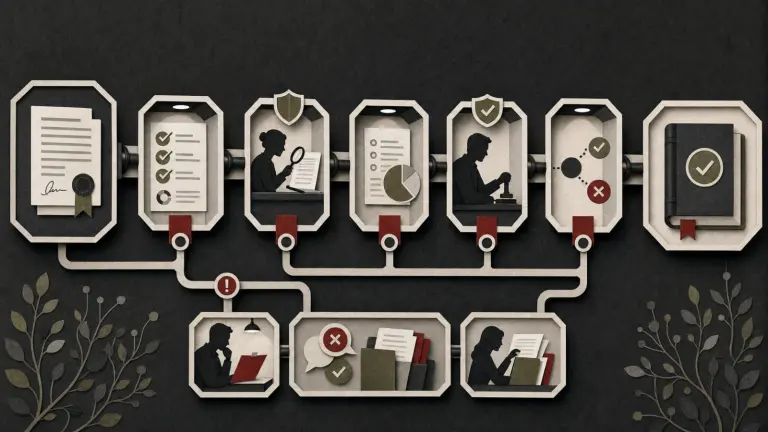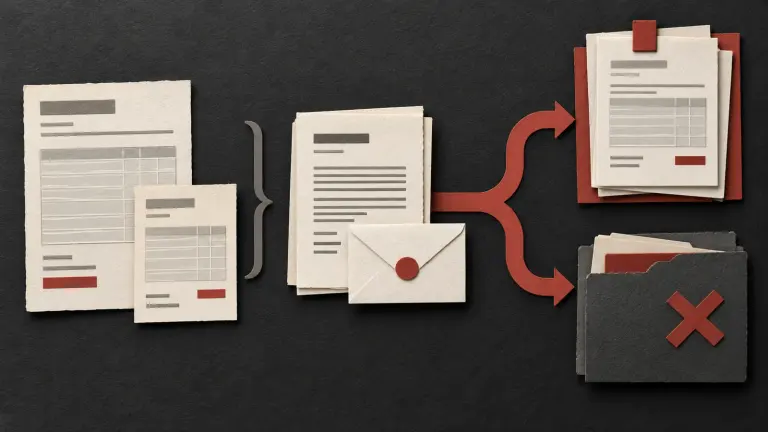
If a German client has not paid a freelance invoice, first decide whether the amount is genuinely undisputed and payable or whether the client disputes the work, the price or a later discount. Then assemble the agreement, delivery record, invoice history and communications before choosing a reminder, a negotiated settlement, a court dunning procedure (gerichtliches Mahnverfahren), or an ordinary civil claim. A Mahnverfahren is designed for a claim for payment of a specified sum; it is not a shortcut for deciding a complex dispute about what work was ordered or accepted.
Nonpayment alone is not proof of fraud. Under § 263 of the German Criminal Code (StGB), fraud involves deception, an induced or maintained error, financial loss and an intent to obtain an unlawful financial benefit. Whether those elements exist is fact-specific. Keep the ordinary civil payment question separate from any criminal allegation and obtain legal advice before making an accusation.
Reconstruct the agreement and any revised price
Freelance work may be governed by an oral agreement, an email chain, a platform order, a signed statement of work, or a combination. Collect the version that was actually accepted. If the parties agreed later to discount the invoice, identify what changed: the total price, the scope, a payment deadline, or only a temporary accommodation. A discount accepted by email may matter, but preserve the entire exchange and any conditions, not only one line quoted out of context.
For each deliverable, document what was requested, who approved the scope, how it was delivered, whether revisions were requested and what the customer said about acceptance. In a German services relationship, the agreement may be analyzed under the BGB’s service-contract rules; for a work contract, the result and acceptance can matter differently. A lawyer should identify the contract type from substance and terms rather than the label “freelancer.”
Create an invoice table with the original amount, each revised version, due date, credited payment, agreed discount, remaining balance and calculation. Keep the original and revised invoices so the history is transparent. Do not send several inconsistent totals without explaining which one supersedes the earlier version.
Check when payment became due and default began
The official German Civil Code (BGB) § 286 explains debtor default (Verzug). Generally, a debtor who fails to pay after a reminder sent after the claim is due may enter default. The statute includes exceptions, such as where a payment date is fixed by calendar, where the debtor seriously and finally refuses performance, or other listed circumstances. Section 286(3) provides a 30-day rule for a payment claim after maturity and receipt of an invoice or equivalent payment statement; if the debtor is a consumer, the consequence applies only if the invoice specifically points it out. Do not count from the invoice date without checking receipt, maturity and the debtor’s status.
Before claiming default interest or costs, confirm the due date, whether a reminder was necessary, whether it reached the correct debtor and whether the contract changes the default rules. Check the amount and interest calculation with German counsel or an authoritative calculation source. A reminder should state the invoice, amount, due date and payment details without adding unsupported penalties.
Preserve a compact evidence file
The file should support each element of the claim, not just show that communication stopped. Save:
- the accepted scope, quote, order confirmation or contract;
- messages and email showing any changed price or payment arrangement;
- the delivered work and transmission record;
- acceptance, revision requests, objections or use of the work;
- original and revised invoices and credit notes;
- bank statement entries for partial payments, with unrelated transactions redacted;
- reminders and proof of delivery; and
- a dated chronology of calls and decisions.
Preserve native emails and attachments where possible. Keep a read-only copy and a separate annotated working set. Do not alter dates, silently replace an invoice, or remove messages that weaken your position. If the work is hosted in a repository or customer platform, export only what you are entitled to access and retain. Be careful not to disclose customer data or trade secrets in a public demand or social post.
Decide whether the Mahnverfahren fits
The Zivilprozessordnung (ZPO) § 688 permits an application for a Mahnbescheid for a claim for payment of a specified sum in euros, subject to exclusions. It does not require the court to assess all supporting evidence before issuing the payment order. The respondent can object (Widerspruch). If the claim is contested, the matter may proceed through ordinary civil procedure if the statutory steps are taken; a claimant then needs to prove the claim in the appropriate proceeding.
The official joint state-court portal Mahngerichte.de explains the procedure and available filing routes. Its page on ways to submit applications describes paper forms and online Mahnantrag paths; online preparation is not the same as completed filing unless you use a submission route that actually transmits the application. Under ZPO § 702(2), where machine-processable forms have been introduced under § 703c(1) sentence 2 no. 1, the specified form is mandatory for applications or statements submitted by an attorney, a registered legal-services person within RDG § 10(1) sentence 1 no. 1, a licensed credit-servicing institution, an authority, or a public-law legal person (including its public-task associations). Separately, ZPO § 130d requires attorneys, authorities and public-law legal persons to transmit preparatory briefs and written motions or statements electronically in civil proceedings, subject to its substantiated temporary technical-failure exception. These are defined categories and rules, not a blanket e-filing rule for every company or represented applicant. Check the competent Mahngericht’s current instructions and fees.
Use the Mahnverfahren only when you can accurately state the amount and payment basis. If the customer disputes the discount, says the work was incomplete, claims setoff, or contests who ordered the work, consider whether a negotiated clarification or ordinary civil action is more suitable. A court payment order does not establish the truth of a disputed claim simply because it was issued.
Hypothetical: revised invoice accepted by email
Assume Lena performs a design project for a German business. The original quote is €2,400. After a scope dispute, the customer proposes €1,900 as a final amount if Lena supplies two corrected files. Lena replies that she accepts the amount once those files are delivered; the customer confirms receipt, but the revised invoice remains unpaid.
Lena should preserve the proposal, acceptance, corrected files, delivery record, final invoice and later reminder. She can show how the amount changed and what condition was completed. If the customer now says the discount was conditional on a future campaign launch, Lena should retain that dispute and not represent the €1,900 as undisputed. She can ask for a written explanation, negotiate, or consult a German lawyer about whether a Mahnbescheid is appropriate. This example does not predict whether the correspondence proves a settlement.
Decision table: reminder, dunning order or civil claim?
| File status | Route to assess | Key risk |
|---|---|---|
| Amount, due date and debtor are clear; no substantive objection | Send a precise reminder and consider Mahnverfahren if unpaid | Incorrect recipient, amount or default date |
| Client accepted a discount but the condition is unclear | Clarify the agreed figure and condition in writing | Filing the wrong invoice total or ignoring a condition |
| Client disputes quality, scope or acceptance | Consider negotiation and ordinary civil advice | Mahnverfahren may produce an objection, not a merits decision |
| Debtor’s identity or contracting party is uncertain | Verify entity and authority before filing | A payment order against the wrong person can waste time and cost |
| Claim crosses borders or service is abroad | Obtain German/EU conflict and service advice | ZPO § 688 includes limits for service abroad; jurisdiction is not automatic |
| There is evidence of an intentional deceptive scheme | Discuss facts confidentially with counsel | Nonpayment by itself does not establish criminal fraud |
Common mistakes
- Treating an invoice as proof that the underlying contract and amount were accepted.
- Losing the email that accepted a discount or failing to state which invoice replaced which.
- Treating the 30-day rule under BGB § 286(3) as a universal due-date rule without checking receipt, consumer status and the invoice notice condition.
- Filing a Mahnbescheid for a claim that is actually disputed without planning for the next civil-procedure step.
- Assuming the court tests evidence or liability before issuing the payment order.
- Calling a customer a fraudster simply because payment is late or promised and missed.
- Sending a reminder to an employee rather than the contracting legal entity or designated payment address.
- Confusing an online form that prepares an application with a completed, correctly transmitted filing.
For cross-functional evidence handling, see Gotham’s contract payment workflow, litigation evidence export workflow, and document naming and version control guide. These are operational references, not German legal authorities.
Pre-filing checklist
- Confirm the legal debtor and the court or Mahngericht with territorial competence.
- Match the amount claimed to the latest accepted invoice or settlement.
- Record due date, receipt and any reminder needed under BGB § 286.
- Separate agreed fee, discount, partial payment, interest and costs.
- Preserve quote, contract, delivery, acceptance, objection and invoice history.
- Ask whether the contract is for services or a work result and whether acceptance matters.
- Determine whether the claim is genuinely suitable for a payment order or likely to be disputed.
- Check ZPO § 688 exceptions, service location, competent court, filing method and costs.
- Keep civil payment recovery separate from any allegation of criminal fraud.
- Obtain German counsel for cross-border, limitation, substantial or contested claims.
Frequently asked questions
Is a German client automatically in default 30 days after I send an invoice?
Not always. BGB § 286(3) refers to maturity and receipt of an invoice or equivalent statement; a consumer debtor must receive a special notice of the consequences. Other rules in § 286 may make a reminder necessary or unnecessary depending on the due date and facts. Verify the exact timeline.
Should I send a Mahnung before filing a Mahnbescheid?
A reminder often helps clarify the amount and document default, but § 286 contains circumstances where a separate reminder may not be required. Check the contract, due date, prior refusal and applicable law before deciding.
Can I use Mahnverfahren if the customer disputes the work?
An application concerns a specified money claim, but the procedure is not designed to decide a complex factual dispute at the outset. The customer can object. If contested, you may need to pursue the merits in ordinary civil proceedings and prove the claim.
Does an unpaid invoice prove fraud?
No. StGB § 263 requires specified conduct and intent, including deception and unlawful financial benefit. A late or unpaid debt may be a civil breach without proving fraud. Seek legal advice before making a criminal accusation.
Can an email establish a discounted final amount?
It may be relevant evidence of a changed agreement, depending on its wording, authority, conditions and performance. Preserve the entire chain and show whether the conditions were fulfilled; do not rely on an isolated excerpt.
Can I file the Mahnverfahren online?
Mahngerichte.de describes an online Mahnantrag, but the submission path matters. Some options prepare data or a barcode form for later transmission; an electronic submission route is different. ZPO § 702(2) applies its form mandate to enumerated applicants when the specified machine-processable forms have been introduced. ZPO § 130d separately applies to attorneys, authorities and public-law legal persons filing civil-procedure documents, with a limited technical-failure exception. Neither provision makes every private freelancer or company subject to the same filing rule. Check the current instructions of the competent Mahngericht.
What happens if the debtor files an objection?
An objection means the payment order is contested. The claimant may need to ask for the matter to be transferred to the ordinary court and then prove the claim under civil procedure. Check the notice and deadline and get advice promptly.
Can I add interest and collection costs?
Only amounts with a legal and factual basis should be claimed. Verify the point when default began, the rate, the applicable contract and any statutory limits with German counsel or an authoritative source.
What if the debtor is in another country?
Cross-border service, jurisdiction and enforcement require separate analysis. ZPO § 688 contains limits for service abroad, and EU or international rules may apply. Do not assume a domestic Mahnverfahren automatically works for any foreign debtor.
To organize invoice and delivery records, explore Gotham’s workflow resources or contact the team. The platform can support document workflows; it does not collect the debt or predict a court outcome.
General information, not legal advice. German contract, default, limitation and court-procedure questions depend on the facts and current law.
How Gotham researches and reviews field guides