If an employer calls a shift an “unpaid trial,” that label does not settle whether minimum wage is due. A short, observed task that genuinely tests someone for recruitment can be different from hours spent doing useful work for the business. The right next step is to write down what happened, separate working time from breaks, check the pay facts, and ask Acas or HMRC for the route that fits the issue.
This guide is for people in England dealing with an ordinary recruitment trial or early paid work. It does not decide whether a particular person is legally a worker, whether a contract was formed, or what an employer must pay. The National Minimum Wage rules can apply even when an employer describes the arrangement as a trial, test or recruitment exercise. The result depends on the whole arrangement, including the work asked for, why it was done, how long it lasted and how closely it was observed.
Start with the task, not its label
The government’s minimum-wage eligibility guidance says current law does not define a trial-work period or set a precise point at which pay must begin. It says a person asked to perform a trial may nevertheless be a worker entitled to minimum wage. Its listed factors include whether the trial is genuinely for recruitment, whether its length is reasonable for testing ability, how much the person is observed, whether the tasks match the job, and whether the work has value to the employer beyond testing.
These factors are evidence, not a checklist with a guaranteed result. Acas’s recruitment guidance says unpaid trials should be for a reasonable amount of time and should not usually last longer than one day. The government guidance describes a trial longer than one day as likely to create minimum-wage entitlement in all but very exceptional circumstances. Neither statement makes “one day” a universal bright line: a brief exercise can still raise questions if it provides productive work, and a longer assessment must be considered in its full context.
A person working a real shift may have been observed closely, or may have been left to serve customers, clean, prepare stock or cover routine duties. Those facts matter, but none by itself resolves pay entitlement. Record them accurately and avoid treating a manager’s description, a verbal promise or the fact that the work was useful as a final legal decision.
Build a clear timeline
Write a short, dated account while the events are fresh. Keep each day separate and record:
- when you arrived and left, including any handover or closing work;
- each task you performed and whether it was a demonstration, simulated exercise or real customer/business work;
- who supervised or watched you, and when you worked without observation;
- the role advertised, what the employer said the trial would test, how many trial hours were expected and any promised pay or terms;
- when a job offer was made, what hours and rate were discussed, and when work continued beyond the trial;
- breaks offered, taken, interrupted or worked through, including the actual start and end times;
- any shift cancellation, termination, request to return, payment, payslip or explanation for an unpaid amount.
Keep the original messages, rota, job advert, notes, travel or clock records, payslips and bank entries. Save a copy somewhere you control. If another worker saw what happened, note their name and what they directly observed; do not pressure them to take a position. Do not edit a message or recording to make it appear more complete than it is. Ask for advice before sharing a private recording or other personal information.
Separate trial time, paid work and breaks
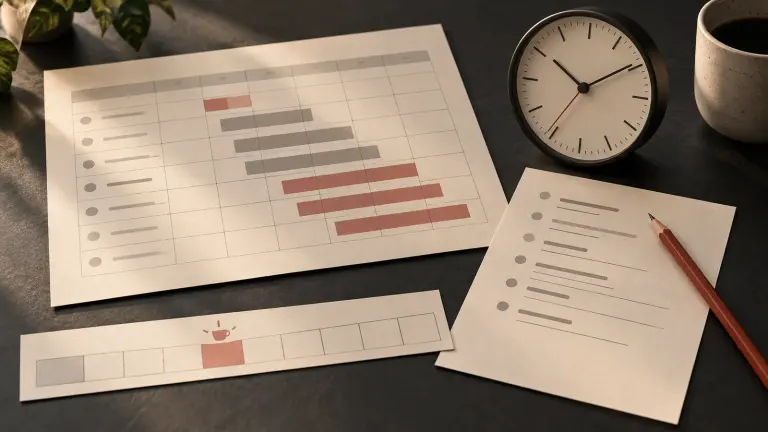
Make one table for each shift. Use columns for planned start and finish, actual start and finish, tasks, supervision, break offered, break taken, any interrupted break, and the source for each entry. If you cannot remember an exact minute, mark it as an estimate rather than presenting it as a clock record.
Do not deduct a scheduled meal break automatically if you were asked to keep serving, cleaning, answering questions or otherwise working during it. Equally, a break being unpaid does not by itself show that the minimum wage was underpaid. The GOV.UK rest-break guide says an employer cannot count a break if it requires the employee to return before the break ends, and that workers do not have a right to be paid for a rest break unless their contract says so. The separate question is whether the time was actually working time for minimum-wage purposes.
For an adult worker, the standard Working Time Regulations entitlement is an uninterrupted 20-minute rest break when daily working time is more than six hours. A young worker’s standard threshold is different: more than four and a half hours brings a 30-minute break. The Health and Safety Executive’s explanation describes these baseline rules and notes that exceptions and special circumstances exist. Check the person’s age, role and applicable agreement before applying the adult rule. The rest-break entitlement is not the same as a pay calculation, and it does not determine whether every part of a trial is paid.
Estimate the amount without guessing
First total the hours you actually worked, separating each shift and any break you were free to take. Then identify the age band and apprentice status that applied on the date of the work, the pay received or promised, and any deductions that affect minimum-wage calculation. Use the current GOV.UK minimum-wage rates and calculator for the applicable period; rates change, so do not reuse a number from an older payslip or internet post.
Keep the calculation simple and mark uncertainties. For example, “6 hours scheduled; 30-minute break listed; worked through it while serving customers; exact duration uncertain” is more useful than silently treating the full shift as either six paid hours or five and a half. A calculation helps you ask a precise question; it does not decide whether the arrangement was a contract or whether every recorded minute counts.
A trial lasting a few hours may be a proportionate way to assess a candidate when the purpose is genuine recruitment, the person is watched, and the exercise has little value beyond testing. A longer stint or ordinary shift can point the other way, particularly where the person is doing real tasks with value to the business. Government guidance says HMRC officers and, where needed, courts or tribunals assess the facts case by case. Do not promise yourself a particular result from one factor alone.
Ask for a written pay explanation
If you feel safe doing so, send a calm message that states the dates, hours and amount you believe remains unpaid, then ask the employer to confirm the amount paid, the calculation, any break deducted and the payment date. Request a copy of the relevant pay records in writing. Do not agree to an unexplained deduction or sign a document you do not understand simply to get a conversation started.
A concise note can say:
I am checking the pay for the shifts on [dates]. My records show [hours and breaks], and I understand that [amount] remains outstanding. Please send the hours and pay calculation, including how the trial time and breaks were treated, and confirm when any balance will be paid. I would like to resolve the records in writing.
Change the note to fit the facts. Do not state that the employer has broken the law as a certainty where worker status, hours or pay remain disputed. If you are worried about meeting the employer alone, you can seek advice first and use a written channel instead.
When to contact Acas or HMRC
You can contact Acas for free, confidential advice about pay, minimum wage, workplace disputes and working time. You do not have to wait for an in-person meeting to ask what to do. Acas can explain options, but it does not decide whether your particular trial created a contract or order the employer to pay.
If the concern is unpaid National Minimum Wage, GOV.UK says a worker can ask the employer in writing for payment records and can complain to HMRC. The official pay-and-work-rights page routes National Minimum Wage complaints to HMRC and lists Acas as an advice resource. The HMRC process and a tribunal claim are different routes. Acas’s minimum-wage dispute guide explains the available options; check the current process before starting a formal case, because some routes cannot be used concurrently for the same issue.
A tribunal may be another route, depending on the claim and facts. Tribunal time limits are strict and the rules changed on 1 October 2026. The updated Acas time-limit guide says the deadline depends on when the problem happened and the type of claim; early conciliation pauses a limit only when Acas is notified within that limit. A grievance, an employer discussion or an HMRC complaint should not be assumed to pause a tribunal deadline. If you are considering a claim, ask Acas promptly for the current deadline for your specific claim and date.
What to take into an advice call
Have your one-page timeline, rota or clock entries, copies of messages, the job advert, any terms, your pay calculation and the questions you need answered. Ask whether the tasks and supervision suggest the trial was genuinely a recruitment test, whether the time could count as work, what break rule applies to your age and shift, and whether HMRC or a tribunal is the appropriate next route. If you do not know an answer, say so; do not fill gaps with an estimate presented as fact.
A short trial can be legitimate, and an unpaid label does not settle every case. But a trial can also become productive work, and pay and break issues should be assessed separately. A written timeline and an early Acas conversation can help you ask the right question before memories fade or deadlines pass.
This article is general information, not legal advice. It does not determine worker status, contract formation, a minimum-wage calculation or a claim outcome. For a structured way to assemble a timeline, see Gotham’s legal case-intake workflow; for reviewing terms, see the contract data-extraction guide. Gotham’s document workflows provide a general way to organize dated employment records and follow-up. For help discussing a workflow, contact Gotham.
Questions about unpaid trial shifts in England
Is every unpaid trial shift against the law?
No. A short, observed trial that genuinely tests skills for recruitment may be unpaid in some circumstances. If the person is doing work under a contract, or the task provides value beyond testing, minimum wage may be due. The facts matter and there is no universal trial-shift rule.
Does a trial lasting more than one day automatically prove minimum wage is due?
No. Government guidance says a trial longer than one day is likely to attract minimum wage in all but very exceptional circumstances, but that is a view about the evidence, not an automatic deadline or legal test. HMRC and, where necessary, a court or tribunal assess the full arrangement.
Does an unpaid meal break count as paid work?
Not automatically. Keep the scheduled break and what actually happened separate. If you had to continue working or return before the break finished, record that time and ask Acas how it affects the pay calculation. Whether a rest break must be paid is a separate question from whether minimum wage is due for working time.
Should I contact Acas before speaking to the employer?
You can contact Acas for free, confidential advice before or after raising the issue with the employer. If an in-person conversation feels uncomfortable, you can ask about pay and records in writing and keep a copy. Acas does not decide whether a particular trial creates a contract.
What should I do if the employer still does not pay?
Keep your timeline, hours, task and break records, messages and any pay calculation. GOV.UK says a worker can ask for payment records in writing, contact Acas, make a minimum-wage complaint to HMRC or consider an employment tribunal. Check the current deadline and route before waiting or starting a formal process.
This is general information about employment rights in England and is not legal advice. Whether minimum wage is due for a trial depends on the facts, including the work, length, observation and purpose. Break and tribunal rules can vary by age, claim type and date. Contact Acas or a qualified adviser about your situation.
How Gotham researches and reviews field guides