A manager’s “there’s nobody to cover you” does not tell you whether you are legally entitled to a break. The first facts to check are your daily working time, whether you were allowed a genuinely uninterrupted rest period, and the date of each shift when it was missed. Those details matter more than the label “lone working.”
This guide focuses on a worker in England. The Working Time Regulations 1998 cover Great Britain, including England, Wales and Scotland; Northern Ireland has separate regulations. The outcome can also depend on whether you are legally a worker, your age, the shift pattern, and any applicable collective or workforce agreement. Nothing here decides whether a particular employer has broken the law.
Check what break the shift requires
For an adult worker, the basic rule is a rest break if daily working time is more than six hours. The minimum is generally one uninterrupted period of at least 20 minutes. It should happen during the working day, not at the very beginning or end, and you must be able to spend it away from your workstation. That does not automatically mean you can leave the employer’s premises. Whether the break is paid depends on your contract.
Daily working time of exactly six hours does not trigger the adult entitlement in regulation 12 because the rule says “more than six hours.” A longer day does not automatically give you additional statutory breaks beyond the minimum. Your contract, workplace agreement, health-and-safety needs, or another rule could provide more. If you are under 18, the threshold and duration are different: young workers generally get at least 30 minutes when daily working time is more than four and a half hours.
An employer can decide when during the day to schedule a break. But if you are expected to keep serving customers, answer calls, monitor the door, or return to work before the break is complete, that time may not be an uninterrupted rest break. If an interruption happens, record what occurred and whether you were later able to take a full qualifying break.
Lone working is a scheduling problem to solve
The question is not simply whether a shop can close or whether the worker can walk away. The employer can arrange cover, stagger shifts, designate a manager, or plan another compliant break time. A worker may have to remain on site during an unpaid break if the contract and arrangements allow it, but must still receive the uninterrupted rest period and time away from the workstation required by the rule.
The regulations contain specific exceptions and allow some collective or workforce agreements to change how certain rest provisions operate. Examples can involve continuity of service or production, seasonal work, or a qualifying agreement. These are not a blanket “we are short-staffed” exemption. If the employer says an exception applies, ask which regulation or agreement it relies on, what alternative arrangement it provides, and whether a full break or equivalent rest is scheduled.
Where a valid exception or modification means you have to work during a period that would otherwise be a rest break, regulation 24 can require equivalent compensatory rest wherever possible. In exceptional cases where an equivalent rest period cannot objectively be given, the employer must provide appropriate health-and-safety protection. The exact rule depends on the category and facts; do not assume every interrupted break automatically creates a fixed amount of later time off.
Do not close a shop, leave a safety-critical post, or refuse a shift based only on a general online summary. You can document the problem and ask the employer for a workable plan without taking a step that creates a separate safety, contract, or disciplinary dispute.
Make a simple record for every affected shift
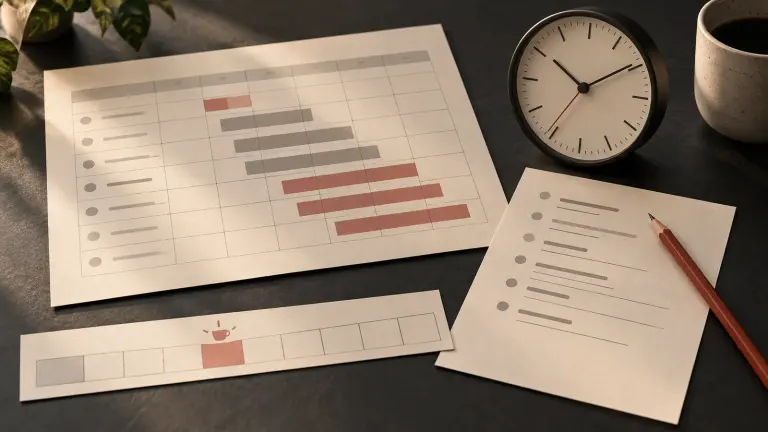
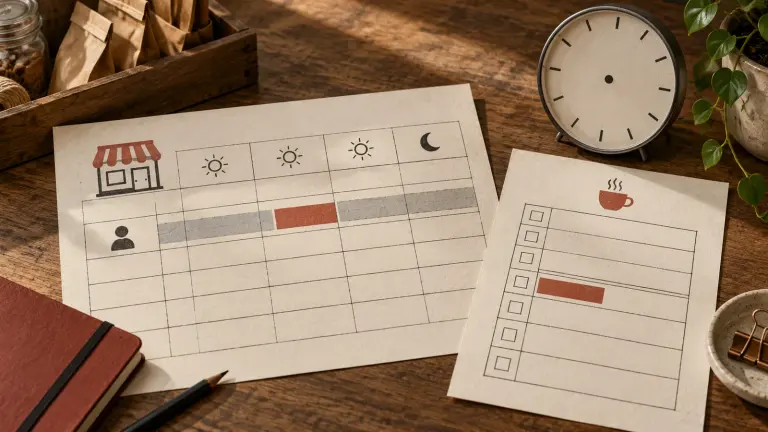
A short contemporaneous log is more useful than a general statement that you “never get breaks.” For each shift, record:
- date, start and finish time, and any break shown on the rota;
- whether your daily working time was more than six hours;
- the time you tried to take a break and whether it lasted 20 uninterrupted minutes;
- any call, customer, safety or other work interruption, including how long it lasted;
- whether you later took a full break, and whether you were away from the workstation;
- who you asked for cover, when you asked, and the reply or lack of reply.
Keep the rota, time records, relevant contract or handbook terms, and messages about arranging cover. Preserve your own records lawfully; do not copy customer data or confidential business material. If the employer’s time system labels a break as taken automatically, note whether you actually received it. A rota entry does not prove a break was taken, but a detailed record helps explain the difference.
A screenshot can preserve a message, but keep enough context to show its date and the preceding request. Avoid editing or publicly posting private work conversations. If the record includes other people’s personal information, keep it secure and ask an adviser what is necessary to share.
Ask for a clear break plan in writing
A short, factual message can clarify the arrangement without making a legal accusation. For example:
My rota shows shifts over six hours on [dates]. I have not been able to take an uninterrupted break because I am alone and have no cover. Please confirm the break time and who will cover the shop so I can take the full break away from my workstation. If you believe a different rule or agreement applies, please identify it and explain what alternative rest is arranged.
If you do get a break but it is interrupted, give the date and explain what work you were asked to do. Ask whether you can take the full 20 minutes later that day or what equivalent rest is available under the arrangement. Keep the answer and continue the shift record.
If the first manager does not respond, consider raising the issue with HR, a more senior manager, a union representative, or the person named in your grievance policy. Keep the complaint specific: list dates, shift lengths, what break was missed, what you requested, and what change would let you take it. Do not assume that a grievance is required before every legal claim, and do not assume the grievance process changes a legal deadline.
If a manager proposes changing your shift after you raise the issue, keep the message and compare it with your contract, rota policy, and the reason given. A change to nights can raise a separate contract or workplace issue. The facts alone do not establish retaliation or constructive dismissal. Get advice before resigning or refusing a scheduled shift.
Know the tribunal time-limit change
For a worker who says the employer refused a right to a qualifying rest break, regulation 30 provides a route to complain to an employment tribunal. The tribunal can make a declaration and may award compensation if it finds the complaint well-founded; an award is not automatic and depends on the circumstances and any loss. This is different from a guarantee that the employer will be fined or that the worker will receive a particular sum.
The time limit changed on 1 October 2026. For a refusal on or after that date, the regulation 30 period is generally six months from the date the rest right should have been permitted. For an event before 1 October, the earlier three-month period may apply under the transition rules. A series of missed breaks can involve multiple dates; a later event does not automatically revive an older one. Acas describes most claims as “six months minus one day” for a problem occurring on or after 1 October, and “three months minus one day” for an earlier problem. The exact date calculation, including any continuing or repeated events, is fact-sensitive.
Contact Acas promptly if you may need to bring a claim. Early conciliation may pause a time limit when you notify Acas in time, but relying on an extension without calculating the original deadline is risky. An internal grievance or appeal does not itself stop the clock. If you are near a deadline, have several types of claim, or are unsure which date applies, speak to Acas or a qualified employment adviser rather than waiting for the employer’s internal process to finish.
For a separate issue about minimum wage during a trial shift, our England trial-shift guide explains how to record work time and pay; it does not replace this break-right analysis. Our England holiday-entitlement guide covers a different Working Time Regulations topic. If your issue also involves a formal workplace request after maternity leave, see the England flexible-working guide. If an employer has dissolved while a tribunal claim is under way, our England company-dissolution guide covers that separate process problem.
Sources
- Working Time Regulations 1998, regulation 12, and regulations 23–24.
- GOV.UK: rest breaks at work and taking breaks.
- Working Time Regulations 1998, regulation 30; Employment Rights Act 2025, section 152 and Schedule 12, paragraph 6; and SI 2026/954.
- Acas: employment tribunal time limits and GOV.UK: before making a tribunal claim.
Disclosure: I am affiliated with Gotham. This guide is general information for organizing a workplace issue, not legal advice or a finding about any employer.
Questions about missed work breaks in England
When does an adult worker get a 20-minute rest break?
Under the Working Time Regulations, an adult worker whose daily working time is more than six hours is entitled to a rest break. It must generally be uninterrupted and at least 20 minutes, subject to applicable collective or workforce agreement terms. Young workers have different rights.
Does working alone remove the right to a break?
Lone working by itself is not listed as a reason to ignore the rest-break right. The employer may schedule the break and specific statutory exceptions or agreements can affect the arrangement, so ask which rule applies and what cover or alternative rest is provided.
Can my employer interrupt a rest break?
The break must generally be uninterrupted. If you are required to return to work before the planned break is complete, GOV.UK says it does not count as a rest break. Record the interruption and whether you received a full break later.
What if my daily working time is exactly six hours?
The adult-worker rest-break entitlement described in regulation 12 applies when daily working time is more than six hours, not exactly six. Your contract may provide more generous breaks, and other rest or health-and-safety rules may still matter.
What is the tribunal time limit for a denied rest break?
For a rest-break right that should have been permitted on or after 1 October 2026, the current regulation 30 period is generally six months, subject to exact date calculation and early conciliation rules. For an event before that date, the previous three-month limit may apply. Notify Acas promptly; do not assume a grievance pauses time.
Does a grievance extend the tribunal deadline?
No. Acas says an internal grievance does not itself stop the time limit. Early conciliation can pause the clock if you notify Acas within the applicable deadline. Ask Acas or a qualified adviser to calculate the date for your facts.
General information for workers in England about working-time rest breaks, not legal advice. The Working Time Regulations 1998 apply across Great Britain with exceptions and different rules in some cases; Northern Ireland has separate law. Your status, shift hours, contract and any applicable collective/workforce agreement matter. Tribunal deadlines are strict and depend on the date of each event. Get prompt advice from Acas or a qualified adviser. This guide does not determine whether a particular employer breached the law or promise compensation.
How Gotham researches and reviews field guides