A renter in Brampton says the landlord changed the room’s lock code after a rent notice. The renter also describes renting a room in the landlord’s home, a planned move-out date and a disagreement about rent for days after the notice. That raises an urgent access question, but the post does not establish whether the Residential Tenancies Act (RTA) covers the arrangement. A room in a shared home can raise an important exclusion question.
Start by separating two issues: whether the renter is covered by the RTA, and what happened to access after the code changed. The Residential Tenancies Act, 2006 says a landlord must not alter a lock during a tenant’s occupancy without giving replacement keys. Tribunals Ontario explains that a termination notice is not an eviction order and that, where the Act applies, a sheriff enforces an eviction order. Those rules do not answer whether a particular occupant is a tenant under the Act or whether an exclusion applies.
First check the shared-accommodation exclusion
Section 5(i) of the RTA excludes living accommodation where the occupant must share a kitchen or bathroom with the owner, or specified family members of the owner, and that owner or family member lives in the building. The wording is specific. Sharing a kitchen with another renter is not the same as sharing with a resident owner. Nor does the quoted exclusion apply merely because the owner lives somewhere else. Other statutory exclusions may exist, so check the actual living arrangement and legal relationship.
Write down who owns the property, who lives there, which rooms and facilities are shared, and what the rental agreement says about access. A landlord’s label such as “lodger,” “roommate” or “tenant” does not by itself answer the legal coverage question. If the facts are unclear, get help from a tenant service or lawyer before relying on the LTB process. The published Ontario deposit guide and Ontario rent-shortfall guide cover different tenancy issues; they do not resolve this coverage question.
| Fact to establish | Useful record | Why it matters |
|---|---|---|
| Who rented the room and from whom | Agreement, messages, e-transfers or receipts | Helps identify the parties and the terms they discussed. |
| Who owns and occupies the home | Address history, written statements, lease or other reliable record | Section 5(i) turns on a specified owner or family member living in the building. |
| Which facilities are shared | Room layout, move-in messages, photographs or a neutral description | The statutory exclusion names a kitchen or bathroom shared with specified people. |
| What access was agreed | Code messages, key handover, agreement and later updates | Helps establish what method of access was supplied and when it changed. |
| Whether an LTB order exists | A copy of the order and service information, if any | A notice from a landlord and an eviction order are different documents. |
Avoid publishing a landlord’s address, access code, identity documents or other personal details while asking for help online. Keep the originals securely and share them only with an appropriate adviser or tribunal process.
A notice is not the same as an eviction order
Tribunals Ontario’s lockout information for tenants explains that a landlord’s termination notice is a request to leave; it is not itself an LTB eviction order. The same official guide says only a sheriff from the Court Enforcement Office can force a tenant to move out after an eviction order. This is a process distinction, not a conclusion that every person renting a room is covered by the RTA.
The notice and any order should therefore be kept separately. Note the form number, date received, termination date stated, amount claimed and any LTB case number. Do not infer from a rent notice alone that the tenancy has ended, that an eviction order exists, or that the renter can safely ignore a deadline. If the notice refers to a hearing or order, get the actual document and verify its current status promptly.
Document the access problem in a short timeline
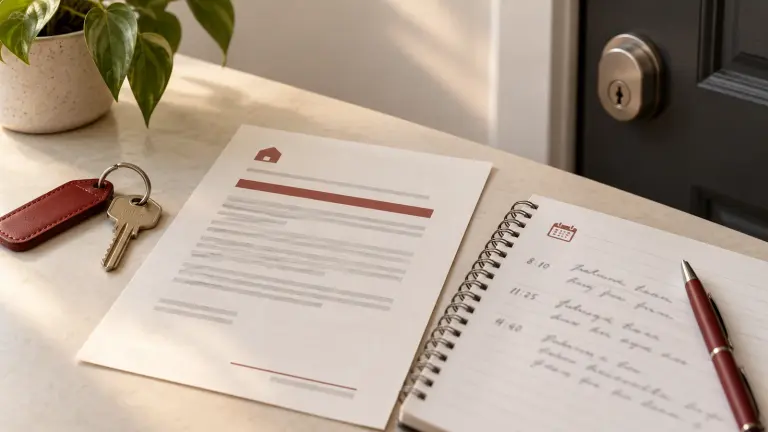
If a keypad code stops working, record when access failed, what message appeared, whether a key or alternate entry method was offered, and what the landlord said. Keep the original text or email thread, rent payment records, the notice, agreement and proof of occupancy. If safe, make a factual note of the condition of the door and whether the renter’s belongings remain inside. Avoid damaging the lock or entering by force.
Send a brief written message asking for working access or replacement keys and stating the time access was lost. Keep the wording neutral. For example: “The code did not work at 8:15 p.m. today. I am still living in the room and have not received a replacement key. Please confirm how I can enter now and whether an LTB order exists.” This preserves the issue without making legal conclusions or accusations.
If there is immediate danger or an urgent safety issue, contact emergency services. Tribunals Ontario’s information says tenants locked out may call police for immediate help, contact the Rental Housing Enforcement Unit, and consider a T2 application if the RTA applies. Responses can depend on the situation; calling an agency is not a guarantee that it can restore access.
If the RTA applies, the T2 process may be relevant
The Board’s T2 application instructions list a landlord changing the lock or locking system without giving replacement keys as a reason to apply about tenant rights. The applicant should describe the dates, who changed the lock if known, what access was lost, whether the person was still a tenant, and what remedy is requested. The form is evidence-based; it does not automatically prove the allegation.
The LTB brochure says a tenant may seek an order to return to the unit and continue the tenancy. It also warns that the Board cannot order the landlord to let the tenant back in once another tenant is living there. If the room is vacant or the renter has already moved out, describe that accurately and ask an adviser which remedies fit the facts. Do not assume that an order for re-entry, compensation or a rent adjustment will be made.
The Board may need to decide whether the RTA applies, whether a lock was changed during occupancy without replacement keys, what the notice and any order required, and which remedies are available. Those are fact-sensitive questions. If a landlord says the renter is not covered, ask for the basis and preserve the agreement and living-arrangement details rather than treating the statement as a final ruling.
Keep the rent dispute separate from access
The original post also asks whether rent is due for several days after a notice expiry when the renter plans to leave earlier. The answer depends on whether the RTA applies, what notice was given, the agreed tenancy period, the effective termination date, any order and the actual move-out or key-return facts. A lock-code dispute does not automatically cancel rent, and a rent dispute does not by itself establish that a lock change was lawful.
Make a separate payment schedule showing each period, amount due, payment date and receipt. Ask the landlord to identify the clause or order relied on for any claimed arrears. Do not calculate a final amount from a screenshot alone if the agreement, dates or credits are missing. The RTA’s rent and termination provisions may be relevant only after the coverage and timeline are established.
| Timeline entry | Record to preserve | Open question |
|---|---|---|
| Rental arrangement began | Agreement, messages, deposit and first payment | Who is the landlord and what was the room arrangement? |
| Notice was delivered | Full notice, envelope or email date and any response | What termination date and legal process does it state? |
| Code or key changed | Screenshot, time, message and access attempts | Was a replacement key offered, and was an order served? |
| Rent or other amount claimed | Ledger, receipts and calculation | What exact period and basis does the claim cover? |
| Occupancy ended or belongings moved | Key return, photos, written confirmation | What happened to the room and when? |
Ask for help without delaying urgent steps
For immediate access and safety, use the appropriate emergency or local service. For an RTA coverage question, a community legal clinic, tenant duty counsel or qualified Ontario lawyer can review the room-sharing facts. If the person is covered and wants to apply, use the current LTB forms and instructions and follow service and filing requirements. Check any hearing date, order or review deadline directly from the official document.
Gotham’s document workflows can help organize source-linked records and a chronology. The Ontario severance guide is unrelated to tenancy rights but illustrates why a document timeline should distinguish records instead of blending separate issues. These tools do not determine RTA coverage or provide a legal decision.
The most useful first questions are concrete: Who lives in the building? Is the renter required to share a kitchen or bathroom with the owner or qualifying family member? What exact notice was received? Did an LTB order issue? When did the code stop working, and was a replacement key offered? Answering those points helps a qualified adviser assess what process may apply without assuming that the renter has a remedy or that the landlord acted lawfully.
Questions about an Ontario lock change after a rent notice
Does a 10-day rent notice let a landlord change the locks?
A notice of termination is not an LTB eviction order. If the RTA covers the unit, the Board's guidance says the sheriff enforces an eviction order. Whether the Act covers a room or shared accommodation must be checked first.
Does the Ontario RTA always cover a rented room?
No. The Act excludes some living accommodation where the occupant must share a kitchen or bathroom with the owner or specified family member, and that person lives in the building. Other facts and exclusions may matter.
Can I file a T2 if a landlord changed a lock code?
The T2 instructions list a lock or locking-system change without replacement keys as a tenant-rights issue. The LTB decides its jurisdiction and facts; a T2 is not a guarantee of re-entry or compensation.
What should I document if the code stops working?
Record the date and time, save the lease and rent notice, capture messages, keep proof of payment and ask in writing for working access. Preserve photographs or screenshots in original form and note who was present.
Should I stop paying rent after a lockout dispute?
Do not treat this guide as permission to stop paying. Rent obligations, the tenancy's status, coverage and available orders depend on the facts. Seek advice from an Ontario tenant service or qualified lawyer promptly.
General information, not legal advice. Ontario's Residential Tenancies Act coverage depends on the actual living arrangement and statutory exclusions. This guide does not decide whether the LTB has jurisdiction or whether a particular lockout was unlawful.
How Gotham researches and reviews field guides