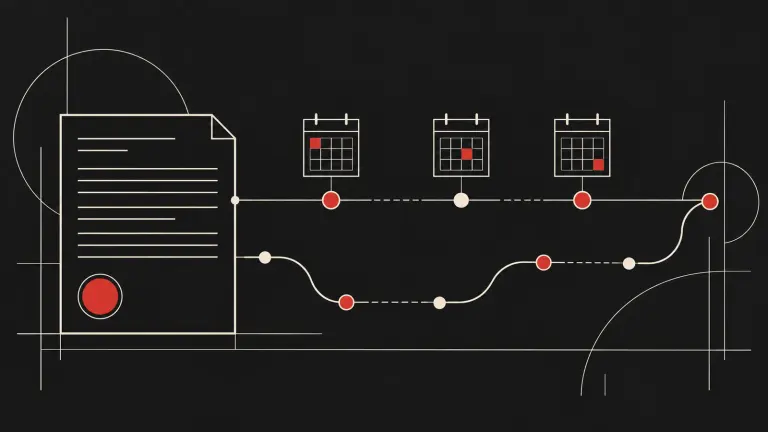
If a maintenance order is not being paid, start by checking the complete order and making a month-by-month record of what was due and received. The enforcement route depends on the law and court behind that order, its terms, any later stay or variation, and the dates involved. No single statutory procedure applies to every maintenance order, and filing does not guarantee recovery.
Confirm what the order requires
Use the complete signed, certified, or digitally authenticated order. Note:
- the court or authority, case number, date, and statute or proceeding;
- who must pay, who is to receive payment, and any child or other beneficiary named;
- the amount, due date, payment method, and the date from which payment is ordered;
- whether the order is interim or final and whether it expressly awards arrears; and
- any later appeal, stay, modification, variation, settlement, or order in another case.
If there is more than one maintenance order, give each order and payment history to counsel. Do not assume that a later case or informal agreement automatically cancels an earlier order, or that sums under different orders can simply be added together.
Make a month-by-month record
For each installment, record the amount and due date under the order, the amount and date received, the payment channel, and the balance claimed. Keep bank statements, receipts, and relevant communications with the original order. Separate other household, school, or medical expenses from maintenance unless the order says they count toward payment. Keep private family documents secure and share them only with the court, counsel, or another appropriate service.
Use the procedure for the order's own legal basis
Order under section 144 of the BNSS
Section 144 of the Bharatiya Nagarik Suraksha Sanhita, 2023 (BNSS) provides a summary maintenance procedure for the people and circumstances listed in that section. It is not the enforcement rule for every maintenance order.
For an order made under BNSS section 144, subsection 144(3) says that, if the person ordered to pay fails without sufficient cause to comply, the Magistrate may issue a warrant for each breach to levy the amount due in the manner used for levying fines. The subsection also permits imprisonment, after execution of the warrant, for all or part of each month's allowance still unpaid, for up to one month or until payment if sooner. These are powers the Magistrate may use; they are not an automatic result of filing.
The proviso to section 144(3) says that a warrant for recovery may not be issued unless an application to the Court to levy the amount is made within one year from the date it became due. This is a condition on issuing that warrant. The proviso does not, by itself, determine whether an underlying entitlement is extinguished or preserved, or what other remedy may be available. Ask counsel promptly to calculate the dates and assess the order and any other possible remedies; do not assume that another remedy is available or unavailable. Section 147 separately says an order under this maintenance chapter may be enforced by a Magistrate in any place where the person against whom it was made may be, once the Magistrate is satisfied about the parties' identity and non-payment. Section 147 does not turn every order under a different law into a section 144 order.
Older orders and proceedings
Orders and proceedings under the former Code of Criminal Procedure can require a different analysis. BNSS section 531 contains savings for specified proceedings pending when the BNSS commenced. The Supreme Court discussed that transition in Parvinder Singh v Directorate of Enforcement, a criminal proceeding; it does not itself decide the procedure for every maintenance order. Ask counsel which law applies to the particular order and enforcement proceeding before applying the BNSS warrant rule.
Monetary relief under the Domestic Violence Act
An order for monetary relief under section 20 of the Protection of Women from Domestic Violence Act, 2005 has its own statutory setting. The Act addresses jurisdiction in section 27 and procedure in section 28; section 27(2) says an order made under the Act is enforceable throughout India. Upon failure to pay monetary relief under section 20(1), subsection 20(6) allows the Magistrate to direct the respondent's employer or debtor to pay a portion of wages, salary, or debt directly to the aggrieved person or to deposit it with the court; the amount may be adjusted toward the monetary relief payable. This is a court power, not a guaranteed collection method. Ask counsel to identify the correct filing, forum, and service steps for the particular order and state.
An order in matrimonial proceedings
For example, sections 24 and 25 of the Hindu Marriage Act, 1955 address maintenance during proceedings and permanent alimony and maintenance. Section 28A provides for enforcement of decrees and orders under that Act in the same manner as decrees and orders made in the court's original civil jurisdiction. The applicable court process and local rules should be checked with counsel; do not substitute the BNSS section 144(3) warrant procedure just because the order concerns maintenance.
Other personal laws and statutes can provide different forms of relief and enforcement. The title or wording of an order may not, by itself, reveal every procedural step. Ask an Indian family-law advocate to identify the governing provision, court with authority to act, filing format, notice or service requirements, and any applicable time limit. If the person ordered to pay is outside the place where the order was made, ask whether the order can be enforced elsewhere under its own statute and the applicable court procedure.
Prepare for legal advice or a court filing
Bring the complete order, a clear arrears ledger, proof of payments and missed payments, any prior enforcement filing or response, and later orders or agreements. Ask whether an execution or enforcement application is needed, what period can be claimed, which court should receive it, how notice must be served, and whether the order has been stayed or varied. A court will assess the facts and the governing procedure; filing does not guarantee recovery, a particular hearing date, or a particular result.
If no maintenance order exists
Seeking maintenance for the first time is a separate process. Eligibility, available interim relief, evidence, forum, and how parallel claims interact depend on the governing law and facts. A private promise or message may not have the same effect as an enforceable order. Get advice on the initial application before treating an unpaid informal arrangement as a court-order enforcement matter.
Safety and privacy
If there is coercion or a safety concern, use a safe device and speak with a lawyer or local support service before contacting the other person. Avoid posting the order, children's information, addresses, or financial records publicly. A person ordered to pay who believes the order is no longer workable should seek a variation, stay, or appeal through the appropriate legal process rather than assume they can stop complying.
Related resources
For a practical way to preserve the chronology of a formal communication, see the guide to legal notice management. Legal teams can also review matter intake and ownership through Gotham's practice workspace and consider whether a repeatable workflow fits their review process. To discuss a legal operations workflow, contact Gotham.
Sources and limits
- Bharatiya Nagarik Suraksha Sanhita, 2023 (India Code), especially sections 144 and 147.
- Protection of Women from Domestic Violence Act, 2005 (India Code), especially sections 20, 27 and 28.
- Hindu Marriage Act, 1955 (India Code), especially sections 24, 25 and 28A.
- Parvinder Singh v. Directorate of Enforcement (Supreme Court of India), cited only for the transition discussion described above; it does not decide the procedure for every maintenance order.
These sources do not cover every personal law, state amendment, local court rule or factual variation. The applicable law and procedure must be checked for the particular order. Have qualified Indian family-law counsel review the analysis before relying on it in a specific case.
This article provides general legal information, not legal advice. The governing procedure depends on the order, statute, court, facts and current local rules. Obtain advice from qualified Indian counsel before acting in a specific matter.
How Gotham researches and reviews field guides