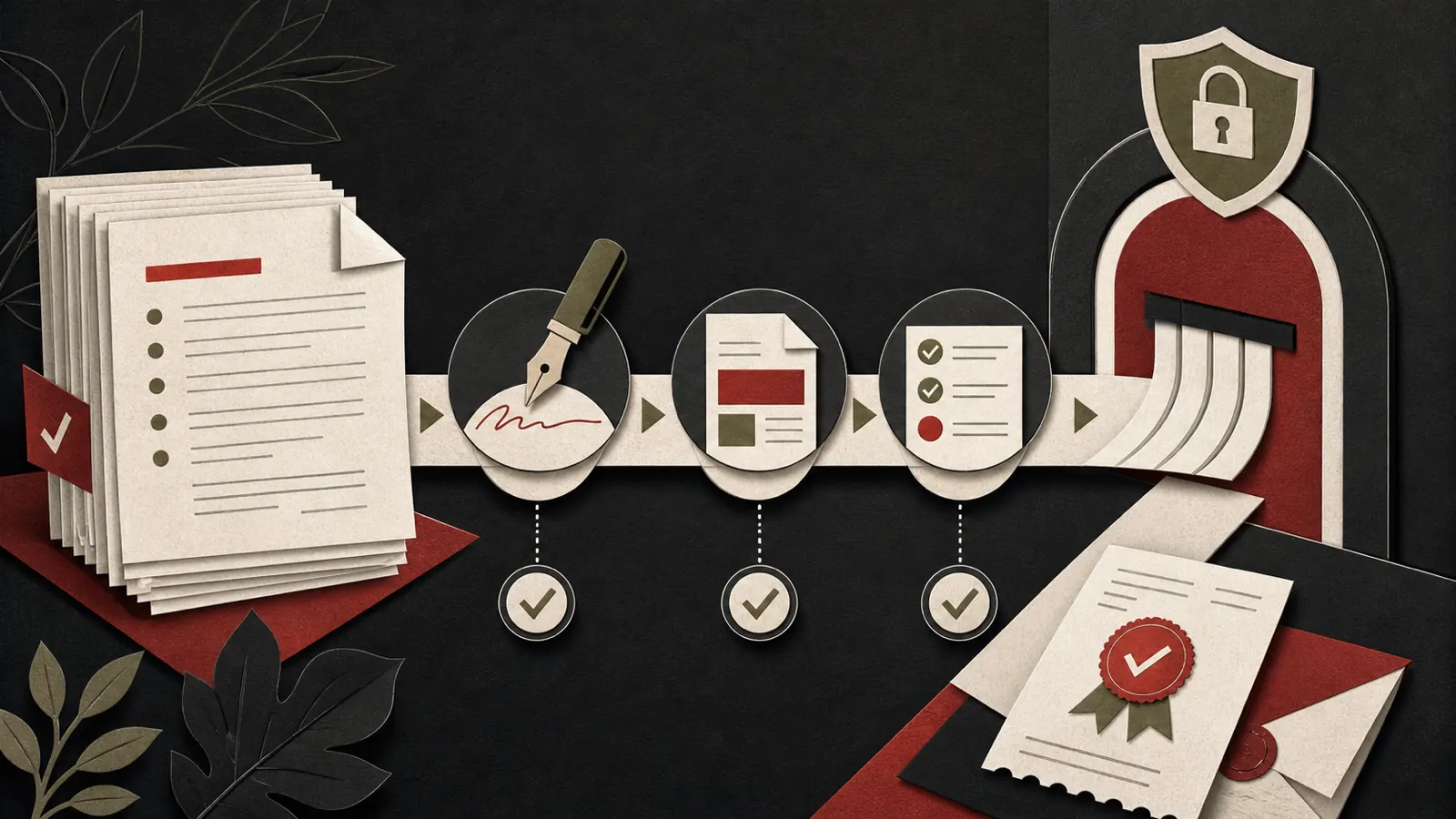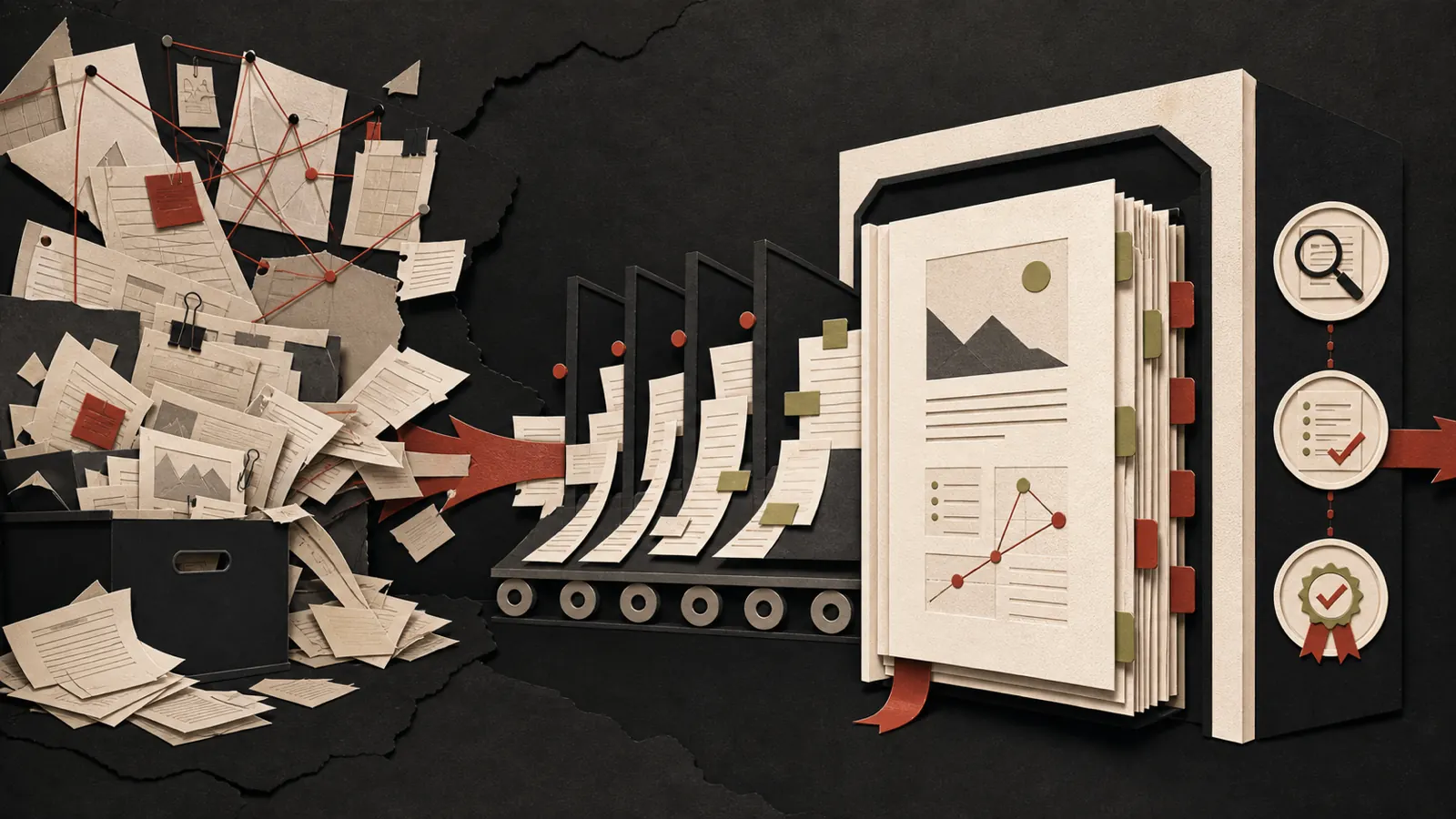
ITAT paper book preparation is not the mechanical act of merging PDFs. The team must decide which documents belong in the set, establish whether each was part of the record below, preserve its authentic source, create stable pagination, and make every hearing reference easy to verify. A beautiful index cannot repair an incomplete or procedurally inappropriate record.
The responsible professionals must apply the current Income Tax (Appellate Tribunal) Rules, bench directions, and matter-specific orders. This guide concentrates on the operational controls that make their decisions executable.
What should be decided before assembly begins?
Counsel should approve the paper book's purpose and scope. Is it intended to collect documents already before a lower authority, support a procedural application, present additional evidence subject to a separate request, or organise authorities? Keep evidence, pleadings, orders, and authorities in distinct sets where current requirements or professional judgment call for separation.
Open a scope note:
| Question | Decision to record |
|---|---|
| Proceeding | Appeal number, parties, assessment year, bench |
| Filing purpose | Hearing, direction, application, or other approved purpose |
| Record boundary | Documents treated as already on record |
| Disputed material | Items requiring admission or status decision |
| Format and service | Current rule, direction, portal, and recipient requirements |
| Approval | Responsible counsel and date |
Check the ITAT website for current notices and the e-Filing help page for linked procedural material. Save the version and date reviewed.
How do you build the source-document register?
Collect from verified repositories, not from an advocate's email thread if the controlled matter file has a better copy. Assign each document a stable ID. Record title, date, author or issuing body, source, page count, record status, confidentiality, legibility, and proposed index position.
For every document said to have been filed below, locate proof such as the earlier submission index, acknowledgement, order reference, hearing record, or other approved evidence. Use statuses that disclose uncertainty:
- record status verified;
- record status asserted, proof pending;
- not previously filed;
- duplicate or superseded;
- excluded by counsel; or
- requires procedural decision.
Do not mark a document as “on record” merely because it was found in the client folder. That label has legal consequences outside the operations team's remit.
How should the index be designed?
Draft the index before merging files. Use exact descriptions that help the bench and opponent identify the item. Avoid vague entries such as “miscellaneous emails.” If a document has annexures, decide whether the index should describe them separately.
Recommended control fields are:
| Item | Document date | Description | Source ID | Paper-book pages | Record status |
|---|---|---|---|---|---|
| Sequential number | Exact or “undated” | Neutral, specific title | Register reference | Final range | Approved label |
Chronology often helps, but the best sequence depends on the matter. Orders, pleadings, written submissions, evidence, and computational records may need a logical grouping. Counsel should approve the sequence before final pagination.
What pagination method prevents broken references?
Convert approved working copies to a common page size only when doing so does not distort content. Merge them once, then apply continuous paper-book pagination. Keep native document page numbers visible. The index should refer to paper-book pages, while citations may also note the internal page or paragraph where useful.
After pagination, freeze the master. Any insertion or deletion requires a new version, a regenerated index, and renewed checks. Do not patch page labels manually in only the index.
Run three reconciliations:
- Index to PDF: every listed range opens at the correct first page and ends correctly.
- PDF to source: every assembled item matches its approved source and remains complete.
- Citation to page: every draft synopsis or submission reference points to the final pagination.
The court filing readiness checklist provides related controls for final-file inspection.
How should scans, OCR, and confidential material be handled?
Retain original scans. OCR a controlled copy through an approved tool and compare sensitive fields visually. Tax documents are especially vulnerable to errors involving decimal points, brackets, negative signs, assessment years, and section numbers. Search results from OCR help navigation but should not be quoted without checking the image.
Before assembly, verify:
- Each page is readable at normal zoom.
- No page is clipped, blank unexpectedly, upside down, or duplicated.
- Handwriting, stamps, signatures, and faint entries remain visible.
- Colour conveys no meaning lost during conversion.
- Personal data is included only where required and approved.
- Bookmarks do not expose internal filenames or comments.
- Hidden annotations, tracked changes, and attachments are removed where appropriate.
- The final file opens in a separate viewer.
Do not upload confidential material to unapproved online compressors. Organisations can use Gotham's security overview as one input to their own system assessment.
How do you check citations and disputed record status?
Create a citation map linking each factual proposition in the draft synopsis or hearing note to the order paragraph and paper-book page. A citation should land on the supporting passage, not merely the beginning of a long document.
For material whose record status is disputed or uncertain, place it in a separate review queue. Record counsel's decision on whether to omit it, address it through an application, or take another procedurally appropriate step. Do not conceal it within a large compilation.
| Proposition | Order finding | Paper-book support | Status or caveat | Reviewer |
|---|---|---|---|---|
| Neutral factual statement | Paragraph reference | Exact page | Admitted, disputed, or incomplete | Name and date |
The ITAT appeal workflow explains how an issue map can become this hearing-level citation map.
What final quality checks should two reviewers perform?
The first reviewer checks substance against the approved scope and document register. The second performs a cold read of the final export. Neither should rely only on automated page counts.
The cold review should cover title and party details, assessment year, appeal number, index descriptions, date order, page ranges, missing pages, orientation, search results, bookmarks, footer consistency, and file naming. Sample-check every document boundary and all cited pages. For a smaller paper book, a page-by-page review is usually more efficient than investigating a registry defect later.
Create a release record containing the final filename, version, checksum if used, total pages, approvers, approval time, service recipients, filing route, and any known caveat.
How should filing, service, and later corrections be recorded?
Use the official ITAT e-Filing portal where applicable and follow current instructions. Preserve the uploaded master, portal acknowledgement, service evidence, and filing event log. A local “final” file is not proof that the same file was uploaded.
If a correction is required, do not overwrite the filed version. Create a new version and a change note that lists the affected pages, reason, approval, filing or service step, and new evidence. Update the hearing team's citation map so no one argues from obsolete pagination.
The paper book is operationally ready when its scope is approved, record status is visible, the index reconciles, final pages are readable, citations land accurately, and filing evidence is preserved. Teams can explore Gotham's workflow capabilities, review its legal corpus, or contact Gotham to discuss source-controlled hearing preparation.