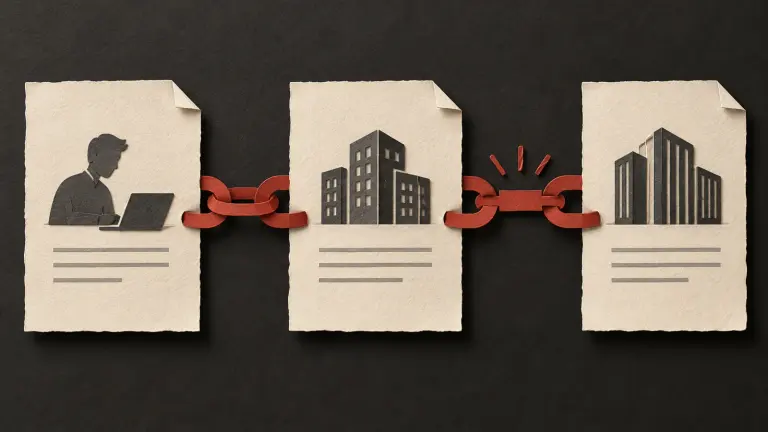
When a property paper goes missing, first identify which paper is missing and who last had it. A registered sale deed may have a certified-copy route through the relevant registration office. An original held by a lender calls for a custody and release inquiry. A builder, society, revenue office or private signatory may keep a separate record or duplicate process.
These routes are different. A certified copy of a registration entry can help prove what was recorded, but it does not by itself establish ownership or guarantee that a buyer, lender, court or other authority will accept it for a particular transaction.
Start with an inventory
List each missing item separately. Note its name, date, parties, registration number, Sub-Registrar's Office if known, property identifiers, and when and where you last saw it. Preserve scans, receipts, emails, loan-closure letters, custody slips and handover lists. Keep sensitive identity and property details off public websites and send them only through verified channels.
A sale deed, gift deed or mortgage instrument may have been registered. An allotment letter, builder agreement, possession letter, tax receipt, mutation or revenue extract, society record, will, loan file or privately signed agreement may follow a different route. A registration office's certified-copy service covers entries in its registration records; it is not a general replacement service for every paper mentioning a property.
Ask family members and any lender, lawyer, builder, housing society, employer or safe-deposit provider who may have handled the original. Check loan files, safe-custody receipts and closure inventories. If an institution confirms it holds the original, ask for its location and return or access process in writing. That is a custody question, not a lost-document application.
If a registered instrument is missing
Contact the Sub-Registrar or State registration department connected with the instrument. Ask which search or certified-copy service applies, who may apply, what proof and fees are required, and whether the relevant historic record is online or only available at an office. Procedures, digitisation, access rules and fees vary by State and document type. Use the State government's current instructions. A portal search with no result does not prove that no registered record exists.
Section 57 of the Registration Act, 1908 provides for inspection of specified registration books and indexes and for copies of entries, subject to different access rules for different books. Subsection (5) says copies issued under the section, signed and sealed by the registering officer, are admissible to prove the contents of the original document. That is a rule about proving recorded contents. It does not itself determine ownership, resolve competing claims or decide whether a copy meets the requirements of a particular sale, loan or court matter.
As a State example, Karnataka's Department of Stamps and Registration points citizens to its Kaveri service portal, and the Government of India's India Stack Local directory describes Kaveri 2.0 as including certified-copy services. Confirm the current service, eligibility, record period and process with the portal or relevant Sub-Registrar. A service listing does not establish that every historical document is digitised or retrievable online.
If a bank or lender may hold the original
Ask the lender to trace the file and say whether it holds the original, a copy or only a reference to a document. Send a dated written request through a verified contact channel and keep its acknowledgement. If the loan was repaid or settled, attach closure evidence and ask where and when the originals were returned or made available. Check collection receipts and handover inventories.
The Reserve Bank of India's 13 September 2023 directions set a 30-day period for releasing original property documents after full repayment or settlement of certain “personal loans” by listed regulated entities, where release falls due on or after 1 December 2023. The listed entities include commercial banks other than payments banks, local area banks, specified co-operative banks, NBFCs (including housing finance companies) and asset reconstruction companies. The RBI's definition of personal loans includes loans to individuals for creating or improving immovable assets, such as housing, subject to the applicable regulatory definition.
Where the direction applies, a regulated entity must give reasons for a delay beyond 30 days. If the delay is attributable to it, paragraph 6 requires compensation of ₹5,000 for each day of delay. If it loses or damages the originals, paragraph 7 requires it to help obtain duplicate or certified copies and bear associated costs. It has an additional 30 days for that process; the compensation period for delay is calculated after a total of 60 days.
These are conditional directions, not a universal remedy for every missing-paper situation. Check that the lender, loan, event date and reason for non-release fit the directions. If the lender says it lost documents, request written confirmation and its proposed steps, preserve repayment evidence and correspondence, and get advice before asserting that compensation is due. If the loan is repaid but still appears active on a credit report, see our guide to checking a closed loan on an Indian credit report; credit reporting is a separate issue from document custody or title.
If a private or unregistered paper is missing
Contact the person or organisation that issued or signed it. Ask whether it holds a counterpart, duplicate, certified extract or replacement process. For a builder or housing-society record, contact its records office. For a tax or revenue record, contact the responsible local authority. For a private agreement, contact the other signatory or the lawyer who prepared it.
Keep any response and replacement with the remaining property records. An issuer's duplicate may document its own record, but whether it is enough for a specific transaction is a separate question.
If the missing paper relates to a builder handover or possession dispute, our India RERA checklist for delayed possession covers that separate route. It does not replace a registry search or title review.
If theft or misuse is suspected
Record when and where the item disappeared and why you suspect theft, forgery or attempted misuse. If the facts suggest a crime or an immediate transaction risk, contact local police through the current official channel and ask which report or acknowledgement fits the circumstances. Tell an affected lender, registrar or other institution promptly where relevant.
A police complaint or FIR is not described here as a universal prerequisite to obtain a certified copy or replace every kind of property paper. Do not publish a notice, sign an indemnity or swear a declaration just because an online checklist says so. Whether any such step is useful or required depends on the document, State, transaction and facts.
Before you rely on a copy
Ask the person or institution requesting the paper exactly what it needs and why. Take the certified copy, remaining chain documents, custody correspondence, loan-closure papers and relevant property or revenue records to a property lawyer practising in the State where the property is located. Ask the lawyer to assess the chain of documents, registration and encumbrance records, pending transaction, competing claims and suspected misuse.
A registry copy, encumbrance search, tax receipt or mutation entry serves a defined purpose. Do not treat any one item as a complete title opinion.
Quick checklist
- Identify the exact missing paper and its last known custodian.
- Preserve scans, registration particulars, correspondence, receipts and loan-closure records.
- For a registered instrument, ask the relevant State registration office about search, copy eligibility, historic records, fees and delivery.
- For lender-held papers, request written custody or release status and check whether the RBI directions fit the loan and dates.
- For private papers, contact the issuer, other signatory or responsible authority about its own record or duplicate process.
- Report suspected theft or misuse through the appropriate local channel and tell affected institutions where needed.
- Get State-specific legal advice before relying on a copy for a sale, refinance, court matter or competing claim.
Sources and limits
This guide draws on section 57 of the Registration Act, RBI/2023-24/60 (DoR.MCS.REC.38/01.01.001/2023-24), and RBI/2017-18/117 (DBR.No.BP.BC.99/08.13.100/2017-18), which defines personal loans to include loans to individuals for creating or enhancing immovable assets, such as housing. Check the applicable definition for the particular lender and loan. The RBI directions and Act text are linked above.
Registration records, access rules, fees and replacement procedures vary by State and document. Confirm the current process with the relevant registration office, and get State-specific legal advice before relying on a copy in a transaction.
For help organising documents and review workflows, see Gotham's legal workflows or contact the team.
This guide provides general information, not legal advice. Registration records, access rules and replacement procedures vary by State, document and transaction. Get advice from a property lawyer in the State where the property is located before relying on a copy.
How Gotham researches and reviews field guides