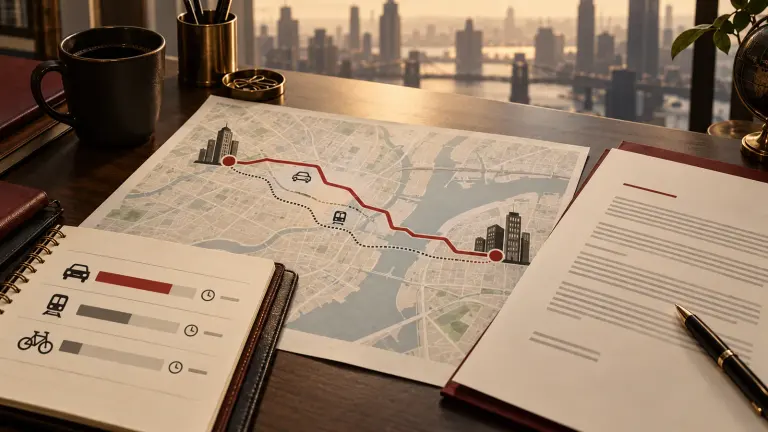
A red or amber weather warning does not answer every employment question. An employee may be unable to reach an open workplace, face a particular danger on a route, or be told that the workplace itself has closed. Those situations can have different consequences for pay, absence and safety protections.
For an England-based worker facing snow, ice, flooding or another serious travel disruption, start with four questions: what does the contract say, what has the employer instructed, what is the actual risk on the journey, and can work be done another way? Notify the employer promptly and keep the evidence. Do not rely on a social-media comment as a legal rule.
This guide explains general sources and practical steps. It cannot determine whether a particular journey is safe, whether an absence is authorised, or whether a worker has a legal claim. Northern Ireland has separate employment legislation, so this England-focused guide should not be applied there without checking the relevant rules.
First separate the journey from the workplace
Write down whether the risk arises while travelling to the workplace, at the workplace, or from travel that is itself part of the job. A worker driving a bus, making deliveries or travelling between job sites may face different work-related risks from someone commuting to a fixed office or school. Even then, the facts, role and applicable policies matter.
Also establish whether the workplace remains open. If the employer closes it because of disruption, the pay question is different from an employee being unable to reach a workplace that is still operating. The government’s travel disruption and work guidance distinguishes inability to reach work from a workplace closure and says weather-related inability does not automatically create an entitlement to pay.
Record the warning’s location and time, the route affected, transport cancellations or road closures, and any safer alternatives you considered. A general forecast may explain the background, but evidence about the route and timing is more useful when the employer needs to make a decision about your shift.
Check the contract and severe-weather policy
Look for terms about attendance, remote work, emergencies, unpaid absence, annual leave, making up hours, travel time, and workplace closure. Check the staff handbook and any severe-weather or business-continuity policy as well. A policy may describe how the employer expects staff to report delays or decide whether a site will open.
GOV.UK advises employees to talk to their employer about working from home, taking leave or making time up when travel disruption prevents attendance, and to check the contract. It also says an employer can require annual leave only with the required notice, unless the contract sets another notice period. Do not assume that the employer can unilaterally convert every missed shift into annual leave or that you can choose paid leave without agreement.
Acas says that if the contract says nothing about pay when an employee cannot get to work because of disruption, the employer does not have to pay for the missed time. That guidance is distinct from the situation where the employer closes the workplace: Acas says employees who were ready, willing and able to work are usually entitled to normal pay if the employer chooses to close or reduce hours, subject to any clear contractual lay-off or short-time-working term.
Ask for the decision in writing if there is uncertainty. A concise message can ask whether the workplace is open, whether remote work is available, how the absence will be recorded, and whether pay or leave will be affected. Keep the answer with the policy and rota.
| Situation | What to check | Useful record |
|---|---|---|
| You cannot reach an open workplace | Contract, weather policy, absence reporting and pay terms | Route warnings, transport notices and messages |
| The employer closes the workplace | Closure instruction and any lay-off or short-time term | Closure notice, rota and pay record |
| Remote work may be possible | Contract, role requirements and manager approval | Written request and response |
| Travel is part of your job | Work risk assessment, route assignment and safety process | Work instructions and hazard reports |
| Childcare is disrupted | Dependants leave and flexible-work policies | School closure notice and request |
The health-and-safety protection is specific
Section 44 of the Employment Rights Act 1996 provides detriment protection in defined health-and-safety circumstances. For example, section 44(1A) addresses a worker who reasonably believes there is serious and imminent danger that they could not reasonably be expected to avert and leaves, proposes to leave, or while danger persists refuses to return to their place of work or a dangerous part of it. It also addresses taking or proposing appropriate steps to protect themselves or others in circumstances of danger reasonably believed to be serious and imminent.
That wording is not a general right to refuse any commute in bad weather. The legal question is not answered solely by the existence of a weather warning. The risk, its seriousness and immediacy, what the worker reasonably believed, whether it could be avoided, where the danger existed, and the steps taken all matter. Section 44 also treats dismissal separately; the related section 100 addresses specified health-and-safety reasons for dismissal. Neither provision should be presented as a guaranteed result for an individual who turns around during a journey.
A commute on an unsafe road may not be the same thing as a danger at the workplace or a journey undertaken as part of the job. If the risk is at work, such as unsafe access to a site, raise it through the employer’s safety process. If the risk is the route, explain the specific road, transport or weather conditions and ask what alternative the employer proposes. A worker should not be encouraged to take a route they reasonably consider dangerous just to preserve a pay position.
The Health and Safety Executive’s risk-management guidance helps employers assess hazards and choose controls. It does not decide whether a particular employee’s commute is covered by section 44 or whether pay is due. Keep those questions separate.
What to do before the shift
If it is safe to do so, contact the employer before the shift begins using the normal reporting route. Give the facts rather than a legal conclusion: where you are, the journey you would need to make, what has changed, which official travel information you checked, and whether remote work or a later start is practical.
Ask the employer to confirm whether the workplace is open, whether attendance is required, and what will happen to the shift if you cannot reach it safely. If you can work remotely, say what you can complete and ask for approval. If you need to make up hours or use leave, ask how the employer wants to arrange it. Save the answer.
If the warning changes during the day, update the employer. A planned return journey may become unsafe even if the outward journey was possible. Keep dated records of the changing conditions and any instructions. Do not drive while using a phone or delay taking immediate safety steps in order to create evidence.
If the employer says “come in regardless,” ask for the instruction and the proposed safety measures in writing. Explain the specific risk and ask whether a safer route, later start, alternate site or remote work is available. If there is an immediate danger, prioritise safety and contact emergency services where appropriate; employment questions can be addressed afterwards.
If the employer records the shift as unpaid or takes disciplinary action
Start with the documents: contract, policy, rota, timesheet, pay record and messages. Ask which term or policy the employer relied on and how it classified the time. A dispute about the pay term is separate from whether the employer dealt appropriately with a health-and-safety concern.
If you believe you were penalised for raising a work-safety concern or taking a protected step, make a dated record of what you raised, when you raised it, the employer’s response and the action that followed. Do not assume that every reduction in hours, pay deduction or warning is unlawful; the statutory conditions and facts matter. Ask a union, Acas or a qualified employment adviser about your position before resigning or missing a formal deadline.
Where the employer closed the workplace, note whether you were ready, willing and able to work and whether any contractual lay-off or short-time arrangement applies. Where you could not reach an open workplace, check the contract and policy before assuming pay is due. These categories should not be collapsed into one claim.
A practical message to send
A short factual message can preserve the issue without overstating the law:
“I’m scheduled for [shift] at [site]. The current warning/closure on [route or transport] means I’m concerned the journey is unsafe because [specific facts]. I checked [official source] at [time]. Is the site open, and can I work remotely, start later or use another arrangement? Please confirm how you want the shift recorded and whether pay or leave is affected. I’ll update you by [time].”
Keep a copy and update it if the situation changes. If the employer has already issued a specific instruction, quote it accurately and explain the practical obstacle. Do not state that section 44 guarantees pay or permits every refusal; that is not what the legislation says.
If the employer asks you to use annual leave, our England holiday entitlement guide covers that separate issue; it does not decide whether a specific weather absence counts as leave. If the problem is a proposed permanent site relocation rather than a one-off weather journey, see our England TUPE relocation guide. For an employer reviewing its own severe-weather process, keep the contract, attendance policy, closure decisions, risk assessments and employee communications together. The contract obligation management workflow can help track who must communicate a decision and by when, while the legal case-intake workflow can organize a timeline and supporting records. Gotham helps teams organize and review legal documents; it does not decide whether a journey is safe or determine an employment-law outcome.
Bad-weather travel and work questions
Can I refuse to travel to work because of a weather warning?
A warning does not create a blanket right to refuse every journey. The contract, employer policy and facts about the route matter. Employment Rights Act 1996 sections 44 and 100 provide specific health-and-safety protections where their serious-and-imminent-danger conditions are met; they are not a general commute or pay guarantee. Tell your employer promptly and explain the actual risk and alternatives.
Will I be paid if snow or flooding stops me reaching work?
Not automatically. GOV.UK says employees are not automatically entitled to pay when bad weather prevents them getting to work. Check your contract, handbook and any severe-weather policy for remote work, paid or unpaid leave, making time up or other arrangements.
What if my employer closes the workplace?
That is different from being unable to travel to an open workplace. GOV.UK says an employer cannot usually deduct pay when the workplace closes because of disruption and the employee does not usually work from home. Check for contractual lay-off or short-time provisions and any direction to work at another location.
Does section 44 protect me if I turn back during a dangerous journey?
Section 44(1A) concerns leaving or refusing to return to a place of work or a dangerous part of it, or taking appropriate protective steps, in circumstances of danger reasonably believed to be serious and imminent. Whether a particular commute or decision to turn back falls within the provision is fact-specific; do not assume the section automatically covers every hazardous journey to work.
What should I tell my employer if I cannot safely travel?
Contact the employer as early as possible through the usual channel. State where you are, what warning or route condition affects you, what you have checked, whether you can work remotely, and when you will update them. Keep the message factual and save the reply, rota, policy and relevant travel alerts. Ask how absence or pay will be recorded.
What evidence should I keep if the weather disruption becomes a dispute?
Keep the dated weather warning, travel operator notices, route or road closures, messages to and from the employer, shift details, contract and policy wording, and any instructions about attendance or closure. If the issue concerns a danger at work rather than the journey, record the workplace hazard and the steps taken to raise it.
General information about adverse-weather travel and work in England, not legal advice. Pay, absence and safety outcomes depend on the contract, employer policy, actual danger, communications and individual facts. Northern Ireland has separate employment legislation. Consider speaking with Acas, a union or a qualified employment adviser before taking a step that may affect your job.
How Gotham researches and reviews field guides