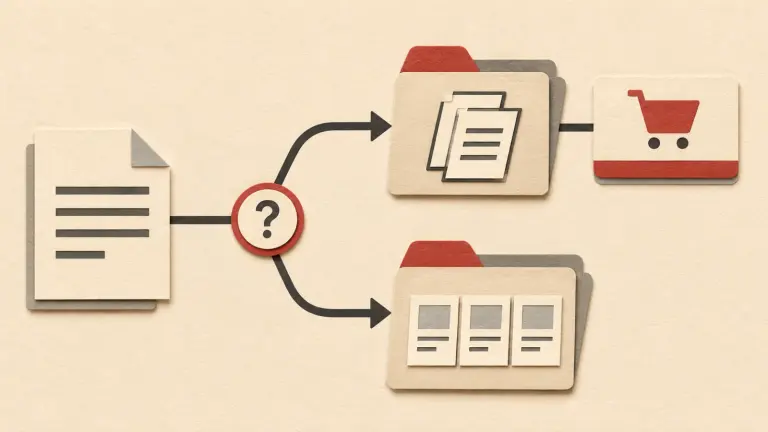
A purchase request does not automatically need a competitive sourcing event just because it enters through an intake form. Your organization may still create an intake or sourcing record for every request to maintain visibility, capture controls, or document the handoff. That record is not the same decision as whether this specific need requires supplier evaluation. First check whether the item or service is already covered by an active contract, framework agreement, or approved catalog route for the relevant supplier and purchasing entity. If it is covered and policy permits the repeat purchase path, procurement can route it to the purchase request or ordering workflow while keeping the required intake record. If a supplier is new, the need falls outside the agreement, terms have changed, or required information is uncertain, route it for the appropriate sourcing, contract, or specialist review.
The important distinction is not simply “approved supplier” versus “unapproved supplier.” Approval does not prove the contract covers this scope, entity, price, location, term, or order size. Check both supplier status and agreement context, then record the route and reason.
Separate the request from the route
Teams often use “request,” “sourcing record,” “sourcing event,” “purchase request,” and “purchase order” as if they were interchangeable. They represent different things, even when one system combines them:
- Intake request: the initial request and facts needed to decide what should happen next.
- Intake or sourcing record: the system record used to log and track a request. An organization may create one for every purchase to support oversight. Its name does not establish that a supplier comparison is required.
- Sourcing event: the substantive process used to evaluate or select suppliers, compare options, or follow an organization-defined sourcing route. The organization decides when that work is required.
- Purchase request: an internal request to authorize a particular purchase under the relevant purchasing controls.
- Purchase order or order record: the resulting authorization or transaction record under the organization's process.
- Contract review or change: a check that agreement terms cover the proposed commitment, or a controlled change when they do not.
Your system may call the universal intake record a “sourcing request” even when no supplier evaluation follows. That can be a sensible design. Define separately what record oversight requires and what process should evaluate this need, then map both decisions to your tools. Requesters should not need to know the internal object name.
Use a contract-aware decision table
At intake, ask whether the supplier, purchasing entity, item or service, and commercial terms appear to match an existing agreement or catalog route. Then let the named workflow owner confirm scope and policy. This table is a design pattern, not a universal procurement rule. Adapt it to your organization's authority matrix, sourcing policy, contract terms, and system design.
| What intake finds | Checks to complete | Suggested next route | Decision owner |
|---|---|---|---|
| Same approved supplier; request appears within an active agreement or catalog; no change identified | Confirm purchasing entity, covered item or service, relevant term, pricing method, order conditions, and required approvals | Existing-contract or catalog purchase request, if policy allows | Procurement or purchasing owner, with contract owner available for confirmation |
| Same supplier, but scope, quantity, location, service, or commercial terms may differ | Compare the request with the agreement and any applicable limits; identify the difference | Procurement and contract-owner review; source or amend only through the appropriate approved path | Contract owner plus procurement; legal or finance when assigned by policy |
| New supplier, no applicable agreement, or a materially new requirement | Confirm business need, specifications, supplier information, and any defined selection route | Sourcing workflow or the organization's new-supplier process | Sourcing or procurement owner |
| Existing supplier but agreement is expired, unclear, unavailable, or does not obviously cover the request | Retrieve the signed agreement and amendments; confirm status and scope; do not infer coverage from the supplier record | Hold for clarification and route to the contract owner, then procurement or legal as needed | Named contract owner, with procurement coordinating the request |
| Exception, urgency, unusual commitment, or policy trigger | Record the reason, business owner, time need, requested exception, and compensating review | Exception route under the organization's policy; preserve required approvals | The delegated policy or business approver, with required specialists |
A useful control is an explicit “cannot determine yet” route. If the requester says “we use this supplier all the time” but cannot identify the agreement, keep the request open with an owner and next action. Do not convert uncertainty into a routine purchase simply to keep a queue moving.
Public procurement frameworks are examples, not a universal route
Public-sector frameworks illustrate why a buyer must check the agreement's ordering rules before treating a purchase as routine. UK government guidance describes call-off routes as direct award or further competition; under the Procurement Act 2023, the corresponding route names are “award without competition” and “award with competition.” Earlier legislation can still govern procurements commenced under that regime and contracts awarded under it, subject to the transitional and saving provisions. For a framework, those provisions can continue to apply until the last call-off contract awarded during the framework term ends. These are UK public-sector examples, not rules for private companies or other jurisdictions. The Government Commercial Agency's call-off guide, official Procurement Act framework guidance, and Cabinet Office transition guidance explain why teams must check the applicable regime and the specific framework's ordering procedure and terms.
The practical lesson for any team is narrower: verify the actual agreement, purchasing policy, ordering procedure, and assigned authority. Do not infer that an approved supplier or a past purchase automatically permits another order.
Give each handoff an owner
The intake workflow works when each team knows what it is deciding and what evidence it hands to the next team. Keep the division of work visible:
| Role | Primary responsibility | Handoff evidence |
|---|---|---|
| Requester or business owner | Describe the need, desired outcome, item or service, timing, and business context | Completed intake fields, proposed supplier if known, quote or specifications, and named accountable owner |
| Procurement triage | Decide whether the request appears to fit a repeat-purchase, sourcing, or exception path under policy | Route selected, reason, applicable policy version, and missing information owner |
| Contract owner or repository steward | Find the controlling agreement and related amendments; confirm which agreement family or order terms need review | Agreement link, relevant scope and term, version, unresolved coverage questions |
| Sourcing owner | Run the organization-defined supplier evaluation when a new or uncovered requirement needs it | Selection record, supplier outcome, and transition to contract review or purchase request |
| Legal, finance, security, privacy, or other specialist | Decide only issues assigned to that function, such as nonstandard contract terms or a specific control trigger | Approval, advice, conditions, or escalation saved against the request and agreement version |
| Purchasing or accounts-payable operations | Process the approved request or order and connect it to the right supplier and agreement record | Final request/order reference and link back to the contract record |
One person may hold more than one role in a small team, but the decision should still name the responsibility. “Procurement has it” is not an exit condition. Record who confirms agreement coverage, who decides sourcing is unnecessary or required, and who owns an exception.
Ask for facts a requester can supply
Keep the first form short enough to complete, then reveal follow-up questions based on the request. Ask for observable facts rather than asking someone to interpret contract clauses or decide whether a purchase is legally covered.
Useful intake fields include:
- Requester, business owner, business unit, and the intended purchasing entity.
- Supplier name and whether the supplier is already approved in the applicable process.
- Item or service, quantity or usage estimate, location, delivery or performance dates, and business purpose.
- Existing contract, framework, statement of work, catalog entry, purchase order, or prior request reference, if known.
- Quotation or other commercial proposal, including changes from the prior price or order pattern.
- Whether the supplier, scope, terms, or purchasing entity differs from a prior purchase.
- Whether the request is a repeat, new need, replacement, extension, or change to existing work.
- Required-by date and the operational reason for it.
- Any known sourcing, budget, security, privacy, finance, or approval trigger from the organization's own process.
- What is unknown and who can help resolve it.
Treat “repeat purchase” as a lead, not confirmation. Find the signed agreement and amendments, then ask the contract owner to verify the entity and scope. A supplier name or old order number alone may not identify the terms that govern this request.
For an India-focused example of in-house legal request intake fields and handoffs, see the Contract Request Intake Workflow for In-House Legal Teams (India). This global guide addresses the separate procurement decision about routing a contract-covered purchase, a new sourcing need, or an uncertain match.
Example: a repeat order with one changed detail
Consider a fictional company that routinely buys maintenance support from an approved supplier. A department requests the same support for another site and says the price is unchanged. Procurement finds a framework agreement and an existing catalog item. The site, service description, term, and ordering entity are checked against the agreement and the organization's purchasing policy. If the request matches and the authorized repeat-purchase path applies, the team can record that basis and continue through the purchase request process.
Now change one fact: the new site is in a location not clearly named in the agreement, or the quote adds a new data-handling service. The supplier's approved status has not changed, but the purchase may no longer be the same request. Procurement should pause the routine route, attach the agreement and quote, and ask the contract owner to resolve coverage. The organization's policy may require a sourcing comparison, an amendment, specialist review, or another approval. The workflow should make the unresolved question visible instead of treating the supplier relationship as sufficient evidence.
The company defines any threshold and authority route in its own policies and contract controls.
Handle exceptions without creating a bypass
A fast path needs an exception path. Define how to handle at least these situations:
- Urgent operational need: capture why the timing matters, which checks can happen in parallel, and who can authorize any permitted exception. Do not silently skip required controls.
- Agreement not found: assign a contract-repository search or owner follow-up. Record the search performed and what remains unresolved.
- Supplier is approved, but scope is unclear: distinguish supplier onboarding status from permission to buy this specific product or service.
- Quote changes the commercial deal: route the changed terms to the contract owner and any finance or business approver required by policy.
- Agreement is close to expiry or already expired: confirm current status and renewal or extension authority before treating a new order as covered.
- New supplier or new category: use the defined supplier and sourcing process, then connect any resulting agreement to the purchase workflow.
- Requester disagrees with the route: record the reason and direct the disagreement to the process owner. Do not let repeated informal escalations become the hidden policy.
Maintain a short route reason on the record, such as “existing catalog item matched to agreement X” or “new scope sent to sourcing.” The reason helps an auditor or teammate understand the decision without reconstructing it from email.
Measure the workflow and adjust it carefully
Do not measure success only by how many requests avoid sourcing. A route is efficient only if it also preserves the reviews and records your organization requires. For a defined pilot, track:
- How many requests enter each route and how often procurement changes the initial route.
- How often intake is returned for missing supplier, scope, agreement, entity, quote, or timing information.
- The time spent waiting for a contract owner to confirm scope or locate an agreement.
- Repeat purchases incorrectly sent to sourcing, and new or changed requirements incorrectly treated as routine.
- Requests delayed by unclear ownership or conflicting policy rules.
- The exception reasons and the role that resolved each one.
Review a small sample with procurement, sourcing, contract owners, and the teams that process purchase requests. Look for patterns: a frequently missing field, an agreement that is hard to find, a catalog item with stale details, or a policy rule that sends routine work to the wrong queue. Change the form or routing only through the organization's normal policy and system-change process. Test the changed route with examples that should move and examples that should stay put. Keep the old and new rule versions and the effective date visible to the people handling in-flight requests.
A related contract approval matrix guide helps teams name who owns approval decisions. For obligations after signing, see contract obligation management. Use those workflows after the intake route is resolved; they do not replace the initial sourcing-versus-purchase decision.
Common routing mistakes
- Treating an approved supplier as a covered purchase. Supplier approval does not establish scope, price, entity, term, or order eligibility.
- Using a spend threshold as the entire decision. A threshold may be one policy input, but it cannot answer whether the contract covers the requested work or whether terms changed.
- Treating intake records and sourcing events as the same thing. You may need a record for every request while routing only some needs to substantive supplier evaluation. Separate those decisions in the process design; do not remove a required oversight record in an effort to reduce competitive-sourcing work.
- Letting a requester classify their own exception. Requesters can provide facts, but the assigned process owner should decide the route.
- Skipping the agreement-family check. A signed agreement, amendment, statement of work, order form, and renewal document may need to be read together to establish what the record covers.
- Changing the system before agreeing the policy. Define the decision and owner first, then configure the system; otherwise the form may encode a disputed process as if it were settled.
- Failing to capture why a route was chosen. A decision without an agreement link, policy reference, or reason is difficult to repeat consistently.
A practical rollout checklist
- Name the procurement process owner and contract coverage owner.
- Define request types and identify the organization's existing-contract or catalog path.
- Record the actual policy conditions that require sourcing, approval, or specialist review.
- Add a visible “uncertain coverage” route with an owner and next action.
- Make requesters provide the supplier, purchasing entity, scope, quote, timing, and known agreement reference.
- Test routine repeat purchases, new suppliers, scope changes, missing agreements, and exceptions.
- Confirm that the workflow preserves required approvals and connects to the contract and order records.
- Pilot with one category or team and measure misroutes, returned requests, and waiting time.
- Review results with procurement, sourcing, and contract owners before expanding.
- Keep version history and communicate any changed routing rule, including its effective point.
If your team wants to map how procurement intake connects to contract review, approvals, and follow-up, talk to Gotham about the workflow you want to improve.
Questions about contract-aware procurement intake
Should every purchase request go through sourcing first?
Every purchase may need an intake record under your organization's process, but that does not automatically mean it needs a competitive sourcing event. Use policy to distinguish an in-scope repeat purchase from a new supplier, uncovered requirement, changed terms, or another sourcing trigger, and keep an owner for uncertain cases.
Does an approved supplier mean a purchase is already covered by a contract?
No. Supplier approval and contract coverage are different checks. Confirm the purchasing entity, service or item, scope, term, pricing mechanism, and any applicable limits before treating the request as a repeat purchase.
What should happen when the requester cannot tell whether existing contract terms cover the purchase?
Do not guess or route it as routine. Keep the request visible, assign a contract owner or procurement reviewer, link the available agreement and purchase facts, and record what must be confirmed before commitment.
Who decides whether a request needs sourcing, procurement, or contract review?
Define the decision owners in your organization's workflow. Procurement can triage the purchasing path, the contract owner can confirm agreement context, and legal, finance, or another specialist can decide issues within their assigned authority.
How can a team tell whether its intake routing is working?
Track avoidable sourcing handoffs, requests returned for missing information, misroutes, time waiting for clarification, and exceptions by route. Review a sample with procurement and contract owners, then adjust the intake questions and routing rules under your change process.
General operational information, not legal, procurement, competition, financial, or regulatory advice. Sourcing routes, approvals, and purchasing authority depend on your organization's policies, contracts, and applicable requirements.
How Gotham researches and reviews field guides