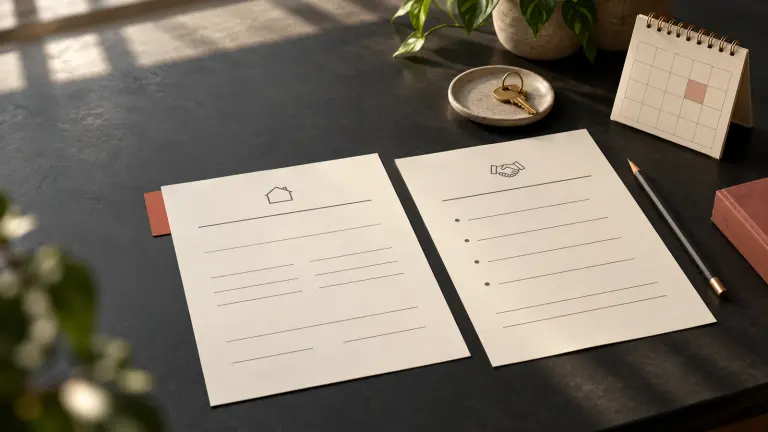
“Cash for keys” is a common label for a negotiated payment connected to a tenant agreeing to move out. In British Columbia, that conversation can involve two different records: RTB-8, the Residential Tenancy Branch’s Mutual Agreement to End a Tenancy form, and separate written terms describing any money the parties have agreed to exchange. They answer different questions. RTB-8 records that both sides agree to end the tenancy and identifies the move-out date and time. It does not itself state a cash-for-keys amount or payment schedule.
That distinction matters before anyone signs or hands over keys. A tenant may be deciding between continuing under the existing tenancy, responding to a landlord’s notice, or agreeing to a new move-out date in return for a payment. Those are not interchangeable choices. BC’s current mutual-agreement guidance says a mutual agreement differs from a notice, neither side can be required to sign one, and a tenant who ends the tenancy mutually will not receive compensation that might have been due if the landlord had served a notice instead. The facts, notice history and type of tenancy still matter.
Use the paperwork to make the arrangement understandable: what ends the tenancy, when possession changes, what payment is promised, when it is due, and what each person must do. If any answer is unclear, pause and get guidance from the Residential Tenancy Branch (RTB) or a British Columbia lawyer before committing. This is a review checklist, not a prediction that a particular agreement is valid or that money will be recovered.
Start by identifying what is being proposed
Ask the landlord to describe the proposal in plain terms. Is the landlord asking you to sign RTB-8, proposing an additional payment, serving a formal notice, or discussing more than one of these at once? Request copies of each document and identify whether a notice has already been served, its stated reason and effective date, and whether the landlord says it can still be changed or withdrawn. Keep the original notice and the envelope or delivery record.
The Residential Tenancy Act lists the circumstances in which a tenancy ends, including when the landlord and tenant agree in writing. The statute and RTB guidance are the starting points for understanding a mutual end. A conversation labelled “cash for keys” does not by itself establish that the legal requirements have been met, and a payment offer does not determine whether a prior notice was valid.
Write down your own current position before negotiating. Note the fixed-term or periodic tenancy, the date it began, rent due dates, any written renewal, outstanding repairs or disputes, and all notices or messages about ending the tenancy. If you are considering leaving before a fixed term ends, do not assume the landlord can recover a particular amount, or that an offered payment replaces every possible claim. Ask for the legal basis and calculation in writing, then seek advice if the amount affects your decision.
Treat RTB-8 and payment terms as separate records
The current RTB-8 form says it is not a notice to end a tenancy and that neither landlord nor tenant is obligated to sign. It provides for the parties’ names, the unit, the agreed time and date to vacate, signatures and signing date. It does not include a field for a negotiated payment amount, installment plan or conditions for releasing money.
Read its broader wording carefully, too. RTB-8 says the parties understand the tenancy will end “with no further obligation” between landlord and tenant. If a separate payment promise is meant to remain due after move-out, the form and payment terms need to be read together. Do not assume an extra document automatically overrides or survives RTB-8; equally, do not assume that signing automatically releases every separate claim. The final writing should identify which payment obligations continue, what the payment settles, and what remains outside the arrangement. Have a BC lawyer review the combined wording if that scope is unclear. This guide cannot predict how a decision-maker would interpret a particular set of documents.
If the parties are discussing money, ask for a separate document that identifies the amount and the promise clearly. The form does not require the parties to use a particular “cash for keys” contract, and this guide cannot say whether a proposed side agreement will be enforceable in a particular dispute. Clear written terms help both sides understand what was agreed and give each person a record to review. If the wording makes one document conditional on another, have the relationship between them reviewed before signing either one.
Check that the documents do not contradict each other. For example, the payment terms should not promise one move-out date while RTB-8 records another. If the offer says payment is due after vacant possession, specify how and when the landlord will confirm that condition and how quickly payment follows. If payment is due earlier or in installments, record the dates, payment method and what happens if a transfer is delayed. Do not leave a material term to a later text or verbal promise.
Make the payment sequence concrete
There is no one sequence that is automatically right for every tenant. Some proposals tie payment to signing; others tie it to a move-out event or key handover. Consider what each sequence means in practice. If payment is promised after you vacate, you may be relying on the written promise and any available process to seek payment later. If money is offered before you leave, the agreement should still say whether it is an advance, a final payment, or subject to repayment if a stated condition is not met. Ask for qualified advice before accepting a clause you do not understand.
The written terms should answer at least these practical questions:
- What exact amount is promised, and is it a single payment or installments?
- What event makes it due: signing, a stated date, the move-out time, key return, or another objectively clear event?
- How will it be paid, to whom, and by what deadline after the trigger?
- What should the tenant do if the transfer does not arrive or the payment details are wrong?
- Does the payment settle only the agreed move-out arrangement, or does the writing claim to resolve other issues such as rent, damage, deposits or existing applications?
- What happens if a party cannot meet a stated date, and how must any change be documented?
Avoid vague terms such as “we will sort it out later,” “once everything is done,” or “full settlement” without a defined scope. If the landlord intends the payment to settle a broader dispute, ask which claims and time periods are included and what remains unresolved. Do not sign a release or waiver that you cannot interpret. A payment agreement may have consequences beyond the move-out itself, so consider independent legal advice.
It can help to compare the offer line by line with the costs and obligations you expect. Record the payment amount separately from the return of any security or pet damage deposit, outstanding rent, utilities, or agreed repair costs. Ask whether the proposed figure is before or after any deduction and whether the landlord expects you to sign a release. If deductions are proposed, request the item, amount and basis in writing instead of treating a net figure as self-explanatory.
Check the payee and transfer details before the signing date. Confirm whose name will appear on the payment, which account or method will be used, whether a transfer fee reduces the amount received, and how the parties will document receipt. If the payment is split, the agreement should say whether a later installment depends on another event and what happens if either side disputes that event. A clear record does not guarantee performance, but it gives both parties a concrete document to understand and preserve.
Compare the offer with the alternatives
Before accepting, compare the proposed payment with the actual options available in your situation. Consider current rent and housing availability, moving costs, utility deposits, storage, time off work, school or caregiving needs, and the possibility that a new home may not be ready by the proposed date. BC specifically advises parties to consider rent prices, moving costs and housing availability before signing a mutual end.
Also identify what might be given up or changed. BC’s guidance says tenants will not receive compensation they may have been due if the landlord had served a notice to end tenancy instead. It also says landlords cannot apply for compensation they might have been due if a tenant ended a fixed-term tenancy early when the parties end it mutually. Do not treat those statements as a complete answer to every fact pattern. A notice may have a different status, another claim may exist, or the tenancy may fall outside the ordinary residential rules. Check the current Act and obtain advice about your own documents.
No party has to accept a mutual agreement just because the other side proposes one. If you need time to consider the amount or get advice, say so in writing. Do not sign a form with a blank move-out date, an inaccurate date, or terms you were told would be filled in later. If you are pressured or the proposed date is imminent, contact the RTB promptly and explain the deadline.
Keep a clean record from proposal to move-out
Save the original offer, all versions of RTB-8 and the payment terms, emails, text messages, payment confirmations and any proof of delivery. Keep a dated note of conversations, including who attended and what was said. Store photos or video of the unit’s condition and the key handover separately from the payment record. Keep copies somewhere you can access after moving.
Use the current RTB instructions for completing the form. BC says mutual agreements must be documented in writing using RTB-8 and both sides should keep a copy. If the parties confirm the end by email, the government guidance says they should attach and digitally sign the PDF; it also says text messages are not a legal way to mutually end a tenancy. Do not assume a casual message replaces the form or resolves an inconsistent written term.
Before signing, compare names, unit address, move-out date and time, and signatures. Then read the payment document alongside RTB-8 and check that the two documents describe the same deal. Keep the fully signed copies and confirm payment through your own bank or payment service. A screenshot or promise that a transfer was initiated is not the same as funds appearing in your account.
If the landlord will not document the payment, the documents conflict, or a promised payment does not arrive, gather the complete record and ask the RTB or qualified BC counsel what options apply. Do not assume that the RTB can decide every issue arising from a separate agreement; the right forum can depend on the claim and the law governing it. If a notice or hearing deadline is approaching, get advice promptly rather than relying on a general checklist.
The practical principle is simple: understand the tenancy-ending document, define the payment in separate clear terms, and check how the two fit together before agreeing. The RTB-8 form records the mutual end; the separate payment terms should make any money promise legible. Review the current official materials and your own facts before signing.
For legal teams organizing records and review steps, Gotham’s document organization guide, contract obligation tracking guide, and workflow overview describe general ways to keep documents, dates and responsibilities findable. They are not British Columbia tenancy procedures. Contact Gotham to discuss a team’s document workflow.
Official sources
- BC: Mutual agreement to end a tenancy
- BC Residential Tenancy Branch: RTB-8 form
- British Columbia Residential Tenancy Act
Questions
Does RTB-8 guarantee that a tenant will receive a cash-for-keys payment?
No. RTB-8 records a mutual agreement to end a tenancy and the agreed move-out date and time. It does not set out a cash payment. Put any separate payment amount, due date, conditions and method in clear written terms signed by the parties, and get advice if the documents do not fit together.
Do I have to sign a BC RTB-8 form?
No. BC says neither landlord nor tenant is required to sign a mutual agreement. Ask for time to review the move-out terms and any payment arrangement, and contact the Residential Tenancy Branch before signing if you are unsure about the effect.
Could signing RTB-8 affect compensation I might otherwise receive?
It can. BC’s guidance says a tenant who ends a tenancy by mutual agreement will not receive compensation that might have been due if the landlord had served a notice to end tenancy instead. The actual rights depend on the facts and applicable law, so check the notice history and get advice before agreeing.
Should a cash-for-keys payment be made before the tenant signs RTB-8?
There is no universal sequence that fits every agreement. The parties should state exactly when payment is due, what event triggers it, how it will be paid and what happens if a transfer fails. Do not rely on an unwritten promise; ask a BC lawyer or the Residential Tenancy Branch about unclear terms before signing.
Can text messages alone end a BC tenancy by mutual agreement?
BC directs landlords and tenants to document a mutual end in writing using RTB-8, and says a text message is not a legal way to mutually end a tenancy. Follow the current RTB instructions and keep a complete signed copy of the form and any separate payment terms.
General information, not legal advice. This guide concerns residential tenancies governed by British Columbia law. Tenancy type, notice history and the wording and timing of any agreement matter. Contact the Residential Tenancy Branch or qualified BC counsel before signing if the consequences are unclear.
How Gotham researches and reviews field guides